

Is Lake Kivu Famous for Honeymoon Vacations?
May 21, 2026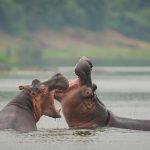
How Do Hippos Communicate?
May 22, 2026
Few moments on an African safari compare to hearing a lion roar across the savannah at sunrise. The sound feels deep, raw, and powerful. It instantly reminds travelers that lions are not only strong predators but also highly social animals with complex ways of communicating. Many guests who travel with Zamunda Travels often become curious about how lions manage to live together peacefully in prides. The answer lies in their remarkable communication system.
Lions communicate almost every hour of the day. They roar to protect territory, use body movements to express emotions, and rely on scent marking to send warnings to rivals. They also show affection through grooming and gentle physical contact. Unlike leopards, which prefer solitary lives, lions survive through teamwork and strong social bonds. Every sound and movement inside the pride carries meaning.
For safari lovers visiting destinations such as Uganda, Kenya, and Tanzania, understanding lion behavior adds more excitement to every game drive. Once you learn how lions communicate, you begin to notice small interactions that many travelers often miss during safari adventures.
The Meaning Behind a Lion’s Roar
A lion’s roar is one of the loudest sounds produced by any wild cat. On calm nights, the roar can travel several kilometers across open grasslands. Male lions mainly roar to announce ownership of territory and warn rival males to stay away. This powerful sound helps prevent unnecessary fights between competing prides.
However, roaring is not always aggressive. Lions also roar to reconnect with pride members after moving through thick vegetation or hunting areas. At night, entire prides sometimes roar together. This group behavior strengthens social bonds while helping pride members locate one another in the darkness.
Travelers exploring Africa with Zamunda Travels often describe hearing lions roar near their lodge as one of the most unforgettable safari experiences. The sound creates a feeling that no wildlife documentary can fully capture.
Silent Signals Inside the Pride
Lions constantly communicate through body language, even when they remain completely silent. A simple tail movement or facial expression can send a clear message to another lion nearby. Dominant males usually walk confidently and maintain strong eye contact. Younger lions often lower their posture to avoid confrontation and show respect.
Tail movements also reveal emotions. A relaxed tail often signals calm behavior, while rapid tail flicking may indicate irritation or tension. Ear positions matter too. Flattened ears often show aggression, especially during feeding or territorial disputes.
One of the most touching forms of lion interaction involves physical affection. Lions frequently rub heads, groom one another, and rest close together. These actions strengthen trust within the pride and help maintain peaceful relationships. Cubs especially depend on grooming and physical touch during their early stages of development.
Safari guides from Zamunda Travels often help travelers understand these subtle behaviors during wildlife encounters. Once visitors recognize these signs, lion sightings become even more meaningful.
Teamwork During the Hunt
Hunting requires careful coordination, and lions work together surprisingly well during these moments. Lionesses usually take the lead because they hunt more effectively as a group. Instead of roaring or making loud sounds, they rely on silent signals while stalking prey.
Each lioness positions herself strategically before the attack begins. Some move through tall grass while others wait quietly to block escape routes. Through eye contact and body movement, they understand when to move closer or remain hidden. This teamwork increases their chances of catching prey such as zebras, antelopes, and buffaloes.
Watching lions hunt in the wild remains one of the highlights of an African safari. Visitors exploring Serengeti National Park or Masai Mara National Reserve with Zamunda Travels often witness how silently and efficiently lions cooperate during a hunt.
Territorial Messages Through Scent
Scent marking plays a major role in the daily lives of lions, although many travelers never notice it during safari drives. Lions use urine, scratches, and scent glands to mark territory boundaries. These scent markings warn rival lions that the area already belongs to another pride.
Male lions regularly patrol territorial borders to refresh these markings. This behavior reduces unnecessary fights because rival males can detect danger before entering occupied areas. Female lions also use scent to communicate reproductive readiness and social identity within the pride.
Experienced safari guides from Zamunda Travels often explain these hidden behaviors during game drives. Learning about scent marking helps visitors understand how lions survive and organize life in the wild.
Why Communication Matters for Survival
Communication is essential for lion survival. Without it, prides would struggle to hunt effectively, protect cubs, and defend territory from rivals. Every roar, movement, and scent marker helps maintain balance within the pride.
Communication also reduces conflict among lions. Instead of fighting constantly, lions use signals and warnings to avoid dangerous confrontations. Mothers guide cubs using soft vocal sounds and gentle physical contact. Young cubs also learn social behavior through play and interaction with other pride members.
Many travelers arrive on safari expecting lions to spend most of their time sleeping. While lions do rest often, they constantly observe and respond to one another. Understanding these behaviors transforms an ordinary wildlife sighting into a deeper and more rewarding safari experience.
Best Places to Watch Lions in Africa
Africa offers incredible destinations for travelers who want to observe lions in their natural habitat. Queen Elizabeth National Park is famous for its tree climbing lions and large open savannahs where visitors can watch prides interact naturally. Murchison Falls National Park also provides excellent lion sightings during morning and evening game drives.
In Serengeti National Park, travelers often witness lions interacting during migration season as massive herds move across the plains. Meanwhile, Masai Mara National Reserve remains one of Africa’s top safari destinations for observing pride behavior and territorial interactions.
With expert guides from Zamunda Travels, visitors gain deeper insight into lion behavior while enjoying unforgettable safari adventures across East Africa.
Conclusion
Lions are far more social and intelligent than many people realize. They rely on roaring, body language, scent marking, and physical touch to survive and maintain strong pride relationships. Their communication system supports hunting, territory defense, and cub protection across the African wilderness.
For travelers planning an African safari, observing these interactions in the wild creates memories that last a lifetime. Through expertly guided safari experiences with Zamunda Travels, visitors can witness the fascinating world of lion behavior while exploring Africa’s most iconic national parks.


