Planning
a Kenya safari involves more than choosing national parks and accommodation. You must also decide how you want to travel.
The choice between a Private vs Shared Safari affects your budget, comfort, daily schedule and wildlife viewing experience.
Both options allow travellers to explore
the Masai Mara,
Amboseli,
Lake Nakuru and other wildlife destinations. However, the experience inside the safari vehicle can differ considerably.
At
Zamunda Travels, we help travellers compare safari options based on their interests, group size and available budget.
Understanding these differences will help you choose the right safari without paying for services you do not need.
Quick answer: A private safari in Kenya gives your group a dedicated vehicle, driver-guide and greater control over daily activities. A shared safari costs less for solo travellers and couples because passengers divide transport expenses. However, private safaris often provide more space and flexibility, especially for families, photographers and larger groups.
Private vs Shared Safari in Kenya: Main Differences
A private safari means your booking group travels in its own safari vehicle. You do not share that vehicle with unrelated travellers.
A shared safari, also called a group joining safari, combines travellers on a scheduled departure. Everyone follows an agreed itinerary and shares transport costs.
Both arrangements can provide excellent wildlife viewing. However, their daily experiences differ.
| Feature |
Private safari |
Shared safari |
| Vehicle |
Exclusive to your group |
Shared with other travellers |
| Driver-guide |
Dedicated to your group |
Serves all passengers |
| Departure dates |
Usually flexible |
Often fixed |
| Game drive schedule |
Customisable |
Prearranged |
| Passenger space |
Depends on your party size |
Depends on available seats |
| Photography |
Greater control over positioning |
Shared viewing space |
| Cost |
Higher for one or two travellers |
Usually cheaper for individuals |
| Best suited for |
Families, couples, photographers |
Solo travellers, budget travellers |
What does a private safari include?
A private safari in
Kenya normally includes a dedicated driver-guide and safari vehicle.
You can arrange your preferred departure date and select accommodation within your budget. Furthermore, you can discuss game drive priorities with your guide.
For example, photographers may prefer extended time observing lions or elephants. Families might request shorter game drives and additional rest stops.
However, private travel does not mean unrestricted access to protected areas. Park regulations, road conditions and wildlife safety rules still apply.
How does a shared safari work?
A shared safari in Kenya usually follows a published itinerary with confirmed departure dates.
Travellers book individual seats, while the operator arranges transport and guiding for the group.
Consequently, everyone must follow the same general schedule.
Shared tours can also be social. Solo travellers often enjoy meeting people with similar interests.
However, accommodation arrangements may differ between passengers. Therefore, confirm your room type before booking.
Kenya Safari Vehicle Options: Space and Comfort
Your safari vehicle plays an important role in your overall experience.
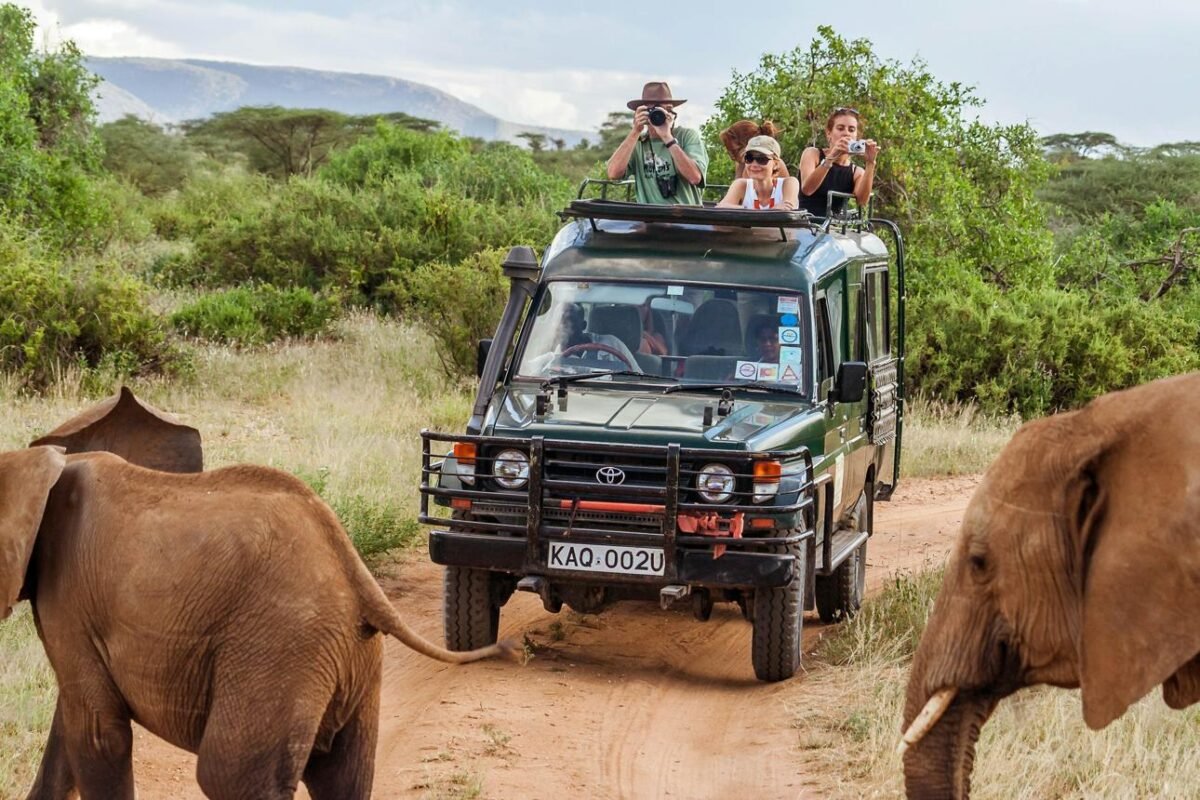
Kenya safari operators commonly use customised Toyota Land Cruisers and safari vans. Both can have raised roofs for wildlife viewing.
However, seating layouts and available space vary between vehicles.
Private Land Cruiser safari vehicles
A customised 4×4 Land Cruiser is a popular choice for private wildlife safaris.
Its raised roof allows passengers to observe animals while standing safely inside the vehicle.
Additionally, four-wheel drive can help when roads become muddy.
A private vehicle gives couples or small groups more room to move between viewing positions.
However, exclusivity does not automatically guarantee a window seat for every passenger.
At Zamunda Travels, we recommend confirming the actual seating layout before accepting a quotation.
Shared safari vehicles
Shared safari vehicles may carry six or seven passengers, depending on their configuration.
When all seats are occupied, passengers must coordinate their movements around the viewing roof.
For example, several travellers may want to photograph a leopard from the same side.
Consequently, some passengers may need to wait or change positions.
Before booking, ask about the maximum passenger number and luggage allowance.
Which safari vehicle is better for photography?
A private vehicle is usually more convenient for serious wildlife photography.
You can request longer stops when an animal offers an interesting photographic opportunity.
Furthermore, fewer passengers reduce competition for suitable camera positions.
However, photography still depends on animal behaviour, lighting, weather and guide decisions.
A shared safari can also work well for casual photographers using smartphones or compact cameras.
For photographers carrying large lenses, ask whether the vehicle has enough space for equipment.
Private vs Shared Safari Costs in Kenya
Cost is often the deciding factor when choosing a Kenya safari.
A shared safari spreads vehicle, fuel and driver-guide expenses across several passengers.
A private safari assigns those expenses to your booking group.
However, the price difference becomes smaller as your private group grows.
Why private safari prices vary
Several factors influence the cost of a private safari:
-
Number of travellers sharing the vehicle
-
Safari duration and driving distances
-
Accommodation category and meal arrangements
-
National park and conservancy entry fees
-
Vehicle type and fuel requirements
-
Travel season and optional activities
For example, a couple generally pays more per person for private transport than six friends sharing one vehicle.
However, each traveller still needs accommodation, meals and applicable park entry fees.
Therefore, a larger group does not reduce every part of the safari price.
Sample private vs shared safari budget
Consider a hypothetical transport budget for a four-day safari.
The following figures are mathematical examples, not current operator quotations.
| Cost calculation |
Shared safari |
Private safari |
| Example vehicle and guide allocation |
$800 total |
$800 total |
| Travellers sharing the cost |
6 |
2 |
| Transport cost per person |
$133.33 |
$400 |
| Accommodation |
Additional |
Additional |
| Park entry fees |
Additional |
Additional |
| Meals and activities |
Additional |
Additional |
In this example, six passengers divide the same transport cost. Therefore, each pays substantially less.
However, four private travellers would divide the $800 transport allocation into $200 each.
This illustrates why a private safari can become more competitive for larger groups.
Actual costs depend on your itinerary and the services included.
Park fees and hidden costs
Park entry fees can significantly affect the final safari price.
For example, the published 2026 Masai Mara National Reserve non-resident adult fee is $100 per day from January through June. It increases to $200 per day from July through December.
These fees apply per eligible visitor, regardless of whether the safari vehicle is private or shared.
Other possible expenses include conservancy fees, optional activities, tips and airport transfers.
Therefore, always request an itemised quotation before paying a deposit.
Rates change, so confirm current prices with Zamunda Travels.
If you are comparing several packages, Zamunda Travels can prepare a private safari quotation with clear inclusions and exclusions.
Safari Flexibility: Why Your Daily Schedule Matters
The difference between private and shared safaris becomes clear during game drives.
A private safari allows you to discuss your preferred schedule directly with your guide.
For example, you may request an early departure to look for predators during cooler morning hours.
Alternatively, you might prefer a relaxed breakfast before exploring the park.
Shared safaris generally follow fixed departure and return times.
Example: One day in the Masai Mara
Consider two travellers spending a full day in the Masai Mara.
Illustrative private safari schedule
| Time |
Activity |
| 6:30 AM |
Begin morning game drive |
| 9:00 AM |
Picnic breakfast at an approved location |
| 10:00 AM |
Continue wildlife viewing |
| 1:00 PM |
Lunch break |
| 2:30 PM |
Afternoon game drive |
| 5:30 PM |
Return towards accommodation |
The private schedule can change according to conditions and your preferences.
For example, you may spend additional time watching elephants near a water source.
A shared safari may follow similar hours. However, major schedule changes require agreement or operator approval.
Both options must respect park operating hours and applicable wildlife regulations.
Can private safaris change routes?
Private safaris provide greater flexibility during planning.
You can combine destinations such as the Masai Mara,
Lake Naivasha and Amboseli.
However, major route changes during the trip may increase fuel, accommodation and park costs.
Therefore, discuss your preferred destinations before confirming the itinerary.
Which Safari Is Better for Families, Couples and Solo Travellers?
Your travelling companions should influence your choice.
Different groups have different expectations regarding privacy, comfort and daily activities.
Kenya safari for families
Private safaris often suit families travelling with children.
Parents can plan breaks around meals, rest periods and the children’s interests.
Furthermore, the family can remain together without coordinating with unrelated passengers.
However, families should confirm child seating, suitable accommodation and age restrictions.
Couples and honeymoon travellers
Couples may prefer private safaris for privacy and a personalised experience.
They can choose quieter schedules and spend more time at preferred wildlife sightings.
However, couples with limited budgets can still enjoy shared safaris.
The right choice depends on how much they value flexibility.
Solo travellers and small groups
Shared safaris often provide better value for solo travellers.
They also offer opportunities to meet other visitors during the journey.
However, solo travellers should check whether a single-room supplement applies.
For groups of four or more, request both private and shared quotations.
A private vehicle may offer competitive value when several people divide transport expenses.
Best Time to Book a Private or Shared Safari in Kenya
Kenya offers wildlife viewing throughout the year.
However, seasonal conditions affect road access, accommodation prices and visitor numbers.
The Masai Mara receives considerable attention during the Great Migration period, generally from July to October.
However, migration movements and river crossings depend on natural conditions.
July to October
This period often brings strong wildlife viewing opportunities in the Masai Mara.
However, popular accommodation can fill quickly.
Therefore, travellers should arrange their preferred vehicle and lodging early.
January to March
These months often provide relatively dry conditions across several Kenyan safari regions.
They can suit travellers interested in wildlife photography and comfortable game drives.
However, weather conditions vary between destinations.
April to May
Long rains can affect road conditions in several national parks.
Therefore, a capable 4×4 vehicle becomes especially useful.
Some accommodation providers may offer seasonal rates, although availability varies.
Kenya Wildlife Service confirms that rainfall patterns and park conditions differ across the country.
Safety, Health and Common Booking Mistakes
Safety should remain a priority on every safari.
A private safari does not permit visitors to ignore wildlife regulations.
Kenya Wildlife Service advises travellers to remain inside vehicles except at designated locations. Visitors must also avoid feeding animals and driving off approved tracks.
Health and comfort considerations
Carry drinking water, sunscreen, insect repellent and any prescribed medication.
Additionally, pack layers for cool mornings and warmer afternoons.
Travellers with mobility concerns should ask about vehicle entry height and suitable seating.
For longer journeys, discuss rest stops and comfort requirements before departure.
Common mistakes to avoid
Some travellers choose the cheapest package without checking what it includes.
Others assume every private safari provides a luxury vehicle or unlimited game drives.
Avoid these mistakes by checking:
-
-
Vehicle type and seating arrangement
-
Accommodation names and room category
-
Included park and conservancy fees
-
Game drive duration and departure times
-
Luggage limits and airport transfers
-
Cancellation and refund conditions
Furthermore, ask whether your guide remains with your group throughout the journey.
How to Choose the Right Kenya Safari with Zamunda Travels
Start by deciding which experience matters most.
If your main goal is saving money, a shared safari may be suitable.
However, if you value privacy, flexible schedules and photography, consider a private safari.
At Zamunda Travels, we recommend comparing the complete itinerary rather than the headline price alone.
For example, a cheaper package may include fewer game drives or accommodation farther from the park entrance.
Therefore, two safaris with similar prices may deliver different experiences.
Our team can help you plan a Kenya safari covering destinations such as the Masai Mara, Lake Naivasha and Amboseli.
We can also discuss how to
combine Kenya with Uganda or Rwanda for a longer East African journey.
Conclusion: Private or Shared Safari in Kenya?
Both safari styles offer opportunities to see Kenya’s wildlife.
A shared safari can reduce costs and introduce you to fellow travellers. Meanwhile, a private safari provides greater control over vehicle space, game drives and daily schedules.
The best choice depends on your budget, group size and travel priorities.
Plan your Kenya safari with Zamunda Travels. Share your dates, preferred destinations and number of travellers. We can help you compare suitable arrangements and prepare a personalised quotation.
Visit
Zamunda Travels or contact us at info@zamundatravels.com. You can also reach us on WhatsApp at +256 704 705 606.
Frequently Asked Questions About Private and Shared Safaris in Kenya
1. Is a private safari in Kenya worth the extra cost?
Yes, a private safari can be worth the additional cost if you value privacy, flexibility and comfortable vehicle space. It is particularly useful for families and wildlife photographers. However, travellers with smaller budgets may find shared safaris more practical. Compare the complete itinerary before deciding.
2. What is the difference between a group and a private safari in Kenya?
A private safari provides a dedicated vehicle and driver-guide for your booking group. A shared safari combines travellers in one vehicle on a scheduled itinerary. Private safaris generally offer more flexibility. However, shared safaris often reduce transport costs because several passengers divide the expenses.
3. How much does a group joining safari cost in Kenya?
Group joining safari prices depend on the destination, duration, accommodation and travel season. Park fees can also change the total considerably. Therefore, there is no single price for every Kenya group safari. Request a detailed quotation showing transport, accommodation, meals, park fees and optional activities.
4. Can solo travellers join a shared safari in Kenya?
Yes, many Kenya safari operators offer shared departures suitable for solo travellers. You can reserve an individual seat and travel with other visitors. However, departure dates and group sizes vary. You should also confirm room-sharing arrangements, single-room supplements and the maximum number of passengers before booking.
5. Are park fees included in Kenya safari packages?
Not always. Some Kenya safari packages include national park entry fees, while others list them separately. For example, Masai Mara fees vary by season and visitor category. Therefore, ask for an itemised quotation. Confirm the number of park-entry days and whether conservancy fees are included.