Pangolin Tracking in Buhoma
April 30, 2026
Why Do Birds Have Feathers? Understanding Nature’s Perfect Design
April 30, 2026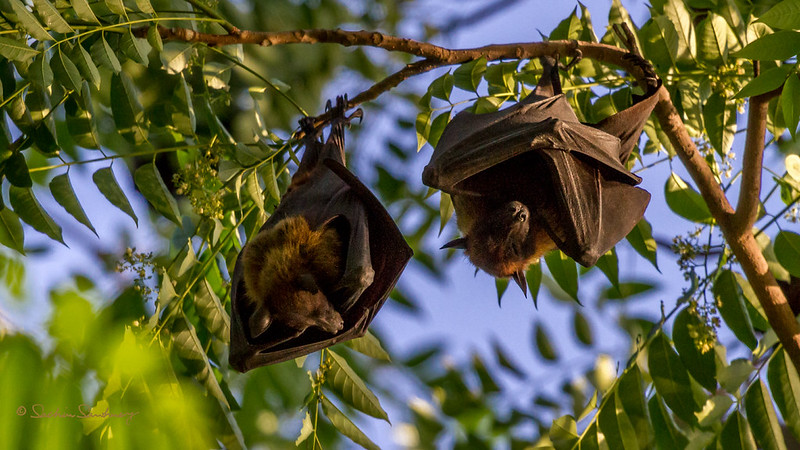
Understanding the Truth
The question “Is it true bats are the only mammals that fly?” often sparks curiosity among wildlife enthusiasts and travelers alike. The simple and scientifically accurate answer is yes, bats are the only mammals capable of true, sustained flight. Unlike other animals that glide through the air, bats possess a unique anatomical structure that allows powered flight, similar to birds. Their wings are not feathers but thin membranes of skin stretched over elongated finger bones, which gives them remarkable control and agility in the air. When you travel with Zamunda Travels to explore Uganda’s rich ecosystems, spotting bats in action offers a fascinating glimpse into one of nature’s most specialized adaptations.
Is It True Bats Are the Only Mammals That Fly or Do Others Glide?
While bats dominate the skies among mammals, a few other species come close but they do not truly fly. Animals such as flying squirrels, colugos, and sugar gliders can glide from tree to tree using flaps of skin called patagia. However, gliding differs significantly from powered flight. These animals rely on gravity and height to move through the air, while bats actively flap their wings to generate lift and thrust. This distinction confirms why the statement “Is it true bats are the only mammals that fly” remains scientifically valid. During forest excursions arranged by Zamunda Travels, especially in tropical regions, you may observe these gliding mammals alongside bats, offering a clear comparison of their movement styles.
How Bats Achieve True Flight in the Animal Kingdom
To understand why bats stand alone, it helps to examine their flight mechanics. Bats have highly flexible wings that allow them to change shape mid-flight, making them incredibly maneuverable. Their muscles generate the power needed for continuous flapping, while their lightweight skeleton supports efficient movement. Moreover, bats use echolocation to navigate and hunt in the dark, emitting high-frequency sounds and interpreting the returning echoes. This combination of flight and navigation sets bats apart from all other mammals. When Zamunda Travels organizes night safaris in Uganda, travelers often witness this extraordinary behavior as bats dart through the night sky with precision.
Is It True Bats Are the Only Mammals That Fly in Evolutionary Terms?
From an evolutionary perspective, bats represent a unique branch of mammalian adaptation. Scientists believe that bats evolved flight independently, making them distinct from birds and insects. Their ability to fly likely developed as a survival advantage, allowing them to escape predators, access new food sources, and explore different habitats. This evolutionary success explains why bats are found across nearly every continent. The idea behind “Is it true bats are the only mammals that fly” becomes even more compelling when viewed through this lens, as no other mammal lineage has developed true flight in the same way.
Where to See Flying Mammals in Uganda with Zamunda Travels
Uganda offers excellent opportunities to observe bats in their natural habitats. Locations such as Maramagambo Forest and Kitum Cave host large bat colonies. These sites provide unforgettable experiences, especially during dusk when bats emerge in large numbers to feed. Zamunda Travels carefully plans guided tours to these areas, ensuring safe and informative encounters. Watching thousands of bats take flight at sunset reinforces the truth behind the question “Is it true bats are the only mammals that fly” in a dramatic and memorable way.
Why This Fact Matters for Nature Lovers and Travelers
Understanding that bats are the only true flying mammals deepens appreciation for biodiversity and evolution. It highlights how different species adapt to their environments in unique ways. For travelers, this knowledge enriches wildlife experiences and adds meaning to every encounter. Zamunda Travels encourages visitors to look beyond the surface and explore the science behind the wildlife they see. As a result, each journey becomes both educational and inspiring.