How Do Lions Communicate?
May 22, 2026
What Makes Murchison Falls Special?
May 22, 2026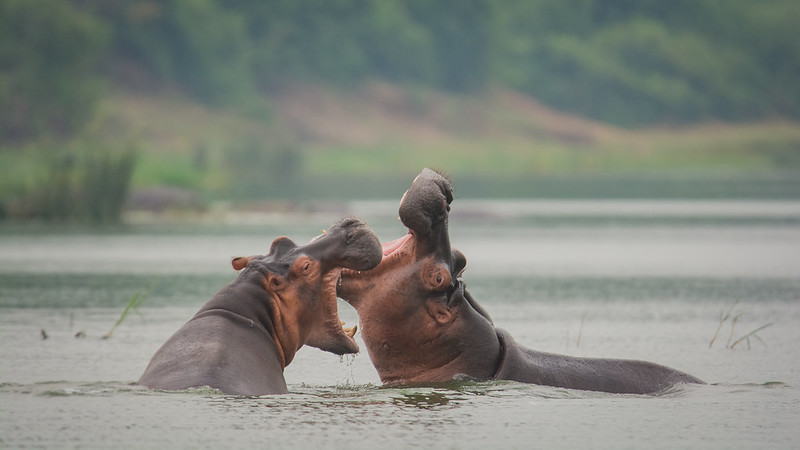
Hippos spend most of their day half hidden in rivers and lakes, looking calm and unbothered. To many safari travelers, they seem quiet compared to roaring lions or trumpeting elephants. Yet once you spend time watching them closely, you quickly realize hippos are constantly communicating. They grunt, roar, splash, stare, and even use scent to send messages to one another. Every sound and movement means something inside the group.
During safari trips with Zamunda Travels, many travelers become fascinated by hippos because their behavior feels unpredictable and surprisingly emotional. One minute they appear relaxed in the water, and the next minute they explode into loud grunts and aggressive splashes. These reactions are not random. Hippos use communication to protect territory, guide their young, avoid fights, and maintain order within their groups.
The more you learn about them, the more interesting they become. In fact, hippos have one of the most unique communication systems in the animal kingdom.
The River Never Stays Quiet
If you have ever stayed near a river filled with hippos, you already know how noisy they can be. Their deep grunts and loud bellows often continue throughout the night. Some sounds are soft and rhythmic, while others shake the entire riverbank. These calls help hippos stay connected, especially when visibility is low.
Most hippo groups contain females, calves, and one dominant male. Because they spend hours crowded together in water, they constantly communicate to maintain personal space and social order. A dominant bull usually produces the loudest sounds. His deep calls warn rival males not to enter his territory. Younger males often respond by keeping their distance to avoid conflict.
Mothers and calves communicate differently. Baby hippos make softer squealing sounds when searching for their mothers. In return, the mother responds with low grunts that help the calf stay close and safe. These gentle exchanges create strong bonds between them.
Guests traveling with Zamunda Travels often hear hippos becoming especially vocal after sunset. This is the time when they leave the water and begin grazing. The sounds echo across lakes and rivers, creating one of the most unforgettable experiences during an African safari.
Conversations Beneath the Surface
One of the most fascinating things about hippos is that they communicate both above and below water. Scientists discovered that hippos can send sounds through air and water at the same time. This ability helps them stay connected even when most of their bodies remain submerged.
Hippos spend nearly the entire day underwater because their skin dries out quickly in the sun. Even while resting beneath the surface, they continue interacting with nearby animals. Water carries vibrations efficiently, which allows hippos to detect movements and sounds from other members of the group.
Safari travelers sometimes notice hippos disappearing underwater while still producing loud noises. It almost feels as though the river itself is speaking. These underwater signals help hippos recognize one another and react quickly when danger approaches.
Seeing this behavior in person changes the way many people think about hippos. They stop looking like lazy river animals and start appearing far more intelligent and socially connected.
Body Language Says a Lot
Hippos do not rely only on sounds. Their body language also carries important meaning. One of the clearest warning signs is the famous open mouth display. Tourists often mistake it for yawning, but it is actually a serious threat signal.
When a male hippo opens his mouth wide, he exposes massive tusks designed for fighting. This display tells rivals to back away before a dangerous confrontation begins. In many cases, the warning works, and the weaker animal retreats immediately.
Hippos also communicate through splashing, charging, staring, and sudden movements in the water. Even small changes in posture can signal aggression or dominance. Experienced safari guides can often predict tension between hippos before visitors notice anything unusual.
Another strange but important behavior involves scent marking. Male hippos spread dung using rapid tail movements to scatter their scent around the riverbank. Although the behavior may look funny to tourists, it serves a serious purpose. The scent marks territory and sends clear messages to nearby males.
During guided safaris with Zamunda Travels, visitors often learn how to recognize these warning signs while safely observing hippos from a distance.
Life Inside the Group
Hippos live in social groups commonly called pods or bloats. Some groups contain only a few individuals, while others grow much larger in areas with enough water and food. Living closely together requires constant interaction and cooperation.
Female hippos usually stay near their calves and other females. They create strong social bonds and help protect younger animals within the group. Calves learn quickly by observing older hippos and responding to sounds made by adults.
Meanwhile, dominant males focus heavily on maintaining control of territory. Rivers and water pools become valuable spaces during dry seasons, so competition can become intense. Instead of fighting all the time, hippos rely on communication to reduce unnecessary conflict. Loud calls, body displays, and scent marking help establish boundaries without constant violence.
Watching these interactions in the wild gives travelers a deeper appreciation for how organized hippo society actually is. Beneath the rough appearance of these giant animals lies a surprisingly structured social system.
Why Hippos Fascinate Safari Travelers
Many safari visitors arrive expecting lions, elephants, or gorillas to be the most memorable animals they see. Surprisingly, hippos often become one of the highlights of the trip. Their personalities feel dramatic, unpredictable, and strangely human at times.
You can sit quietly beside a river for several minutes watching peaceful hippos resting in the water. Suddenly, two males begin roaring at each other while water splashes in every direction. A few moments later, the river becomes calm again. These rapid mood changes make hippos incredibly interesting to observe.
Photographers also love hippos because they create powerful wildlife moments, especially during sunrise and sunset. The combination of glowing light, misty water, and roaring hippos creates scenes that feel truly wild and untouched.
Safari experiences organized by Zamunda Travels give travelers the chance to observe these incredible animals safely while learning about their behavior from experienced local guides.
Conclusion
Hippos communicate in ways many people never expect. They use deep vocal sounds, underwater vibrations, body movements, and scent marking to interact with one another every day. These methods help them defend territory, protect calves, maintain social order, and avoid unnecessary fights.
The next time you see hippos resting quietly in a river, remember that an entire conversation may be happening beneath the surface. Their world is far more social and complex than it first appears.
For travelers planning an African safari, observing hippos in the wild becomes even more rewarding once you understand their behavior. With expert safari experiences offered by Zamunda Travels, visitors can enjoy close encounters with these remarkable river giants while discovering the hidden language that shapes their daily lives.