How Rwanda Became One of the Cleanest Countries in Africa
July 28, 2026
Black and White Colobus Monkey Trekking in Nyungwe: The Complete Guide
August 4, 2026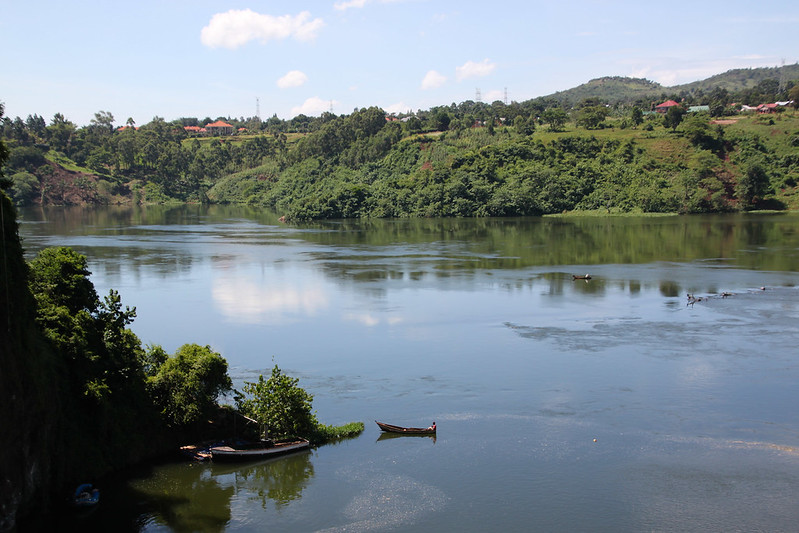
Few geographical questions spark as much passion as the true source of River Nile. Ask a guide in Jinja, and he will point confidently to the spot where Lake Victoria spills into the Victoria Nile. Ask a ranger in Nyungwe, and he will lead you to a quiet spring on the slopes of Mount Bigugu. Ask a villager near Rutovu in Burundi, and he will walk you to a small stone pyramid marking a trickle of water on Mount Kikizi. Each of these places holds real evidence, and each has earned its place in the story. At Zamunda Travels, we get this question constantly from curious explorers, so we decided to lay out the full picture in one place.
The debate is not new. Explorers, geographers, and cartographers have argued over the source of River Nile for more than 150 years, and the argument still has not fully settled. This blog breaks down the three leading claims, explains the science and history behind each one, and helps you decide which site belongs on your African bucket list. Whichever destination you choose, Zamunda Travels can get you there.
What Is the Source of River Nile, and Why Does It Spark Debate?
The Nile stretches roughly 6,650 kilometers from its furthest headwaters to the Mediterranean Sea, making it one of the longest rivers on Earth. Because so many streams and lakes feed into that final route, pinpointing a single starting point becomes genuinely difficult. Early explorers focused on Lake Victoria because it was the largest, most visible body of water feeding the river. Later researchers pushed further upstream, tracing the water back through smaller rivers, forests, and mountain springs. Each discovery moved the accepted source of River Nile a little further from Egypt and a little deeper into the heart of Africa.
Geographers generally define a river’s source as the most distant point from which water flows continuously into it. That definition sounds simple, yet applying it to the Nile is not simple at all. The river system draws from multiple tributaries, and measuring exact distances through dense forest and rugged terrain takes serious expedition work. This is precisely why three different countries can each defend a legitimate claim to the source of River Nile.
The Source of River Nile in Jinja, Uganda: Speke’s Historic Discovery
Most travel guides still point to Jinja, Uganda, as the source of River Nile. On August 3, 1858, British explorer John Hanning Speke stood at the northern shore of Lake Victoria and declared that he had found the river’s beginning. He named the lake after Queen Victoria and later returned in 1862 to confirm his theory at a set of cataracts he called Ripon Falls. A modest sign near Jinja still reads “The Source of R. Nile,” and the site remains one of Uganda’s most visited attractions.
How Lake Victoria Earned the Title of the Nile’s Birthplace
Speke’s claim triggered a bitter rivalry with his expedition partner, Richard Francis Burton, who favored Lake Tanganyika instead. The dispute grew so heated that the two men scheduled a public debate in England to settle it once and for all. Speke died in a hunting accident the day before that debate was due to take place, and his death left the argument unresolved for years. Eventually, the Royal Geographical Society accepted Lake Victoria’s outlet as the recognized source of River Nile, and Ripon Falls became a fixture in geography textbooks worldwide.
Why Modern Geographers Question Jinja as the True Source of River Nile
Today, many cartographers push back against the Jinja claim. Lake Victoria itself receives most of its water from the Kagera River, a large waterway entering from the lake’s western edge. If a river’s source must be its most distant feeding point, then Lake Victoria cannot be the true starting line because water reaches the lake from much further away. National Geographic and several other authorities now trace the Nile’s true headwaters beyond Uganda entirely, deep into Rwanda and Burundi. Jinja still deserves its place on any Nile itinerary, though, because it marks the point where the river visibly begins its long northward journey.
Nyungwe National Park, Rwanda: The Furthest Source of River Nile
Rwanda’s Nyungwe National Park sits along the watershed that separates the Congo Basin from the Nile Basin, and several rivers on its eastern slopes feed directly into the Nile system. A 2006 expedition led by New Zealander Cam McLeay used GPS mapping to trace the Nile’s longest tributary back to a stream on Mount Bigugu, deep inside the Nyungwe rainforest. That stream feeds the Rukarara River, which merges with other tributaries to form the Nyabarongo River before eventually joining the Kagera and flowing into Lake Victoria.
Because this route adds hundreds of extra kilometers to the river’s total length, many researchers now consider Nyungwe the furthest source of River Nile rather than Jinja. National Geographic’s senior cartographer even weighed in, describing Rwanda as the primary source with Burundi holding a secondary claim. Visitors who trek Nyungwe’s Congo Nile Divide trail can walk to this remote spring themselves, guided by porters who know the three-day route between the Uwinka reception center and Gisovu in the north of the park.
Burundi’s Mount Kikizi: The Southernmost Source of River Nile
Long before McLeay’s expedition, a German explorer named Burkhart Waldecker traced a separate tributary to Mount Kikizi in Burundi’s Bururi Province. Waldecker had fled Nazi persecution and settled in Africa, where he spent four years tracking the Nile’s course backward from the Mediterranean. In 1934, he identified a small spring feeding the Ruvyironza River as the river’s southernmost point of origin, and he later built a stone pyramid to mark the discovery. The monument still carries a Latin inscription that translates to “the southernmost head of the Nile.”
From that Burundian spring, the Ruvyironza flows into the Ruvubu River, which then joins the Kagera before reaching Lake Victoria. Local guides near the town of Rutovu now lead travelers up the hillside to see the pyramid and the modest trickle of water beneath it. The site draws far fewer tourists than Jinja or Nyungwe, yet it holds a genuine claim as the southernmost source of River Nile.
Comparing the Three Claims to the Source of River Nile
Each destination measures the source of River Nile using a slightly different standard. Here is how the three claims stack up against each other:
- Jinja, Uganda marks the point where Lake Victoria’s water first becomes the Nile River, and it remains the most accessible and historically famous site.
- Nyungwe National Park, Rwanda holds the title of furthest source by total distance, based on GPS-verified tributary mapping completed in 2006.
- Mount Kikizi, Burundi represents the southernmost source, identified decades earlier through Waldecker’s painstaking fieldwork.
None of these claims cancels out the others. Instead, they describe different scientific criteria applied to the same enormous river system. Travelers who want the complete picture often visit more than one site, and Zamunda Travels builds custom itineraries that combine two or even three of these locations in a single East African journey.
Explore the Source of River Nile with Zamunda Travels
Choosing a single site does not need to be a difficult decision, because Zamunda Travels designs trips that let you judge the debate for yourself. A Uganda itinerary can pair Jinja’s white-water rafting and boat cruises with a visit to Murchison Falls National Park further downstream. A Rwanda extension can add chimpanzee tracking and the Nyungwe canopy walk before the hike to Mount Bigugu’s remote spring. For travelers chasing the full story, Zamunda Travels can also arrange a Burundi add-on to see Waldecker’s pyramid near Rutovu.
Every route our team plans balances comfort, safety, and authentic cultural encounters with local communities along the way. Our guides know the history behind each claim in detail, so you will leave with more than just photographs. You will leave with a genuine understanding of why the source of River Nile has puzzled explorers for over a century.
Does It Matter Where the Source of River Nile Really Is?
Perhaps the argument itself is the real attraction. The source of River Nile has drawn explorers, scientists, and curious travelers into some of Africa’s most beautiful landscapes, from the shores of Lake Victoria to the misty hills of Nyungwe and the quiet slopes of Mount Kikizi. Rather than picking a side, most visitors come away appreciating how these three destinations connect through one extraordinary river. Let +help you experience all three, and decide for yourself where this remarkable story truly begins.