The Source of River Nile: Why Uganda, Rwanda, and Burundi Each Stake a Claim
August 4, 2026
Activities to Do in Kibale National Park: The Ultimate Guide to Chimpanzee Trekking and Nature Adventures
August 4, 2026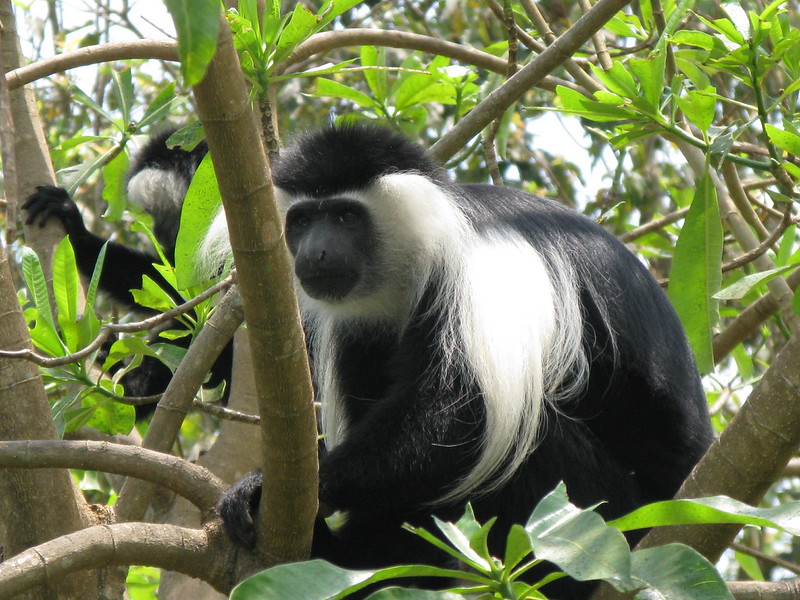
Colobus monkey trekking in Nyungwe ranks among the most rewarding primate encounters in East Africa, and it rarely gets the spotlight it deserves. Most travelers arrive in Nyungwe Forest National Park chasing chimpanzee sightings, yet they leave talking about the colobus monkeys instead. Zamunda Travels builds this experience into nearly every Rwanda itinerary because nowhere else on the continent offers a comparable sight: hundreds of black and white primates moving together through one unbroken canopy. This guide walks through everything a traveler needs before booking, from the biology of the species to permit costs, so the trip can be planned with confidence.
What Makes Colobus Monkey Trekking in Nyungwe Special
Nyungwe Forest National Park sits in southwestern Rwanda and protects more than 1,000 square kilometers of ancient montane rainforest. Scientists believe this forest survived the last ice age, and that long, undisturbed history explains why the park now supports 13 primate species alongside 275 recorded bird species. Colobus monkey trekking in Nyungwe stands out within that list because it delivers something almost no other forest on earth can match: a “supergroup” behavior that researchers have documented nowhere else among wild primates. Visitors do not simply spot a few monkeys resting in the trees. They watch an entire moving community stretch across the canopy, branch by branch, as it forages for the day.
The park also functions as a major watershed. It straddles the ridge that separates the Congo River basin from the Nile River basin, so a single raindrop falling on one side of the trail eventually reaches a different ocean than a raindrop falling on the other side. Guides mention this fact often, and it adds a layer of geographic wonder to what is already a striking wildlife walk.
Meeting the Black and White Colobus Monkeys of Nyungwe Forest
The species at the center of this experience is the Rwenzori colobus, a subspecies of the Angolan colobus monkey. It carries a thick black coat, dramatic white shoulder fringes, and a pale mane that gives it a mohawk-like crest. A long, white-tufted tail trails behind it as it leaps, and that tail acts almost like a rudder during the long aerial jumps between branches. Unlike most other monkeys, colobus primates have little to no thumb. This unusual trait actually helps them, since it lets their four long fingers hook around branches quickly while they swing through the upper canopy.
Their diet sets them apart as well. Colobus monkeys eat mostly leaves, a food source that defeats many other primates because it is difficult to digest. A specialized, multi-chambered stomach allows them to break down tough plant fiber the way a cow processes grass. Consequently, they spend long stretches of the day sitting quietly in the treetops, chewing through leaves and seeds, which actually makes them easier to photograph than more active, restless primates.
The Rwenzori Colobus and Its Supergroups
Researchers have documented Nyungwe’s colobus troops gathering in numbers that exceed 500 individuals in a single supergroup. No other population of colobus monkeys anywhere in Africa forms groups on this scale. Scientists still debate why the Nyungwe population behaves this way, though most point to the unusually rich, unbroken canopy as the likely reason such large numbers can feed and move together without running short of food. For visitors, the payoff is simple: a wall of black and white fur moving through green leaves, branch after branch, as far as the eye can follow.
Two Habituated Troops for Colobus Monkey Trekking in Nyungwe
Nyungwe currently offers two habituated troops for guided visits, and Zamunda Travels helps clients choose between them based on fitness level and time available.
The Gisakura Group
The Gisakura troop numbers around 60 individuals and stays close to the forest edge near Gisakura, which is also where most park lodges are based. Because the terrain here is gentler and the walk shorter, this group suits families, older travelers, or anyone pairing the activity with a separate chimpanzee trek on the same day. Rangers run four separate treks daily, departing at 8:00 am, 10:00 am, 1:00 pm, and 3:00 pm, so the schedule works well for travelers who want flexibility.
The Uwinka Group
The Uwinka troop is the supergroup, with a population that regularly tops 500 individuals. Tracking this group takes longer and covers rougher terrain, since the sheer size of the troop forces it to keep moving in search of enough leaves to feed everyone. Only one departure runs each day, at 9:00 am, and travelers should expect a full morning in the forest. The reward, however, is the rare spectacle of Africa’s largest known colobus gathering moving overhead in a single, continuous procession.
How Zamunda Travels Plans Your Colobus Monkey Trekking in Nyungwe
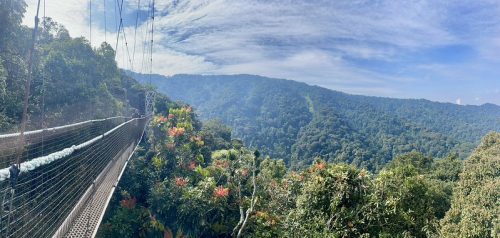
Zamunda Travels designs every Nyungwe itinerary around a client’s fitness level, interests, and time in Rwanda. For travelers focused purely on primates, our team typically pairs colobus trekking with chimpanzee tracking on a single multi-day loop through the park. For travelers who want a lighter pace, we schedule the shorter Gisakura trek alongside the Nyungwe canopy walk, a suspended bridge that hangs above the forest floor and offers a completely different perspective on the same ecosystem. Our guides handle permit bookings, ranger coordination, and lodge reservations in Gisakura or Uwinka, so clients arrive at the park gate with nothing left to arrange. Because Nyungwe sits five to six hours from Kigali by road, Zamunda Travels also builds in scenic stops and rest breaks along the route rather than rushing the drive.
Permit Costs and Practical Trekking Information
Colobus monkey trekking permits are priced separately from chimpanzee permits and are considerably more affordable. Recent pricing places international visitor permits in the range of $40 to $100 per person, depending on the season and the specific troop booked, while East African Community residents and Rwandan citizens pay significantly reduced local rates. These figures shift periodically, so Zamunda Travels always confirms current Rwanda Development Board pricing before finalizing any booking. The permit fee covers park access and the presence of an experienced ranger guide, and it does not usually include the park entrance fee or an optional porter, who typically charges between $10 and $15 for the walk.
Once booked, visitors gather at a park reception center for a short briefing before setting out with their ranger. Trekking itself generally lasts between one and several hours depending on which troop is chosen, and guests are typically granted a full hour with the monkeys once the group is located. Sturdy hiking shoes, a rain jacket, and a reasonable level of fitness make the experience considerably more comfortable, since Nyungwe’s trails can turn muddy quickly after rainfall. Most operators, including Zamunda Travels, set a minimum age of 16 for participants.
Best Time and Tips for Colobus Monkey Trekking in Nyungwe
Nyungwe can be visited throughout the year, though the two dry seasons, from roughly June to September and again from December to February, offer the easiest underfoot conditions and the clearest forest visibility. Early morning departures generally produce calmer monkeys and softer light for photography, since the troops tend to feed actively before the midday heat sets in. Visitors should pack layered clothing, since temperatures in the forest shift quickly between misty mornings and warm afternoons. Binoculars add real value here too, since colobus monkeys often perch high in the canopy rather than at eye level.
Patience matters more than speed on this trek. Rangers track the animals by sound and by recent feeding signs, and the group’s exact location can shift while a party is still walking toward it. Travelers who stay quiet, move steadily, and follow their guide’s pace tend to have the richest sightings, particularly with the larger and more mobile Uwinka supergroup.
Other Activities to Combine With Your Nyungwe Trek
Because colobus trekking rarely fills an entire day, most visitors extend their stay to include Nyungwe’s other signature activities. The canopy walkway offers sweeping views across the forest canopy from a series of suspended bridges. Chimpanzee trekking remains the park’s headline draw and pairs naturally with a colobus visit on a multi-day itinerary. Birders will also find Nyungwe rewarding, since the park hosts dozens of Albertine Rift endemic species alongside its primates. Zamunda Travels regularly builds three to five day Nyungwe circuits that combine several of these activities with comfortable lodge stays in Gisakura or near the Uwinka park headquarters.
Why Book Your Nyungwe Adventure With Zamunda Travels
Choosing the right operator changes how smoothly a trip through Nyungwe unfolds. Zamunda Travels has guided travelers through Rwanda’s forests for years, and our local relationships with park rangers and lodge owners let us secure permits quickly, even during busy travel seasons. We handle transport from Kigali, brief every client on what to expect from each troop, and adjust itineraries around weather and fitness level rather than forcing a fixed template. Whether a client wants a single morning of colobus monkey trekking in Nyungwe or a full week exploring the park’s forests, waterfalls, and canopy trails, Zamunda Travels builds the itinerary around what matters most to that traveler. Reach out to our team to start planning a Nyungwe adventure built around the black and white colobus monkeys and the forest they call home.