Distance from entebbe international Airport to lake mburo national park
August 17, 2026
Kigezi and Its Scenic Tourism Attractions
August 18, 2026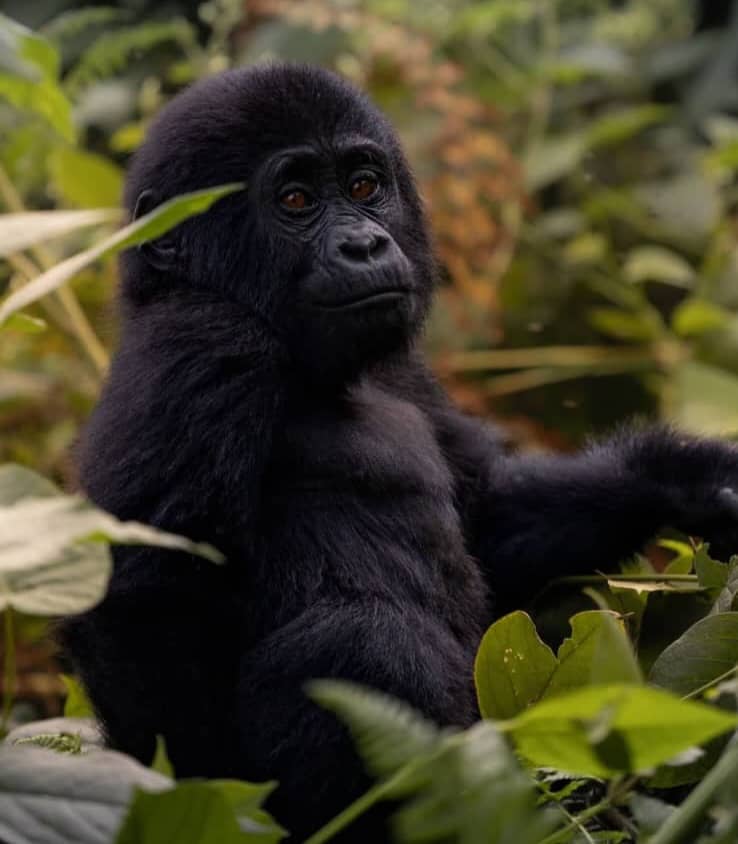
Western Uganda holds some of the richest tourist attractions in Western Uganda that any traveler can find on the African continent. The region stretches from the snow-capped Rwenzori Mountains to the shimmering crater lakes near Fort Portal, and it packs gorillas, chimpanzees, tree-climbing lions, and volcanic scenery into a single, compact circuit. Zamunda Travels has guided visitors through this corridor for years, and the team knows exactly which stops reward every kind of traveler, from first-time safari-goers to seasoned mountaineers. This guide walks you through the destinations that matter most, explains what makes each one special, and shows how Zamunda Travels turns the journey into a seamless adventure.
Why Western Uganda Tops Every Travel Bucket List
Travelers choose Western Uganda because the region rewards effort with variety. You can track mountain gorillas in the morning and soak your feet in a natural hot spring by evening. Moreover, the roads connecting these parks pass through tea plantations, fishing villages, and rolling green hills that make every transfer feel like part of the adventure. Zamunda Travels designs itineraries that respect this rhythm, so guests never feel rushed between destinations. As a result, first-time visitors and repeat safari goers both leave with a fuller picture of Uganda than a single national park could ever offer.
Queen Elizabeth National Park: The Crown Jewel Among Tourist Attractions in Western Uganda
Queen Elizabeth National Park sits at the heart of the region and welcomes more visitors than any other park in Uganda. The park covers 1,978 square kilometers between the Rwenzori Mountains and the Albertine Rift, and it protects an extraordinary mix of savanna, forest, wetland, and crater-lake terrain. It was first gazetted as Kazinga National Park in 1952, and Uganda renamed it in 1954 to honor a visit from Queen Elizabeth II. Today it holds roughly 95 mammal species and more than 600 recorded bird species, which makes it one of the most biodiverse protected areas on the continent.
The Kazinga Channel Boat Cruise
The Kazinga Channel forms the park’s most iconic feature. This 40-kilometer natural waterway links Lake Edward to Lake George, and its banks host massive pods of hippos alongside basking Nile crocodiles. Zamunda Travels schedules the boat cruise for late afternoon, since the light softens beautifully and elephants often gather at the shoreline to drink. Consequently, this single activity delivers more wildlife sightings per hour than almost any other experience in the park.
The Tree-Climbing Lions of Ishasha
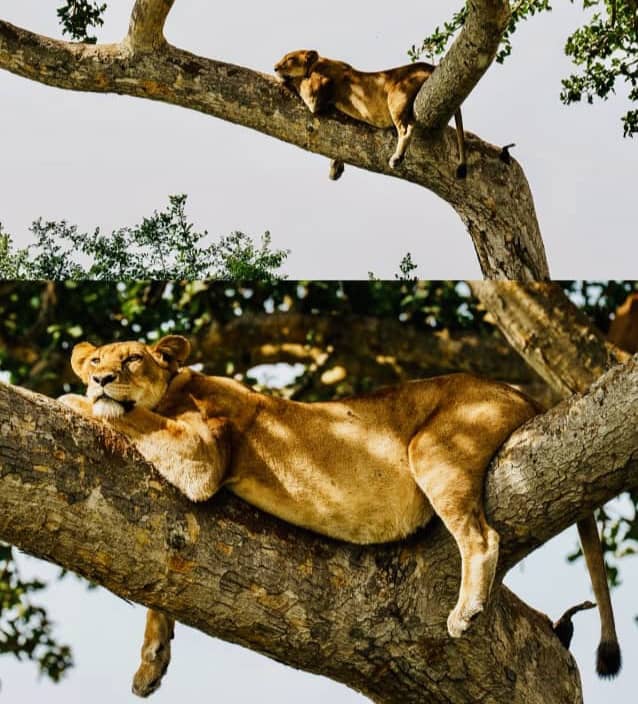
The Ishasha sector, in the park’s southern reaches, protects a rare population of lions that climb fig trees during the heat of the day. Researchers still debate why this behavior developed here and almost nowhere else in Africa. Guides from Zamunda Travels track fresh paw prints each morning, which greatly improves the odds of a sighting before the midday sun sends the cats up into the branches.
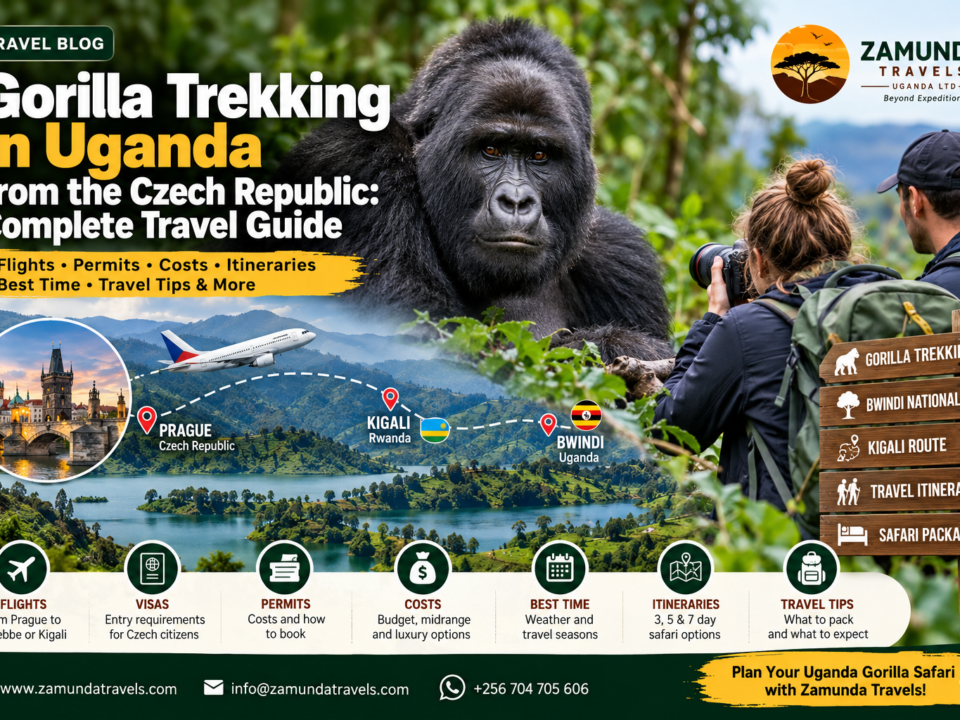
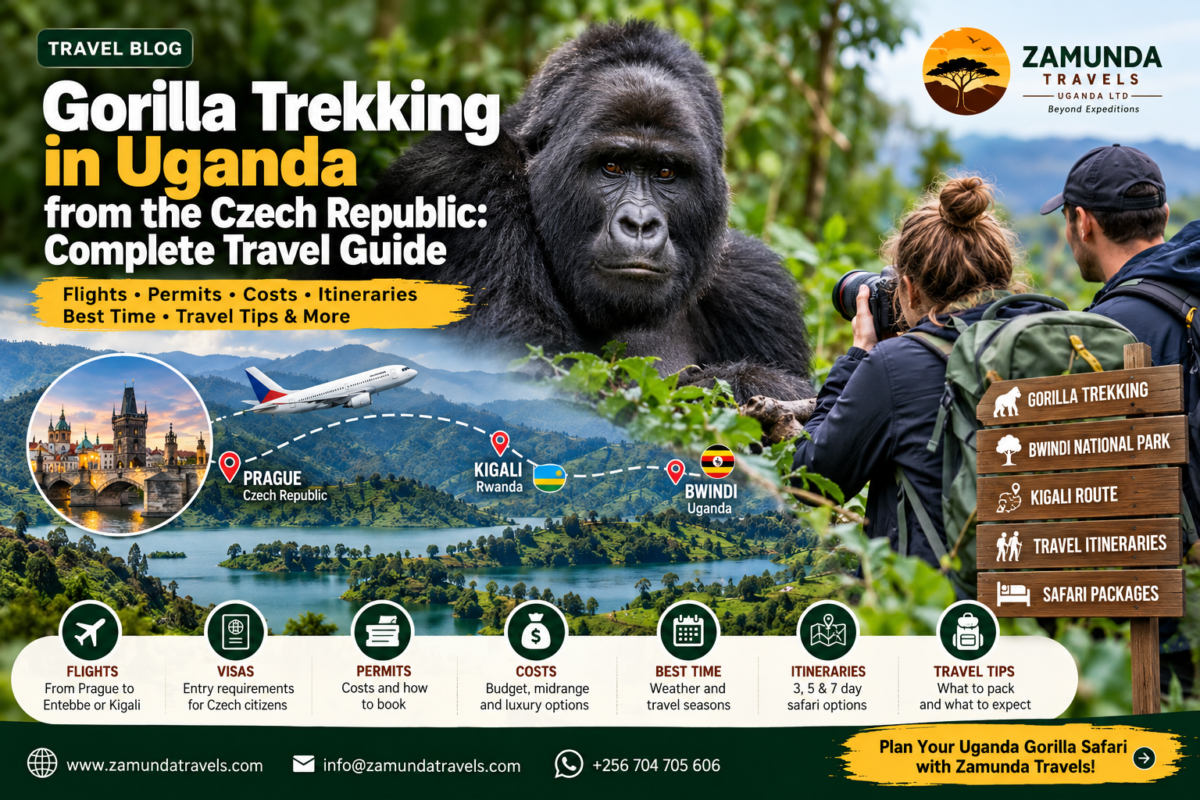
Bwindi Impenetrable National Park and Gorilla Trekking Adventures
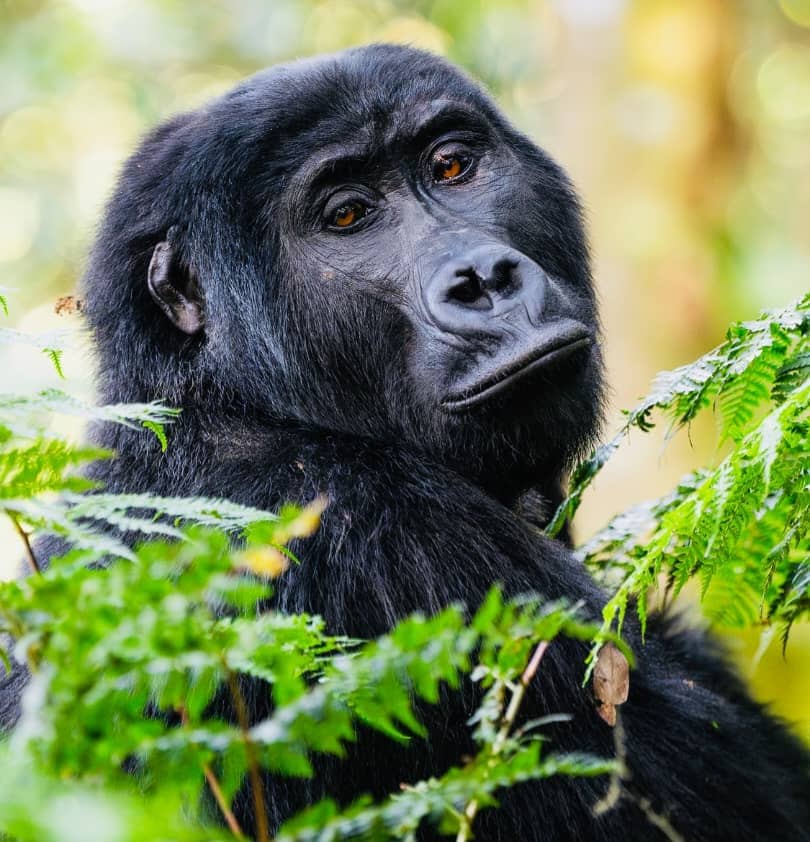
Bwindi Impenetrable National Park protects one of the oldest rainforests in Africa, and its dense canopy shelters roughly 459 mountain gorillas, which is close to half of the entire global population. UNESCO declared Bwindi a World Heritage Site in 1994, three years after Uganda gazetted it as a national park. The forest spans about 321 square kilometers along the edge of the Albertine Rift, with altitudes ranging from 1,160 meters to 2,607 meters, and this elevation change creates cool mornings even on the equator.
Trekkers hike through four main sectors; Buhoma, Ruhija, Rushaga, and Nkuringo and each sector offers a different trail difficulty and forest character. Zamunda Travels matches every client to the sector that fits their fitness level, since some treks demand only ninety minutes of walking while others stretch past four hours through steep, muddy terrain. Once trackers locate a habituated gorilla family, visitors receive a full hour in their presence, and that hour consistently ranks as the highlight of an entire Uganda safari.
Rwenzori Mountains: Africa’s Legendary Mountains of the Moon
The Rwenzori Mountains rise sharply from the Rift Valley floor along the border with the Democratic Republic of Congo, and unlike Kilimanjaro or Mount Elgon, tectonic forces built this range rather than volcanic activity. Margherita Peak, the highest point on Mount Stanley, reaches 5,109 meters and ranks as Africa’s third highest summit. Snow and glaciers still cling to the upper slopes, and early explorers linked these frozen peaks to Ptolemy’s ancient legend of the Mountains of the Moon.
Hikers typically need between five and nine days to reach Margherita Peak, depending on the chosen trail, and the terrain shifts dramatically along the way. Trekkers pass through dense tropical forest, then bamboo woodland, then otherworldly moorland dotted with giant lobelias, before finally reaching bare rock and glacier. Zamunda Travels partners with experienced local guides from the Bakonzo community, who bring generations of mountain knowledge to every expedition. Because the trails see far fewer visitors than East Africa’s other major peaks, hikers often enjoy near total solitude among some of the continent’s most dramatic scenery.
Kibale National Park: The Primate Capital of Africa
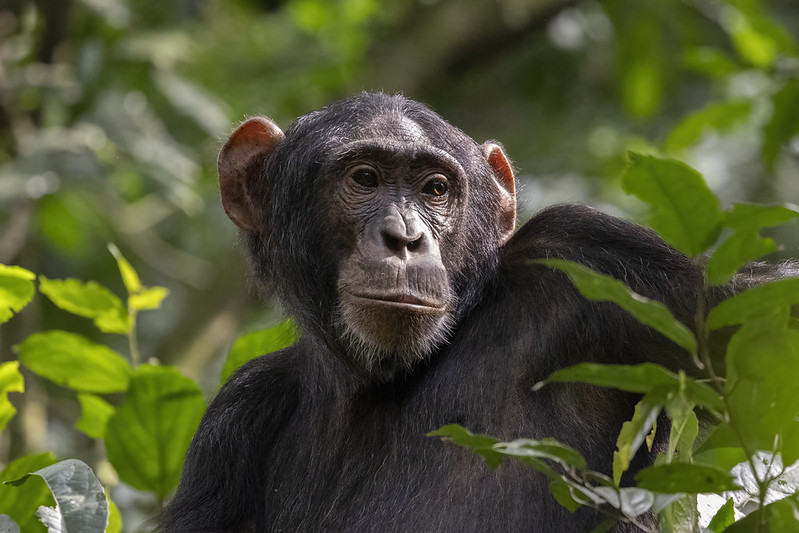
Kibale National Park protects roughly 795 square kilometers of moist evergreen rainforest near Fort Portal, and it earns its nickname as the primate capital of Africa honestly. Thirteen primate species share this single forest, and the park holds the largest chimpanzee population in Uganda, with researchers estimating over 1,500 individuals living across several communities. Trackers have followed these chimpanzee groups since 1993, so guides know their movement patterns extremely well.
Guided walks depart from the Kanyanchu Visitor Centre each morning, and most treks last between two and four hours before hikers locate a habituated community. Along the way, visitors regularly spot red colobus monkeys, grey cheeked mangabeys, and playful red tailed monkeys swinging through the canopy overhead. Zamunda Travels often pairs a Kibale visit with a stop at the nearby Bigodi Wetland Sanctuary, where local guides lead nature walks that support the surrounding community directly.
Lake Mburo National Park: Zebras Close to Kampala
Lake Mburo National Park sits closer to Kampala than any other savanna park in Uganda, which makes it a favorite first or last stop on many itineraries. The park covers a compact area of roughly 260 to 370 square kilometers, depending on the boundary survey used, yet it packs in an impressive range of habitats, including acacia woodland, rocky outcrops, and five interconnected lakes. Zebras thrive here in larger numbers than almost anywhere else in the country, and the park also protects Uganda’s only wild population of impala.
Because elephants never established themselves in Lake Mburo, the woodlands have grown thick and undisturbed, creating ideal habitat for leopards, elands, and more than 350 recorded bird species. Visitors can explore the park on foot, on horseback, or by mountain bike, and these activities feel refreshingly close to nature since few other Ugandan parks allow walking safaris among big game. Zamunda Travels frequently recommends a sunset boat cruise on Lake Mburo itself, where hippos surface beside papyrus reeds while fish eagles call overhead.
Semuliki National Park and the Sempaya Hot Springs
Semuliki National Park lies on the northern foothills of the Rwenzori Mountains, and it forms the easternmost extension of the great Ituri Forest that stretches into the Congo Basin. The park covers roughly 220 square kilometers, and its lowland location gives it a distinctly Central African character, with plant and bird species rarely found elsewhere in East Africa. Ornithologists travel here specifically to spot the Congo serpent eagle and the elusive Nkulengu rail among more than 440 recorded species.
The park’s signature attraction remains the Sempaya Hot Springs, a pair of geothermal pools known locally as the male and female springs. The female spring, Nyasimbi, shoots boiling water and steam several meters into the air, while the male spring, Bitende, forms a wide, bubbling pool that reaches temperatures near boiling point. Local guides demonstrate how to boil eggs and plantain directly in the naturally heated water, and Zamunda Travels includes this stop on any itinerary that already passes through Fort Portal, since the detour adds remarkable variety without adding much travel time.
Fort Portal Crater Lakes and Cultural Encounters
Fort Portal sits at the base of the Rwenzori Mountains and serves as the unofficial tourism capital of Western Uganda. Dozens of volcanic crater lakes surround the town, each one formed by ancient eruptions that punched craters into the surrounding hills. Some lakes, such as Lake Nyinambuga and Lake Kifuruka, sit within easy walking distance of comfortable lodges, and hikers can string several craters together on a single guided nature walk.
Local Batooro communities near the crater fields welcome visitors for cultural tours that include palace visits, traditional dance performances, and storytelling sessions with village elders. Zamunda Travels arranges these encounters directly with community leaders, which channels tourism income straight back into the villages that host every walk. Consequently, a Fort Portal stopover blends volcanic scenery with genuine cultural exchange in a way that few other regions in Uganda can match.
Family-Friendly Tourist Attractions in Western Uganda You Should Not Miss
Families traveling with children often worry that gorilla trekking and mountain hiking sit outside their reach, yet several tourist attractions in Western Uganda suit every age group comfortably. Lake Mburo’s gentle walking trails work well for young children, since the park holds no elephants and the terrain stays flat and open. Queen Elizabeth’s boat cruise offers guaranteed wildlife sightings without any strenuous walking, and the Fort Portal crater lakes provide short, scenic hikes that rarely tire out younger travelers.
Zamunda Travels builds family itineraries around these lower-intensity stops first, then adds more demanding activities like chimpanzee tracking once children show interest and stamina. Additionally, most lodges across the region offer family rooms and child-friendly meal options, which removes much of the logistical stress that can otherwise weigh down a multigenerational safari.
How Zamunda Travels Helps You Explore Tourist Attractions in Western Uganda
Planning a multi park route through Western Uganda involves more logistics than most travelers expect, since permits, road conditions, and park entry points all need careful sequencing. Zamunda Travels handles every one of these details, from securing gorilla and chimpanzee permits months in advance to arranging comfortable transfers between parks that sit hours apart on winding roads. The team also matches each traveler to lodges that fit their budget and pace, whether that means a rustic tented camp beside the Kazinga Channel or a boutique lodge overlooking a Fort Portal crater lake.
Because the team lives and works across this region year round, Zamunda Travels adjusts itineraries quickly when weather, wildlife movement, or road conditions shift. Therefore, travelers gain both the excitement of a well planned safari and the flexibility that only local expertise can provide. If you are ready to experience the very best tourist attractions in Western Uganda, Zamunda Travels can turn that list into a real itinerary within days.