Gorilla Trekking Rules
August 30, 2026
Volcano Hiking Rwanda
August 30, 2026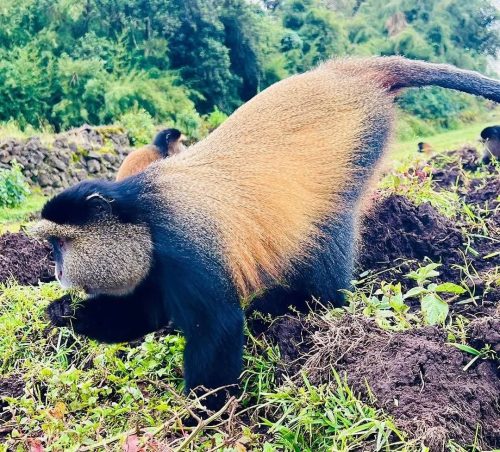
Golden monkey trekking ranks among the most rewarding wildlife encounters in East Africa, and Volcanoes National Park in northwestern Rwanda delivers this experience better than almost anywhere else on the continent. The park sits within the Virunga Mountains, a chain of eight volcanoes shared by Rwanda, Uganda, and the Democratic Republic of Congo. Dian Fossey built her famous gorilla research camp in these same slopes decades ago, and that conservation legacy still shapes how the park protects its wildlife today. While most visitors travel to Volcanoes National Park for mountain gorillas, the golden monkeys living in its bamboo forests offer an equally unforgettable adventure at a fraction of the cost. At Zamunda Travels, we build golden monkey trekking itineraries that let guests experience this rare primate up close, safely, and with expert local guidance every step of the way.
What Is Golden Monkey Trekking in Volcanoes National Park?
Golden monkey trekking involves following experienced park trackers and rangers into the bamboo zone of Volcanoes National Park to observe habituated troops of golden monkeys in their natural habitat. Unlike gorilla trekking, this activity moves at a livelier pace because the monkeys jump, chase each other, and swing through the bamboo almost constantly. Guides from the Rwanda Development Board lead every group, and they track the monkeys using knowledge built up over years of daily observation. Once your group reaches the troop, you spend roughly one hour watching, photographing, and learning about these animals from your guide. Zamunda Travels arranges every logistical detail of this outing, from permit booking to transport, so guests can focus purely on the experience itself.
Meet the Golden Monkey: Rwanda’s Rare Primate Star
The golden monkey, known scientifically as Cercopithecus kandti, stands out immediately because of the bright golden-orange patch that covers its back and flanks. Researchers once classified it as a subspecies of the blue monkey, and the two species still share many physical traits. However, the golden monkey’s distinctive coloring and playful temperament have earned it a devoted following among primate enthusiasts. These monkeys live in large, gregarious troops of 30 to 100 individuals, which makes group dynamics far more visible than during a typical gorilla encounter. Because troops move quickly and interact constantly, every trek feels different, and repeat visitors often say no two outings ever look the same.
Where Golden Monkeys Live and What They Eat
Golden monkeys occupy a narrow ecological niche within the Virunga Massif, and they depend heavily on the region’s bamboo forests for survival. Most troops stay within the bamboo zone of Yushania alpina, at altitudes between roughly 2,100 and 3,550 meters above sea level. Young bamboo shoots and leaves make up the bulk of their diet, particularly during the rainy seasons from March to May and October to November, when fresh shoots emerge in abundance. Beyond bamboo, the monkeys also feed on fruit from more than one hundred plant species, along with flowers, insect larvae, and the occasional insect. This dietary flexibility helps the population adapt when bamboo growth slows during drier months, and it also explains why sightings can shift slightly depending on the season you choose for your visit.
Why the Golden Monkey Is an Endangered Species
Conservationists currently classify the golden monkey as endangered on the IUCN Red List, largely because its habitat has shrunk to just two isolated forest fragments in Central Africa. According to the Regional Golden Monkey Conservation Action Plan for 2023 to 2028, Volcanoes National Park holds the largest surviving population, estimated between 4,165 and 5,088 individuals. Smaller populations survive in Uganda’s Mgahinga Gorilla National Park and in Rwanda’s Gishwati-Mukura National Park, though neither comes close to matching the numbers found in Volcanoes. Habitat loss, forest fragmentation, and historical conflict across the Virunga region have all contributed to this decline. Tourism revenue from golden monkey trekking now funds much of the conservation work protecting these remaining populations, so every permit purchased through Zamunda Travels contributes directly to their survival.
How Golden Monkey Trekking Works, Step by Step
A golden monkey trekking day in Volcanoes National Park follows a clear and well-organized routine designed by park authorities. Guests first gather at the park headquarters in Kinigi, usually between 7:00 and 7:30 in the morning, for a short briefing about safety guidelines and trekking etiquette. Rangers then assign each group to one of the two habituated troops currently monitored in the park. From there, the actual hike can last anywhere from thirty minutes to several hours, depending entirely on where the monkeys happen to be feeding that day. Once your group locates the troop, you receive a full hour to observe, photograph, and enjoy their acrobatic antics before heading back to the trailhead.
Permit Costs and Booking Through Zamunda Travels
Rwanda currently prices golden monkey trekking permits at 100 US dollars per person for foreign visitors, while Rwandan citizens pay a discounted rate of roughly 20 US dollars. This pricing makes golden monkey trekking significantly more accessible than gorilla trekking, which costs 1,500 US dollars per permit. Unlike gorilla permits, which limit each group to eight trekkers, golden monkey permits carry no strict group size limit, so families and larger travel groups can join together comfortably. Zamunda Travels handles every permit reservation directly with the Rwanda Development Board, and we strongly recommend booking several weeks ahead during peak travel months. Many of our clients choose to pair this experience with a separate gorilla trek later in their itinerary, and our team schedules both activities on different days to keep the pace comfortable.
A Typical Morning on the Golden Monkey Trek
Once the briefing ends, your Zamunda Travels guide drives the group a short distance from park headquarters to the trailhead nearest the assigned troop. The terrain through the bamboo forest stays relatively gentle compared to gorilla trekking routes higher up the volcano slopes, which makes this outing suitable for a wider range of fitness levels. As you move deeper into the bamboo, your guide points out fresh feeding signs, droppings, and broken shoots that hint at the troop’s recent movements. Trackers who left camp earlier that morning radio ahead once they locate the monkeys, and your guide then leads the group toward that exact spot. From that moment forward, the golden monkeys largely ignore human visitors, since years of careful habituation have made them comfortable around quiet observers.
Best Time for Golden Monkey Trekking in Rwanda
Travelers can enjoy golden monkey trekking throughout the year, since Volcanoes National Park keeps this activity open in every season. That said, the two dry seasons, running from June through September and again from December through February, offer the easiest hiking conditions and the driest trails. Meanwhile, the rainy months between March and May, as well as October and November, bring fresh bamboo shoots that draw monkeys closer to the forest edge, which often shortens the hike considerably. Consequently, many experienced guides consider the rainy season an underrated window for this activity, even though most tourists still prefer drier weather for comfort. Zamunda Travels can advise on the best timing based on your broader Rwanda itinerary, including gorilla trekking dates and flight availability into Kigali.
Golden Monkey Trekking vs Gorilla Trekking: What’s the Difference?
Many travelers wonder whether to prioritize gorilla trekking, golden monkey trekking, or both during their time in Rwanda, and the answer usually comes down to budget, energy levels, and personal interest. Gorilla trekking offers a slower, more intimate encounter with a family of enormous, calm primates, but it comes with a steep 1,500 dollar permit fee and a strict eight person group limit. Golden monkey trekking, on the other hand, costs just 100 dollars, imposes no firm group size restriction, and rewards visitors with far more constant movement and playful behavior to watch. Furthermore, the hiking terrain for golden monkeys tends to sit lower on the volcano slopes, so the physical demands stay lighter overall. Because the two experiences complement rather than compete with each other, Zamunda Travels routinely builds itineraries that include both activities across separate days.
Where to Stay Near Volcanoes National Park
Kinigi, the small town serving as the gateway to Volcanoes National Park, offers accommodation across every budget category, from simple guesthouses to high end luxury lodges with volcano views. Budget-conscious travelers often choose community run guesthouses close to the park headquarters, which keep early morning transfers short and stress free. Mid-range lodges typically add extra comforts such as hot showers, hearty breakfasts, and cozy fireplaces that suit the cool mountain evenings. Luxury lodges in the area go further still, pairing spacious suites with private decks that face the volcanoes directly. Zamunda Travels partners with a range of properties across this spectrum, so we can match accommodation choices to each traveler’s budget and comfort expectations without compromising the overall trekking experience.
Packing List for a Golden Monkey Trekking Adventure
Preparing properly for a day in the bamboo forest makes the entire golden monkey trekking experience far more enjoyable. Sturdy, closed toe hiking boots protect your feet against uneven, sometimes muddy terrain, while long trousers and long sleeves guard against stinging nettles common along the trail. A light rain jacket earns its place in any daypack, since Rwanda’s mountain weather can shift quickly regardless of season. Binoculars and a camera with a reasonably fast shutter speed help capture the monkeys’ rapid movements, since they rarely sit still for long. Finally, a reusable water bottle, energy snacks, and gardening gloves for gripping bamboo stalks round out a practical packing list that Zamunda Travels shares with every guest ahead of their trek date.
Why Book Your Golden Monkey Trekking Trip with Zamunda Travels
Choosing the right operator shapes the entire quality of a golden monkey trekking experience, since permit logistics, guide quality, and transport reliability all depend on careful planning. Zamunda Travels handles every stage of the journey, starting with permit reservations through the Rwanda Development Board and continuing through airport transfers, lodge bookings, and daily transport to the park. Our guides bring years of local knowledge to every trek, and they take genuine pride in sharing accurate information about golden monkey behavior and conservation. Additionally, our team stays flexible enough to combine golden monkey trekking with gorilla trekking, cultural village visits, or extended safari circuits across Rwanda. Travelers who book through Zamunda Travels also gain access to responsive support throughout their trip, so any last-minute changes never derail the overall experience.
Final Thoughts on Golden Monkey Trekking in Volcanoes National Park
Golden monkey trekking gives travelers a rare chance to watch an endangered, strikingly colorful primate thrive within one of Africa’s most storied conservation landscapes. The activity costs less than most other primate encounters on the continent, yet it delivers a genuinely thrilling, high energy experience that appeals to families, photographers, and wildlife lovers alike. Every permit purchased supports ongoing conservation work protecting the roughly five thousand golden monkeys that remain in Volcanoes National Park today. Whether you plan to combine this outing with gorilla trekking or treat it as the highlight of a shorter Rwanda visit, careful planning makes all the difference. Reach out to Zamunda Travels today, and let our team build a golden monkey trekking itinerary that matches your schedule, budget, and sense of adventure.