Guide to Kazinga Channel Boat Cruise
September 4, 2026
Best Time for a Kazinga Channel Boat Cruise
September 4, 2026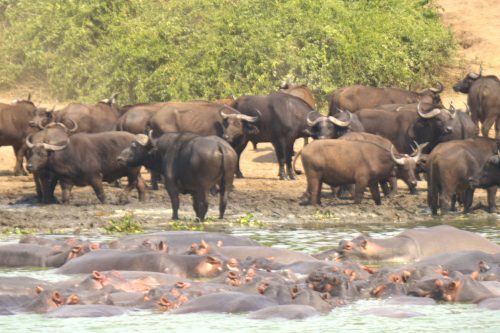
A Kazinga Channel boat cruise is one of the most rewarding wildlife experiences in Uganda. It is also one of the highlights of a safari in Queen Elizabeth National Park. The cruise takes visitors along the famous waterway that connects Lake George and Lake Edward.
The Kazinga Channel stretches for about 32 kilometers through the heart of the park. Its shores attract a remarkable variety of wildlife throughout the year. Hippos fill the water, elephants gather along the banks, and buffaloes often come down to drink and wallow.
For many visitors, the experience offers some of the closest wildlife views available in Queen Elizabeth National Park. Unlike a traditional game drive, the boat allows you to observe animals from a completely different perspective.
Zamunda Travels helps travelers plan memorable safaris that include this exceptional experience. In this guide, we explore the animals you may see, the birdlife along the channel, and what makes the cruise such an important part of a Queen Elizabeth National Park safari.
Hippopotamuses on a Kazinga Channel Boat Cruise
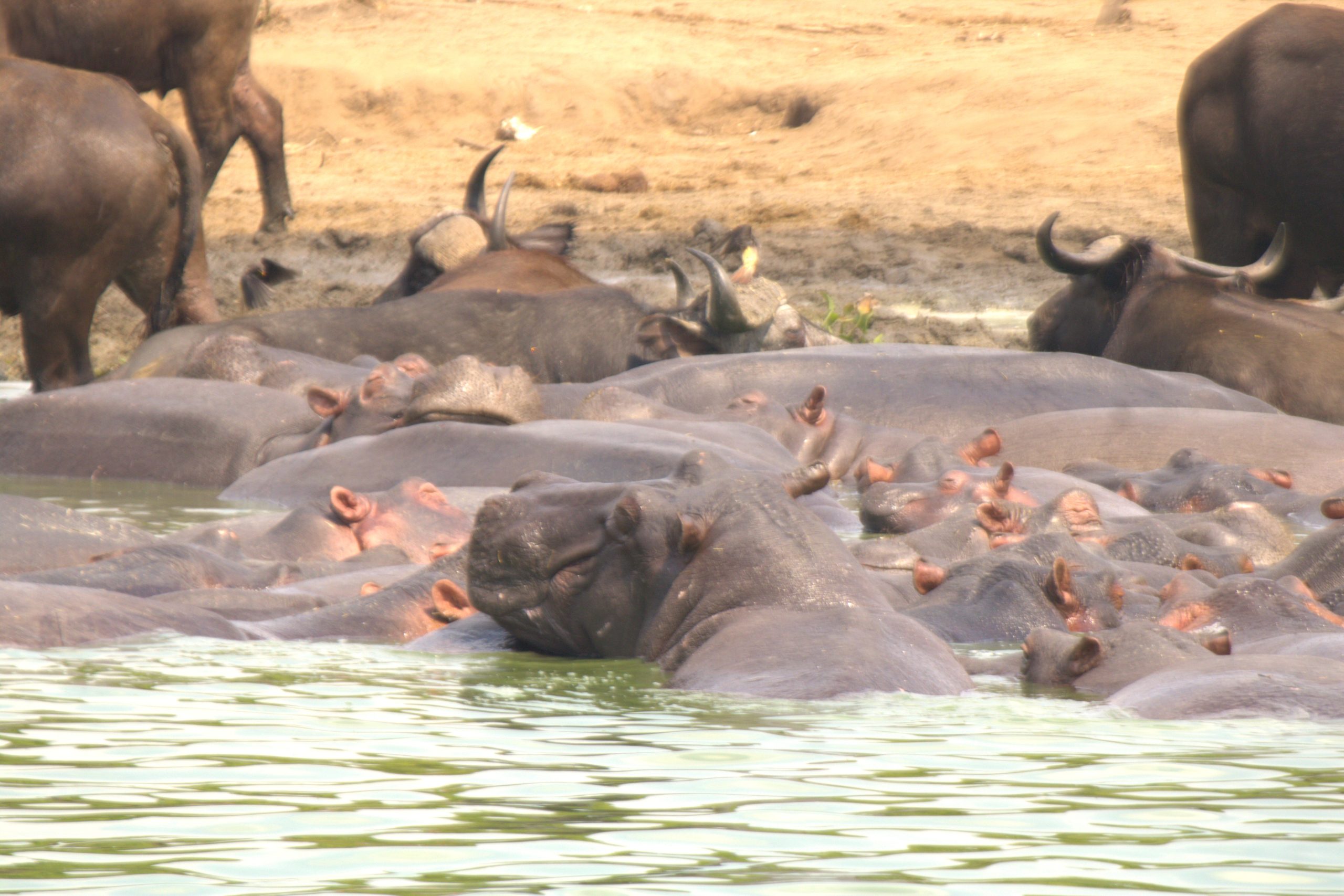
Hippos are among the most common and impressive animals seen during a Kazinga Channel boat cruise. Large groups spend much of the day resting in the water to escape the African heat.
As the boat moves along the channel, you may see dozens of hippos gathered in a single area. Their eyes, ears, and nostrils often remain above the surface while the rest of their enormous bodies stay underwater.
Hippos are fascinating animals to watch. At times, one may open its mouth wide in what looks like a dramatic yawn. However, this display can also communicate dominance or aggression.
Although hippos spend their days in the water, they usually leave the channel at night to feed on grass. For this reason, daytime cruises provide excellent opportunities to observe them resting in the shallows.
The sight of hippos surrounding the boat is one of the reasons why the Kazinga Channel has become such a famous safari attraction.
Nile Crocodiles Along the Channel
Nile crocodiles are another exciting sight during the cruise. These powerful reptiles often rest along the muddy banks or lie quietly near the water.
At first, they can be difficult to notice. Their rough skin blends surprisingly well with the surrounding environment. However, an experienced guide can often point them out before the boat gets closer.
Crocodiles frequently bask in the sun because they depend on external heat to regulate their body temperature. Therefore, sunny conditions can provide excellent opportunities for viewing them along the shoreline.
Some crocodiles remain completely still for long periods. Others slowly slide into the water as the boat approaches.
Seeing these ancient-looking reptiles in their natural habitat adds another exciting dimension to the experience.
Elephants and Buffaloes Along the Kazinga Channel
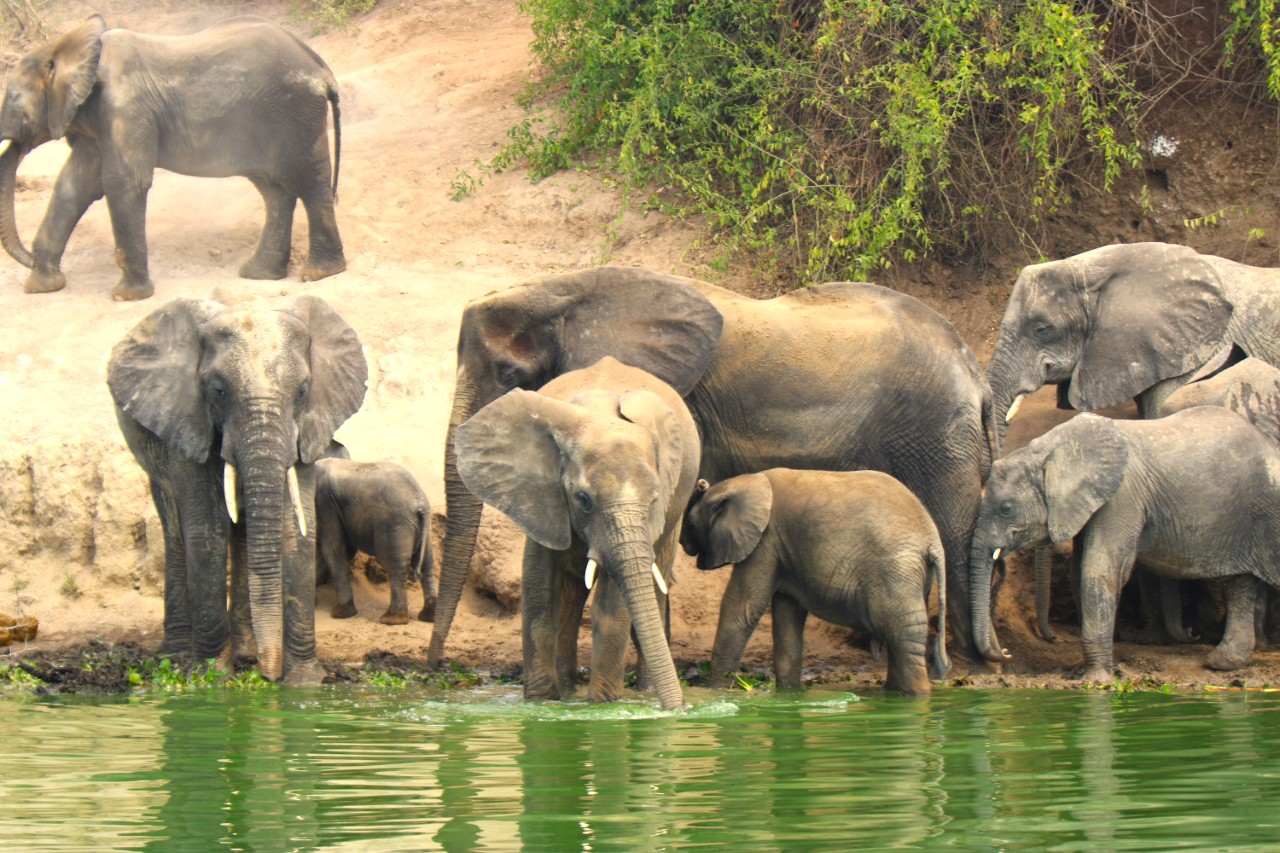
Elephants are among the most memorable animals you may encounter along the shores of the Kazinga Channel. Herds often visit the water to drink, bathe, and cool themselves.
Watching elephants interact near the water can be particularly rewarding. Young calves may play near their mothers, while adult elephants use their trunks to drink or spray water over their bodies.
Because elephants require large amounts of water, the channel remains an important resource for wildlife in the surrounding landscape. As a result, visitors often have a good chance of seeing elephants near the shoreline.
Buffaloes also gather around the channel. Large herds may come down to drink, graze, or wallow in muddy areas.
Their large bodies and distinctive curved horns make them easy to recognize. Sometimes, elephants and buffaloes can even be seen using the same section of shoreline.
These encounters make the cruise an excellent complement to a traditional game drive.
Antelopes, Warthogs, and Other Grazers
The Kazinga Channel is not only home to large animals. Several smaller mammals also live along its shores.
Visitors may spot Uganda kob grazing in open areas near the channel. Waterbucks are also common in suitable habitats around Queen Elizabeth National Park.
Warthogs provide another entertaining sight. They often move through the grass in small family groups. When running, they typically hold their tails upright, making them easy to recognize.
Monitor lizards may also appear along the banks. These reptiles sometimes rest in the sun before slipping quietly into the water.
Together, these animals add variety to every cruise. They also show how a permanent water source can support a wide range of wildlife.
Can You See Predators Near the Kazinga Channel?
Predator sightings during a boat cruise are possible, but they are not guaranteed. Lions, leopards, and spotted hyenas live within Queen Elizabeth National Park, although they are generally easier to search for during a game drive.
Occasionally, a predator may approach the water to drink. However, such sightings are usually brief and unpredictable.
The nearby Kasenyi Plains are particularly well known for wildlife viewing and lion sightings. Therefore, combining a boat cruise with a game drive can improve your overall safari experience.
A boat cruise gives you excellent opportunities to see animals that depend heavily on water. A game drive, on the other hand, can take you deeper into the grasslands where predators are more active.
For this reason, many travelers choose to combine both activities during their stay in Queen Elizabeth National Park.
Birdwatching on a Kazinga Channel Boat Cruise
A Kazinga Channel boat cruise is also an excellent activity for birdwatchers. Queen Elizabeth National Park supports a rich diversity of birdlife because of its varied habitats.
The channel, surrounding wetlands, grasslands, and forests create ideal conditions for many bird species.
African fish eagles are among the birds visitors may see near the water. Their distinctive calls often add to the atmosphere of the cruise.
Kingfishers can also appear along the banks and reeds. Their quick movements and bright colors make them a favorite among photographers.
Pelicans, cormorants, herons, and several species of storks may also be seen during the journey. Waterbirds often gather in shallow areas where they search for food.
Bird sightings vary according to the season, weather, and location along the channel. Therefore, every cruise offers a slightly different experience.
Top Birds to Look for Along the Channel
Some of the birds you may encounter include:
- African fish eagle
- Pied kingfisher
- Malachite kingfisher
- Great white pelican
- Pink-backed pelican
- African openbill
- Yellow-billed stork
- Saddle-billed stork
- Various herons and egrets
- Cormorants
The African shoebill is a highly sought-after bird in Uganda. However, visitors should not expect it as a guaranteed sighting on a standard Kazinga Channel cruise.
Why Wildlife Gathers Along the Kazinga Channel
Water plays a vital role in the survival of wildlife in Queen Elizabeth National Park. The Kazinga Channel provides an important water source for animals living in the surrounding ecosystems.
As a result, many species regularly visit its shores.
Elephants come to drink and bathe. Buffaloes gather near the water and muddy areas. Hippos spend most of the day in the channel, while crocodiles hunt and rest along its edges.
Birds also depend on the waterway. Fish-eating birds search the channel for food, while wading birds explore the shallows.
This concentration of wildlife is what makes the cruise so special. Instead of driving across large areas in search of animals, visitors can often observe many species from the same boat.
The Best Time for a Kazinga Channel Boat Cruise
The Kazinga Channel can be visited throughout the year. However, wildlife activity and photography conditions can vary depending on the time of day and weather.
Morning and afternoon departures both offer rewarding experiences. The best option may depend on your itinerary and personal interests.
An afternoon cruise can provide beautiful light for photography as the day begins to cool. Meanwhile, morning conditions may offer fresh air and different patterns of wildlife activity.
Wildlife sightings can never be completely predicted. Nevertheless, the Kazinga Channel remains one of the most reliable places in Queen Elizabeth National Park to see hippos, buffaloes, elephants, crocodiles, and waterbirds.
Your safari guide can help you choose a suitable departure time based on your overall schedule.
How Long Does a Kazinga Channel Boat Cruise Take?
A Kazinga Channel boat cruise typically lasts around two hours, although schedules can vary depending on the operator and arrangements.
During the journey, the boat travels along sections of the channel where wildlife is frequently seen.
The experience moves at a relaxed pace, giving visitors enough time to observe animals and take photographs.
It is a good idea to carry a camera, binoculars, sunscreen, and drinking water. Lightweight clothing can also make the experience more comfortable.
If you enjoy photography, a camera with a zoom lens can help you capture birds and animals that remain farther away from the boat.
Planning Your Kazinga Channel Boat Cruise with Zamunda Travels
Planning a safari involves more than simply booking an activity. Transport, accommodation, park activities, and timing all need to work together.
Zamunda Travels can help organize your Queen Elizabeth National Park itinerary around your interests and available travel time.
For example, you can combine the boat cruise with a game drive through the Kasenyi Plains. You can also include other destinations in Uganda, depending on the length of your safari.
The cruise fits well into both short and longer Uganda safari itineraries. It is especially popular with wildlife photographers, birdwatchers, couples, families, and first-time safari travelers.
Accommodation near Mweya Peninsula and other areas of the park can also make it easier to enjoy the cruise without rushing.
By planning your activities carefully, you can experience the Kazinga Channel alongside the other major attractions of Queen Elizabeth National Park.
What Makes the Kazinga Channel Boat Cruise Special?
The Kazinga Channel offers a wildlife experience that differs from a traditional game drive. From the water, visitors can observe animals gathering naturally along the shoreline.
Hippos rest in large groups. Crocodiles bask along the banks. Elephants and buffaloes may approach the water, while birds fill the skies and reeds.
The scenery also adds to the experience. The channel sits within one of Uganda’s most diverse national parks, surrounded by savannah, wetlands, and distant landscapes.
For photographers, the cruise provides opportunities to capture wildlife at water level. For birdwatchers, it offers access to productive wetland habitats. Meanwhile, first-time safari travelers can enjoy the excitement of seeing several different species during one activity.
In conclusion, a Kazinga Channel boat cruise is one of the best wildlife experiences to include in a Queen Elizabeth National Park safari. The opportunity to see hippos, crocodiles, elephants, buffaloes, antelopes, reptiles, and a wide variety of birds makes the journey unforgettable. Although no wildlife sighting can ever be guaranteed, the channel consistently provides some of the most rewarding animal encounters in Uganda. With Zamunda Travels, you can combine the cruise with game drives, comfortable accommodation, and other safari experiences to create a complete and memorable journey through Queen Elizabeth National Park.