Mgahinga Gorilla Trekking Permit
September 28, 2026
How to Get to Mgahinga Gorilla National Park
September 28, 2026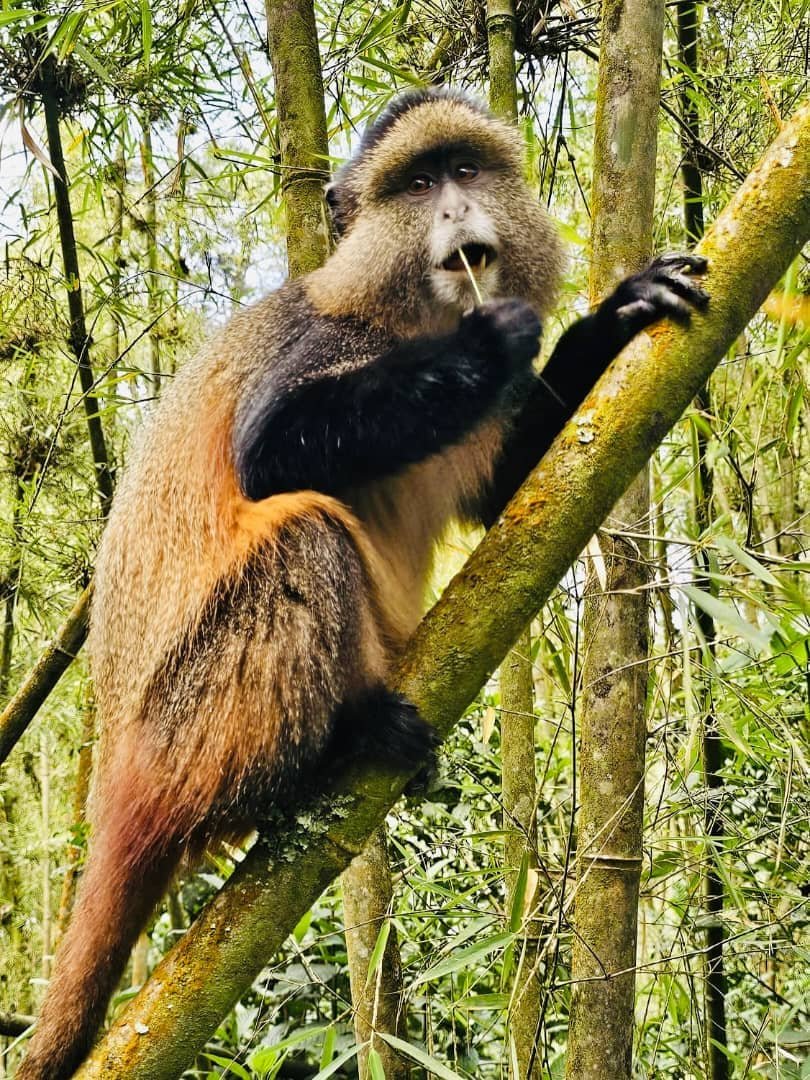
Why Golden Monkey Tracking in Mgahinga Gorilla National Park Deserves a Place on Your Itinerary
Golden monkey tracking in Mgahinga Gorilla National Park is one of the most exciting primate adventures in Uganda. Zamunda Travels takes guests to this small volcanic park in the far southwest of the country. There, bright orange-gold monkeys leap through misty bamboo forests. Moreover, this activity costs far less than gorilla trekking. It also suits travelers who want a lively wildlife encounter without a punishing hike. In this guide, Zamunda Travels explains the monkeys, the trail, the permits, the best seasons, and the packing list. Therefore, you can plan your trip with confidence.
Many travelers head to southwestern Uganda for mountain gorillas. However, the golden monkeys steal the show for many visitors. These primates are playful, fast, and endlessly curious. They race through the bamboo, chase one another along the branches, and pause only to strip a fresh shoot. As a result, every minute of the encounter feels full of action. In addition, Mgahinga stays quiet compared with busier parks. Small groups therefore enjoy a personal and unhurried experience with Zamunda Travels guides.
The activity also fits many budgets and fitness levels. The Uganda Wildlife Authority (UWA) charges a fraction of the gorilla permit price for this experience. Furthermore, the monkeys live on the lower slopes, so the walk is gentler than a gorilla trek. Families, couples, and solo travelers all find a place on the trail. Zamunda Travels often pairs the activity with a gorilla trek, a volcano hike, or a Batwa cultural visit to create a rounded southwestern itinerary.
Meet the Golden Monkeys of the Virunga Volcanoes
The golden monkey (Cercopithecus mitis kandti) is a subspecies of the blue monkey. It carries a bright orange-gold coat on its back, cheeks, and tail. In contrast, its limbs, crown, and tail tip are black. This striking pattern makes the animal easy to spot among the bamboo stems. Conservationists list the species as endangered because it lives only in the high bamboo forests of the Virunga Mountains. Uganda, Rwanda, and the Democratic Republic of the Congo share this range. Estimates place the population at a few thousand animals, and Mgahinga is the only place in Uganda where visitors can see them.
Golden monkeys live in large troops. They feed mainly on young bamboo shoots, leaves, and sap, and they also eat fruit when it is available. Because they move constantly, they rarely stay in one place. Therefore, trackers follow feeding signs such as freshly chewed bamboo. Guides read these clues with great skill. Moreover, careful habituation work has taught the monkeys to accept people. They carry on with their daily routine while visitors watch.
Inside Mgahinga Gorilla National Park
Mgahinga is Uganda’s smallest national park, covering just 33.7 square kilometers. Even so, it protects a remarkable stretch of the Virunga Conservation Area. This wider area also includes Volcanoes National Park in Rwanda and Virunga National Park in the Democratic Republic of the Congo. Authorities gazetted Mgahinga as a national park in 1991. Three extinct volcanoes dominate the landscape: Mount Muhabura at 4,127 meters, Mount Sabyinyo at 3,634 meters, and Mount Gahinga at 3,474 meters.
Vegetation changes with altitude, from farmland edges and montane woodland to bamboo, heath, and alpine moorland. Consequently, the park delivers dramatic scenery alongside its wildlife. Buffalo and forest elephants also roam the slopes. Leopards live here too, although visitors rarely see them.
How Golden Monkey Tracking Works on the Trail
Golden monkey tracking begins early at the park headquarters. Rangers welcome visitors, check permits, and deliver a briefing about the rules. Next, a guide leads your group up the slopes toward the bamboo zone. The park entrance sits at about 2,364 meters, while the monkeys usually live between 2,200 and 2,700 meters. Therefore, the walk includes some uphill sections, although it stays easier than most gorilla treks. Armed rangers accompany the group to protect visitors from buffalo or elephants. Meanwhile, trackers search for fresh feeding signs to locate the troop.
Once the group finds the monkeys, the guide sets the pace. Visitors then spend one hour with the troop. During that hour, you can photograph the animals, watch their feeding habits, and listen to their chatter. In addition, the guide explains the family structure and behavior of the troop. Because the monkeys move quickly, you should keep your camera ready and your steps calm. The whole outing usually lasts between two and four hours, depending on where the troop feeds that morning. Afterward, the group hikes back to the headquarters.
Golden Monkey Tracking Rules and Etiquette
UWA sets clear rules to protect the monkeys and the visitors. First, keep the distance your guide recommends and never touch the animals. Second, keep your voice low and avoid sudden movements. Third, do not eat or drink near the troop, because food attracts wildlife and can spread disease. Moreover, visitors with a cold, flu, or other contagious illness should tell Zamunda Travels before the trip, since primates catch human infections easily. Finally, carry all litter out of the park. These habits keep the animals healthy and the forest clean.
Golden Monkey Tracking Permits and Costs
A golden monkey tracking permit costs USD 60 for foreign non-residents, USD 50 for foreign residents, and UGX 40,000 for East African citizens. These figures come from the UWA tariff that operators quote for this activity. In addition, a park entry fee applies for each day in the park. It stands at USD 40, USD 30, or UGX 20,000 for the same three groups. Some operators include the entry fee in their permit price, while others list it separately. Therefore, Zamunda Travels confirms every cost in writing before you pay. UWA also revises its tariffs from time to time, so we verify the rates for your exact travel date.
Habituation Experience for Longer Encounters
Visitors who want more time can choose the golden monkey habituation experience. This option allows up to four hours with a troop alongside researchers and rangers. The permit costs USD 100 for foreign non-residents, USD 80 for foreign residents, and UGX 100,000 for East African citizens. Photographers and repeat visitors particularly enjoy the extra time. In addition, the experience offers insight into the daily work of conservation teams. In Uganda, only Mgahinga offers this experience.
How to Book Your Permit
Book early, especially for the peak months. You can buy permits directly from UWA or through a licensed tour operator. Zamunda Travels handles the reservation, transfers, and guide arrangements as part of your package. UWA also sets a minimum age for the activity, and sources quote different limits. Zamunda Travels therefore checks the current rule before booking children.
Best Time for Your Mgahinga Adventure
Mgahinga stays open all year, so you can track the monkeys in any month. However, the drier seasons make the trails easier. The main dry periods run from June to August and from December to February. During these months, paths are firmer, views of the volcanoes are clearer, and photos come out sharper. On the other hand, the wetter months bring mud, mist, and heavy showers. Nevertheless, the forest looks its greenest then, and fewer visitors share the park. Therefore, Zamunda Travels advises dry-season travel for comfort and green-season travel for a quieter experience.
What to Pack for the Trail
Good preparation makes the hike far more enjoyable. Pack sturdy waterproof hiking boots with firm grip, because the slopes turn slippery after rain. Bring a light rain jacket, long trousers, and long-sleeved shirts to protect your skin from nettles and insects. In addition, wear layers, since the highland air feels cool in the morning and warms up later. A hat, sunscreen, and sunglasses help at midday. Moreover, carry drinking water, energy snacks, and gloves for gripping vegetation. Finally, protect your camera and phone with a waterproof bag. Many visitors also find a walking stick helpful on steep sections.
Combine the Trek with Other Mgahinga Activities
Mgahinga offers more than monkeys, so a longer stay pays off. Visitors can trek the park’s habituated mountain gorilla family. However, the group sometimes crosses into neighboring countries, so availability changes. Hikers can also climb Mount Sabyinyo, Gahinga, or Muhabura, and each summit takes a full day. Furthermore, the Batwa Trail introduces the culture of the forest’s first inhabitants through stories, songs, and demonstrations. Nearby, Lake Mutanda offers canoe trips and scenic lodges. Zamunda Travels can build any of these activities into a tailored itinerary.
Why Travel with Zamunda Travels
Zamunda Travels designs Uganda safaris around the traveler, not the timetable. Our team arranges permits, transport, accommodation, and guides, so you can focus on the experience. Moreover, we adapt every itinerary to your budget, fitness, and interests. For example, we can combine golden monkey tracking with gorilla trekking, a volcano climb, or a cultural visit in a single trip. We also share clear advice on seasons, packing, and costs. Consequently, guests arrive prepared and leave with lasting memories.
Final Thoughts
Golden monkey tracking in Mgahinga Gorilla National Park delivers color, energy, and close encounters in one of Africa’s most striking landscapes. The trail is manageable, the permit is affordable, and the memories last long after the trip ends. Therefore, add this experience to your Uganda itinerary and let Zamunda Travels handle the details. Contact Zamunda Travels today to reserve your permit and start planning your adventure in the Virunga volcanoes.