Wildlife Projects in Uganda and Their Role in Conservation
August 16, 2026
Are Lions Lazy?
August 17, 2026
Uganda rainforest wildlife draws travelers from every corner of the globe, and for good reason. The country holds some of the last great tropical forests in East Africa. Each one shelters creatures found almost nowhere else on Earth. From misty mountain slopes to steamy lowland jungles, Uganda’s forests form a living mosaic of primates, birds, and rare plants. Zamunda Travels has guided countless visitors through these forests. The team consistently hears the same reaction from almost everyone who joins a trek. Nothing prepares a first time visitor for the sheer density of life inside a Ugandan rainforest. This guide explores the country’s most remarkable forests and introduces the animals that make them famous. It also explains how Zamunda Travels turns a rainforest visit into an unforgettable journey.
What Makes Uganda Rainforest Wildlife So Extraordinary
Uganda sits at a rare ecological crossroads. The country’s rainforests blend Central African, East African, and Albertine Rift species into one compact territory. Forest cover across Uganda now stands at roughly 12.6 percent of the national land area. That marks a steep drop from 24.1 percent in 1990. Even so, the surviving forests pack in extraordinary biodiversity. Conservationists count around 2.6 million hectares of remaining forest. Much of it sits inside protected reserves or national parks. This concentration explains why Uganda rainforest wildlife feels so dense compared with forests elsewhere in the region. Visitors frequently spot several primate species, dozens of bird species, and countless butterflies within a single morning walk. Zamunda Travels designs its rainforest itineraries around this diversity. The company pairs early starts with experienced local guides who know exactly where each species tends to appear. As a result, guests rarely leave a forest walk without a memorable sighting.
Bwindi Impenetrable Forest: Home of the Mountain Gorillas
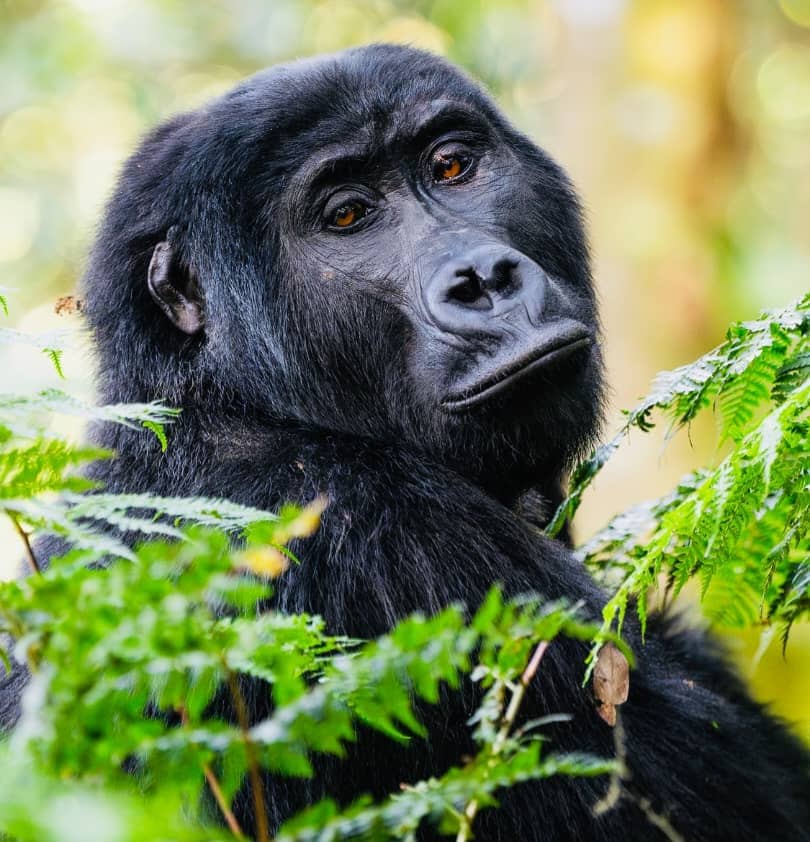
Bwindi Impenetrable National Park anchors most conversations about Uganda’s forests, and it earns that reputation. UNESCO recognizes Bwindi as a World Heritage Site because of its ancient, tangled canopy and rare species. The forest holds more than 400 plant species, roughly 350 bird species, and over 200 butterfly species. However, mountain gorillas remain the star attraction. Bwindi shelters close to half of the world’s remaining mountain gorillas. The Bwindi-Sarambwe population reached an estimated 459 individuals during the most recent full census. Gorillas also live across the Virunga Massif in Rwanda and the Democratic Republic of Congo. Combined, the global mountain gorilla population now stands at roughly 1,063 individuals. Conservationists launched a fresh census in 2025 to update these figures further. Mountain gorillas share about 98 percent of their DNA with humans, and their expressions often feel startlingly familiar. Thanks to decades of dedicated conservation work, the species moved from “Critically Endangered” to “Endangered” on the IUCN Red List in 2018. That shift stands as one of Africa’s clearest conservation success stories.
Trekking Through Bwindi with Zamunda Travels
Gorilla trekking requires stamina, patience, and a good guide, and Zamunda Travels supplies all three. Treks begin early, and rangers track a habituated gorilla family through dense vegetation before guests spend a full hour observing them. Some hikes last two hours; others stretch beyond six, depending on where the gorillas settled overnight. Because permits are limited, Zamunda Travels books gorilla permits well in advance for every client. This careful planning protects both the animals and the overall visitor experience.
Kibale Forest: The Primate Capital of Africa
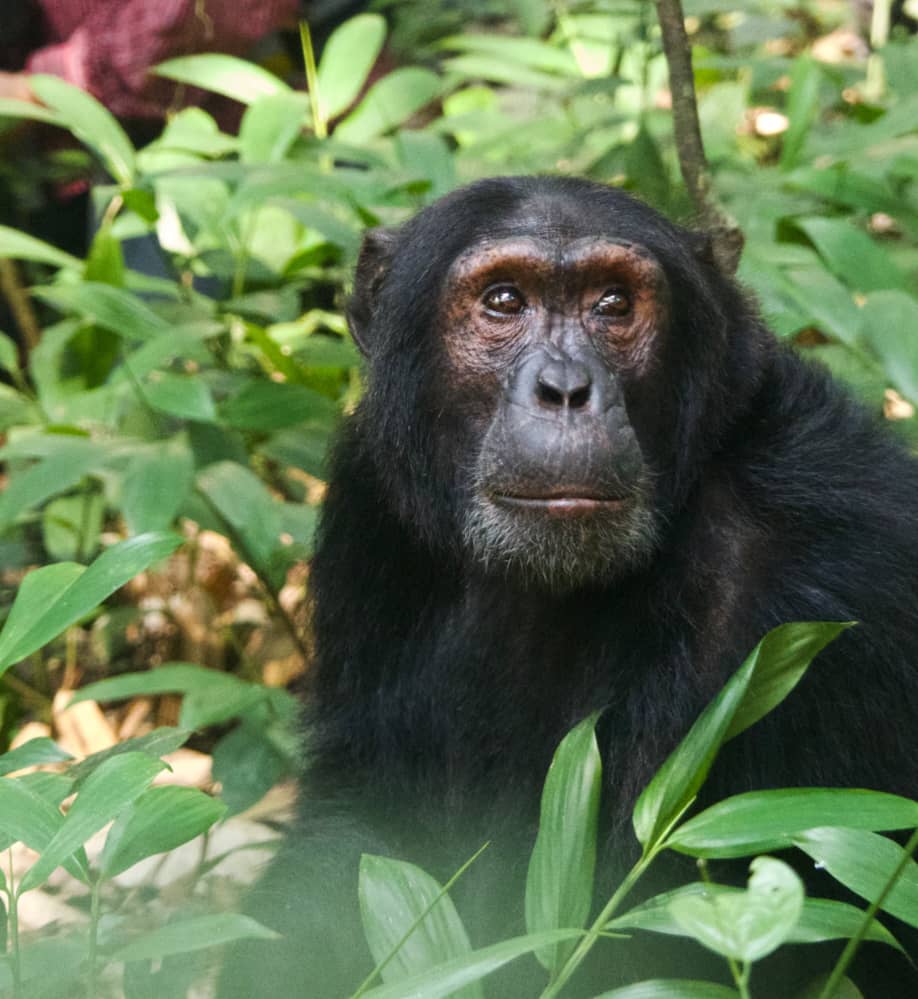
Kibale National Park covers roughly 795 square kilometers of continuous forest in western Uganda. It holds the highest primate density on the continent. Thirteen primate species live within its boundaries, a number unmatched anywhere else in Africa. Chimpanzees headline the park, with a population exceeding 1,500 individuals out of an estimated 5,000 chimpanzees nationwide. That makes Kibale the single largest chimpanzee stronghold in Uganda. Red colobus monkeys also thrive here, forming one of the largest populations of this threatened species anywhere in the world. Travelers regularly spot black and white colobus monkeys, grey-cheeked mangabeys, L’Hoest’s monkeys, and olive baboons along the forest trails. Birdlife proves equally impressive, since Kibale hosts more than 370 recorded bird species, including 23 that occur only within the Albertine Rift. Forest elephants, bush pigs, and several duiker species round out a mammal list that exceeds 120 species beyond the primates.
Chimpanzee Tracking and the Primate Walk
Two daily sessions run at Kibale, one starting at 8:00 a.m. and another at 2:00 p.m., and Zamunda Travels arranges both. Guests follow experienced rangers who track chimpanzee calls and movement through the canopy. Sightings occur on the vast majority of treks because the habituated community stays fairly predictable. Beyond chimpanzee tracking, Zamunda Travels also arranges the Kanyanchu Primate Walk for guests who want a broader wildlife encounter. That walk introduces visitors to several monkey species in a single outing, plus a chance to spot forest birds along the way. Nearby, the community run Bigodi Wetland Sanctuary adds sitatunga antelope, otters, and over 130 bird species to any Kibale itinerary.
Budongo and Semuliki Forests: Uganda Rainforest Wildlife Beyond the Famous Parks
Not every remarkable forest sits inside a headline park, and Budongo proves the point. Budongo Forest sits within the Murchison Falls Conservation Area. It contains more than 400 tree species, including towering mahogany trees that give the canopy its distinctive profile. The forest supports nine primate species, 360 bird species, and roughly 300 butterfly species. Budongo also ranks as Uganda’s second most popular chimpanzee tracking destination after Kibale. Researchers studying the Sonso chimpanzee community even recorded a rare albino chimpanzee birth, a genuinely unusual event among wild primates. Meanwhile, Semuliki National Park offers something entirely different. It protects one of the only true lowland tropical rainforests remaining in East Africa. Its ecosystem closely resembles the Congo Basin rather than the rest of Uganda. Consequently, Semuliki hosts several Central African bird species that birdwatchers rarely encounter anywhere else in the region. The Sempaya Hot Springs sit at the heart of the park and remain its most visited attraction. Together, these two forests demonstrate how diverse Uganda rainforest wildlife becomes once travelers move beyond the best-known destinations.
Mabira Forest: Birds, Butterflies, and Adventure Near Kampala
Mabira Forest sits conveniently between Kampala and Jinja, and it has been under protection since 1932. Covering roughly 300 square kilometers, Mabira ranks among Uganda’s largest tropical rainforests and remains the most accessible one for day trippers. Birders travel here specifically to search for the great blue turaco, the African grey parrot, and the black and white casqued hornbill. Overall, Mabira hosts more than 300 recorded bird species alongside dozens of colorful butterfly species. Early morning walks tend to deliver the best birdwatching results, since the forest becomes noticeably active with birdsong and primate movement at dawn. Adventure seekers also flock to Mabira for canopy ziplines that soar above the treetops. The ride gives guests a completely different perspective on the forest below. Because Mabira sits so close to Kampala and Entebbe, Zamunda Travels frequently recommends it as an easy add-on for travelers with limited time.
Conservation Efforts Protecting Uganda Rainforest Wildlife for the Future
None of these forests survive by accident. Uganda’s rainforests face real pressure from agriculture, logging, and a national deforestation rate that recently averaged around 100,000 hectares annually. Therefore, conservation now sits at the center of nearly every rainforest tourism initiative in the country. Revenue from gorilla and chimpanzee permits funds ranger patrols, community programs, and habitat protection across multiple parks. Local communities near Bwindi and Kibale also benefit directly through employment as guides, porters, and craft producers. Consequently, tourism gives nearby residents a strong financial incentive to protect the forest rather than clear it. Zamunda Travels actively supports this model by working only with licensed operators and community-based projects. In doing so, the company helps ensure that Uganda rainforest wildlife remains abundant for future generations of travelers and local residents alike.
Planning Your Rainforest Adventure with Zamunda Travels
Timing matters when planning a Ugandan rainforest trip, since permits for gorilla trekking sell out months ahead during peak season. Zamunda Travels typically recommends booking gorilla and chimpanzee permits at least four to six months in advance. The team also builds realistic itineraries that combine several forests. Bwindi, Kibale, Budongo, Semuliki, and Mabira each sit within a reasonable driving distance of one another. Comfortable footwear, waterproof layers, and a good camera make a significant difference on any forest trek. Guides from Zamunda Travels brief every guest thoroughly before entering the forest, covering safety protocols, wildlife etiquette, and what to expect along the trail. Whether travelers want gorilla encounters, chimpanzee tracking, birdwatching, or a canopy zipline, Zamunda Travels tailors each itinerary around personal interests and fitness levels.
Final Thoughts
Uganda’s rainforests pack an extraordinary range of habitats, species, and experiences into a relatively small country. From the mist covered slopes of Bwindi to the lowland jungles of Semuliki, every forest tells a different story about survival, adaptation, and recovery. Uganda rainforest wildlife continues to recover thanks to sustained conservation work and responsible tourism. Travelers who explore these forests with Zamunda Travels leave with more than photographs. They leave with a genuine appreciation for one of Africa’s richest ecosystems.