Best Time of Day to See Chimpanzees in Kibale
September 11, 2026
10 Primates You Can See in Kibale National Park
September 11, 2026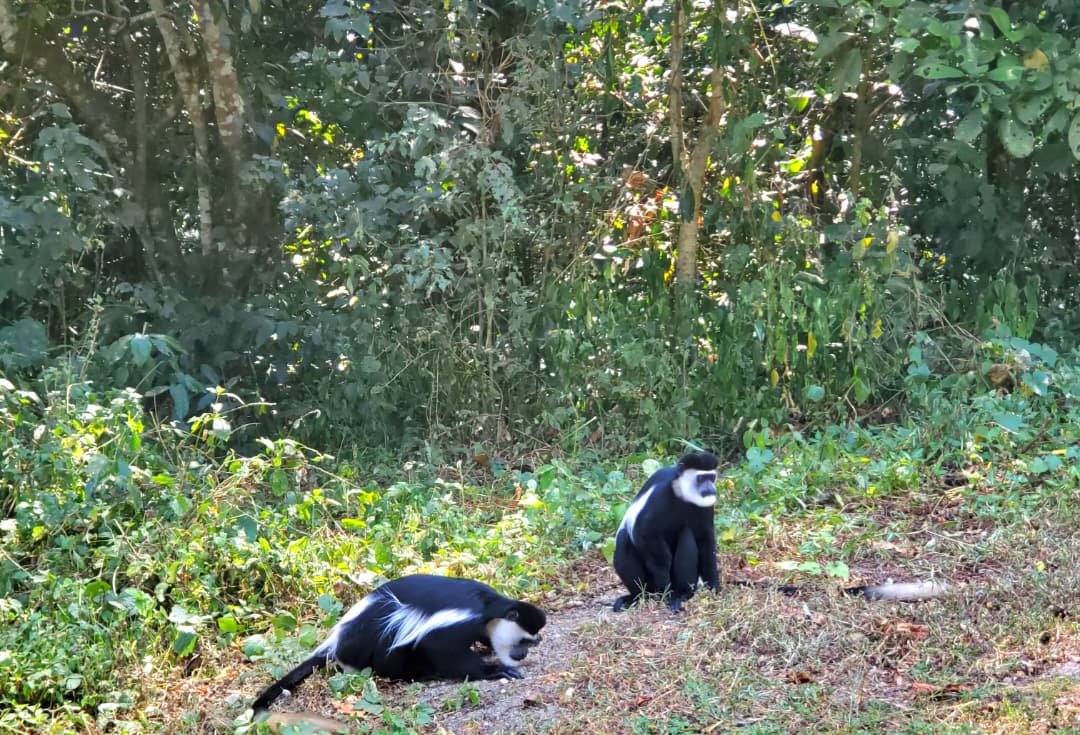
Kibale National Park is one of Uganda’s most remarkable wildlife destinations. Located in western Uganda, the park is famous for its rich tropical forest, beautiful landscapes, and extraordinary concentration of primates. Uganda Wildlife Authority records 13 primate species in Kibale, making the park one of Africa’s most important destinations for primate viewing.
Chimpanzees are the park’s biggest attraction. However, they are only one part of Kibale’s fascinating primate community. Visitors can also encounter red colobus monkeys, black-and-white colobus monkeys, red-tailed monkeys, blue monkeys, L’Hoest’s monkeys, vervet monkeys, olive baboons, mangabeys, bushbabies, and pottos. Some species move through the forest canopy during the day, while others become active after sunset. This rich variety gives every forest walk a sense of discovery.
For travellers planning a Uganda safari, Kibale offers much more than chimpanzee trekking. A visit with Zamunda Travels can combine chimpanzee experiences with primate walks, birding, Bigodi Wetland visits, crater-lake excursions, and other western Uganda attractions. The result is a deeper experience of one of Uganda’s most biologically important forests.
Why Kibale Is Famous for Primates
Kibale’s reputation comes from both the number and variety of primates found within its forests. Uganda Wildlife Authority describes the park as being renowned for extraordinary primate diversity and highlights 13 species that visitors may encounter during the Kanyanchu Primate Walk. These include chimpanzees, red colobus monkeys, black-and-white colobus monkeys, L’Hoest’s monkeys, grey-cheeked mangabeys, and several other monkey species.
The forest also provides different habitats for different animals. Tall trees offer food and shelter for many canopy-dwelling monkeys. Dense vegetation gives smaller primates places to hide and feed. Forest edges and open areas can attract species that spend more time on the ground. At night, the forest changes again as nocturnal primates become active.
This habitat diversity helps explain why Kibale attracts travellers, researchers, photographers, and wildlife enthusiasts. The park has also supported long-term scientific research. Uganda Wildlife Authority notes that Kibale is an important research site because of its varied habitats and exceptional species diversity.
The Primates of Kibale National Park
The phrase primates of Kibale covers a fascinating community of animals with different appearances, behaviours, diets, and activity patterns. While visitors often arrive hoping to see chimpanzees, the forest can offer many other encounters.
Kibale’s primate community includes both apes and monkeys. It also includes smaller nocturnal primates such as bushbabies and pottos. Each species plays a role in the forest ecosystem.
Chimpanzees: The Stars of Kibale
Chimpanzees are the most famous members of the primates of Kibale. Kibale supports one of Uganda’s largest populations of wild chimpanzees. Uganda Wildlife Authority currently estimates more than 1,500 chimpanzees in the park.
Chimpanzees live in complex social communities. They spend much of their time moving through the forest, searching for fruit, leaves, flowers, and other foods. Their calls can travel through the trees, creating one of the most memorable sounds of a Kibale safari.
Chimpanzee trekking gives visitors the chance to follow habituated chimpanzee communities with trained guides and trackers. At Kanyanchu, the main tourism area, visitors enter the forest and search for chimpanzees in their natural environment. UWA states that the main Kanyantale community has been open to tourists since 1993.
For visitors who want more time with chimpanzees, Kibale also offers a chimpanzee habituation experience. During this activity, tourists spend much longer periods observing chimpanzees while researchers and guides continue the habituation process.
Red Colobus Monkeys
The red colobus is one of Kibale’s most important monkey species. The park protects a major population of these threatened primates. Uganda Wildlife Authority identifies the red colobus as one of the notable species that makes Kibale special.
Red colobus monkeys usually spend much of their time in trees. Their reddish or reddish-brown colouring helps distinguish them from the darker black-and-white colobus. They feed mainly on leaves and other plant material.
Seeing a troop moving through the canopy can be a spectacular experience. However, their forest lifestyle means visitors need patience. A guide may hear movement or calls before the animals become visible.
Black-and-White Colobus Monkeys
Black-and-white colobus monkeys are another memorable member of the primates of Kibale. Their striking black-and-white coats make them easier to identify when they move across the green forest canopy.
These monkeys are highly adapted to life in trees. Their long limbs and tails help them move between branches. They spend much of their time feeding and resting in the canopy.
A forest walk can sometimes reveal several individuals sitting quietly in the trees. At other times, visitors may see them leaping between branches. Their movements add another layer of excitement to a Kibale primate experience.
Red-Tailed Monkeys
Red-tailed monkeys are among the colourful monkeys found in Kibale. They are named for the reddish colouring around the tail area, although their appearance can vary depending on age and individual.
These monkeys are active and social. They often move through the forest canopy in groups while searching for fruit, leaves, flowers, and other foods. Their activity can make them easier to notice than some of Kibale’s more secretive primates.
Their presence also shows why visitors should not focus only on chimpanzees. A slow forest walk can reveal several species within a short period.
L’Hoest’s Monkeys
L’Hoest’s monkey is one of the more distinctive primates in Kibale. The species is associated with the Albertine Rift region and has a darker body with a noticeable pale or white throat area. Uganda Wildlife Authority lists L’Hoest’s monkey among Kibale’s notable primates.
Unlike some monkeys that spend most of their time high in the canopy, L’Hoest’s monkeys can spend considerable time closer to the forest floor. Their behaviour makes them an interesting species to watch during a guided forest walk.
They can also be less predictable than some of the more visible monkeys. Therefore, having an experienced guide improves the chances of finding them.
Blue Monkeys
Blue monkeys also occur in Kibale’s forest ecosystem. Despite their name, they do not usually appear bright blue. Their coats have greyish or bluish tones that become more noticeable under the right light.
They spend much of their time in trees. Their diet includes fruits, leaves, flowers, and other plant material. Their ability to move quietly through dense vegetation can make them challenging to photograph.
For photographers travelling with Zamunda Travels, these smaller encounters can be just as rewarding as the major chimpanzee sighting. A good wildlife photograph does not always require a famous animal.
Grey-Cheeked Mangabeys
Grey-cheeked mangabeys are another interesting species in Kibale. They have a shaggy appearance and strong facial features. They often move through the forest in groups while searching for food.
Mangabeys can be active and noisy. Their calls may help visitors locate a group before seeing the animals. Their behaviour also creates opportunities for observing social interactions within a troop.
Kibale’s mangabey populations add important variety to the forest. They also demonstrate how several primate species can share the same habitat while using different resources.
Olive Baboons
Olive baboons are also recorded among Kibale’s primates. They are more terrestrial than many of the forest monkeys. Visitors may therefore encounter them on or close to the ground, especially around forest edges and more open habitats.
Baboons live in social groups. Their strong social bonds make them fascinating to observe. Adults, young animals, and infants can interact throughout the day while the group searches for food and moves between feeding areas.
Their presence adds a different experience to a forest safari because visitors can observe both ground-dwelling and tree-dwelling primates within the same destination.
Vervet Monkeys
Vervet monkeys are another species associated with Kibale’s wider primate community. They are adaptable monkeys that can use different habitats, particularly areas with more open vegetation.
Their greyish bodies and darker faces help identify them. They also have expressive facial movements and complex social behaviour.
Although chimpanzees often receive most of the attention, observing smaller monkeys such as vervets helps visitors appreciate the wider biodiversity of Kibale.
The Primates of Kibale at Night
Not all of the primates of Kibale are active during daylight hours. Some of the forest’s most interesting primates are nocturnal.
Bushbabies, also called galagos, become active after sunset. They have large eyes that help them see in low light. Their powerful hind legs allow them to make impressive jumps between branches.
Pottos are also nocturnal. They move slowly through the forest canopy and use their strong grip to hold onto branches. Because they are active at night, visitors have a better opportunity to encounter them during guided night walks.
A night walk creates a completely different forest experience. Daytime sounds give way to insects, frogs, nocturnal birds, and the calls of active night animals. With a trained guide and appropriate lighting, visitors can search carefully for the reflective eyes of small primates hidden among the branches.
For travellers who want to explore more than chimpanzees, Zamunda Travels can include a night forest experience when planning a suitable Kibale itinerary.
Where Can You See the Primates of Kibale?
The Kanyanchu area is the main tourism hub for chimpanzee tracking and primate experiences in Kibale. Uganda Wildlife Authority identifies Kanyanchu as the park’s flagship location for the Kanyanchu Primate Walk.
However, wildlife does not follow a fixed route. Primates move according to food availability, weather, social behaviour, and other natural factors. Therefore, guides and trackers use their knowledge of the forest to locate animals.
Visitors should also understand that seeing every species on one walk is not guaranteed. Chimpanzees can move deep into the forest. Smaller monkeys can remain high in the canopy. Nocturnal species require different timing and conditions.
This uncertainty is part of the attraction. Each forest walk becomes a genuine wildlife search rather than a visit to a controlled enclosure.
Best Way to Experience the Primates of Kibale
The best approach is to allow enough time for the forest. A rushed visit can focus only on chimpanzees and miss many of the smaller species.
Chimpanzee trekking remains the main attraction for many visitors. However, a primate walk can broaden the experience. Birding can also complement a primate safari because Kibale supports hundreds of bird species. Uganda Wildlife Authority reports approximately 370 bird species in the park.
Visitors can also explore nearby Bigodi Wetland, where community-based tourism provides another opportunity to see wildlife and learn about local conservation. Combining these experiences gives travellers a fuller understanding of the Kibale landscape.
Zamunda Travels can design a Kibale safari around the interests of each traveller. A short itinerary can focus on chimpanzee trekking. A longer journey can include chimpanzee habituation, primate walks, Bigodi Wetland, crater lakes, and other western Uganda attractions.
When Is the Best Time to See Primates in Kibale?
Kibale can be visited throughout the year. Chimpanzee tracking and habituation activities operate throughout the year, according to Uganda Wildlife Authority.
Weather can influence forest conditions and animal movements. During wetter periods, trails can become muddy, but fruit availability can also affect where chimpanzees and other primates move. During drier conditions, animals may travel farther in search of food and water.
For this reason, there is no single day when every primate will appear. The best strategy is to travel with realistic expectations and allow your guide to interpret the forest.
If your main goal is chimpanzee trekking, Zamunda Travels can help you choose suitable travel dates based on your wider Uganda safari plans.
Why Primates Matter to Kibale’s Ecosystem
Primates play important roles in forest ecosystems. Many species eat fruits and later disperse seeds through their movements and droppings. This process helps forests regenerate naturally.
Other primates feed on leaves, flowers, insects, and other resources. Their feeding behaviour influences plant communities and creates links between different parts of the ecosystem.
Protecting Kibale therefore means protecting much more than individual animals. The forest provides habitat for primates, birds, elephants, duikers, and many other species. It also supports ecological processes that benefit the surrounding landscape.
Uganda Wildlife Authority continues to manage Kibale as an important protected area while working with communities and other stakeholders. Conservation efforts also include forest restoration. In 2026, UWA highlighted restoration work in Kibale and its benefits for both the environment and surrounding communities.
Responsible Primate Tourism in Kibale
Responsible tourism is essential when visiting wildlife. Primates are wild animals, even when they appear comfortable around people.
Visitors should follow the instructions of guides and park authorities. They should avoid feeding animals, making unnecessary noise, chasing wildlife, or attempting to touch primates.
Maintaining an appropriate distance also protects both visitors and animals. Chimpanzees and other primates can carry diseases that may affect humans. Human contact can also expose wildlife to illnesses.
Good tourism should therefore create memorable encounters without changing natural behaviour. When visitors follow the rules, tourism can support conservation while creating income for local communities and tourism workers.
Plan Your Kibale Primate Safari with Zamunda Travels
Meeting the primates of Kibale National Park is one of the most rewarding wildlife experiences in Uganda. The famous chimpanzees may be the main attraction, but they are only part of the story.
Red colobus monkeys move through the canopy. Black-and-white colobus monkeys leap between branches. Red-tailed and blue monkeys search for food among the trees. L’Hoest’s monkeys move through the forest. Mangabeys and baboons add further variety. After sunset, bushbabies and pottos bring a completely different side of Kibale to life.
With its remarkable primate diversity, Kibale offers more than a single wildlife encounter. It gives visitors an opportunity to understand how a tropical forest works and why protecting these habitats matters.
Zamunda Travels can help you plan a Kibale safari that combines chimpanzee trekking with other wildlife and cultural experiences in western Uganda. Whether you want a short chimpanzee adventure or a longer Uganda safari, Kibale deserves a place on your itinerary.
In conclusion, Kibale National Park is one of the best places in Uganda to experience primate diversity in the wild. Its 13 recorded primate species, important chimpanzee population, rich forest habitat, and growing conservation efforts make it an exceptional destination for nature lovers.