Bird Watching in Bwindi Impenetrable National Park
October 1, 2026
Fly or Drive to Bwindi for Gorilla Trekking
October 2, 2026
Wildlife in Bwindi draws travellers from every corner of the globe, and the reasons are easy to understand. Bwindi Impenetrable National Park sits in southwestern Uganda, along the border with the Democratic Republic of the Congo. It protects one of Africa’s oldest rainforests, and UNESCO named the park a World Heritage Site in 1994. Today the forest shelters nearly half of the world’s mountain gorillas. However, gorillas are only the beginning of the story. Chimpanzees, forest elephants, rare birds, and hundreds of butterflies share the same misty slopes. Zamunda Travels wrote this guide to help you understand every layer of this remarkable ecosystem before you pack your bags.
Moreover, a visit to this forest rewards patient and curious travellers. Each trail reveals something new, from a flash of colour in the canopy to a rustle in the undergrowth. Zamunda Travels organises safaris that give you time to notice these details. This article explains what you can expect to find, where to look, and how to protect the animals you meet.
A Forest Built for Biodiversity
Bwindi covers steep hills in the Albertine Rift, and its elevation ranges from about 1,160 to 2,607 metres. This rugged terrain creates many habitats, so the forest supports an unusually wide range of life. Surveys record more than 120 mammal species, around 350 bird species, and over 200 butterfly species. In addition, the park holds roughly 27 frog species and more than 50 reptile species. Its plant life is just as rich, with over 1,000 flowering plants, about 200 tree species, and more than 100 fern species. Figures vary slightly between sources, but every count points to the same conclusion. Few forests in East Africa match this variety.
The age of the forest explains much of this richness. Scientists believe Bwindi survived the climate swings of the last ice age, so many species found refuge here while other areas dried out. As a result, the park protects several animals and plants that live nowhere else. Visitors quickly notice that each ridge feels different from the next. A damp valley may echo with bird calls, while a higher slope may hide a colobus troop in the mist. Zamunda Travels designs its Bwindi itineraries around this variety, so guests see far more than gorillas alone.
Mountain Gorillas: The Stars of the Forest
The mountain gorilla is the main reason most visitors travel to Bwindi. Roughly 43 percent of the world’s remaining mountain gorillas live in this park, according to a study in Frontiers in Public Health. A census in 2018 counted at least 459 gorillas in about 50 groups. The only other population lives in the Virunga Massif, which includes Mgahinga Gorilla National Park in Uganda. Because the total population remains small, every gorilla family in Bwindi matters for the survival of the species.
How Gorilla Families Open to Visitors
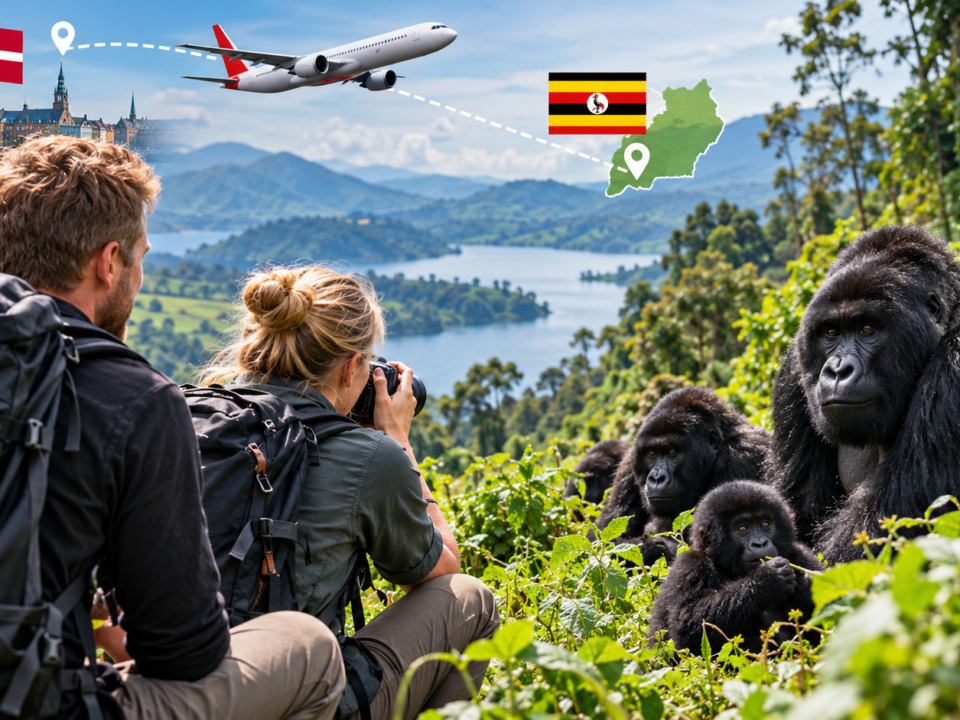
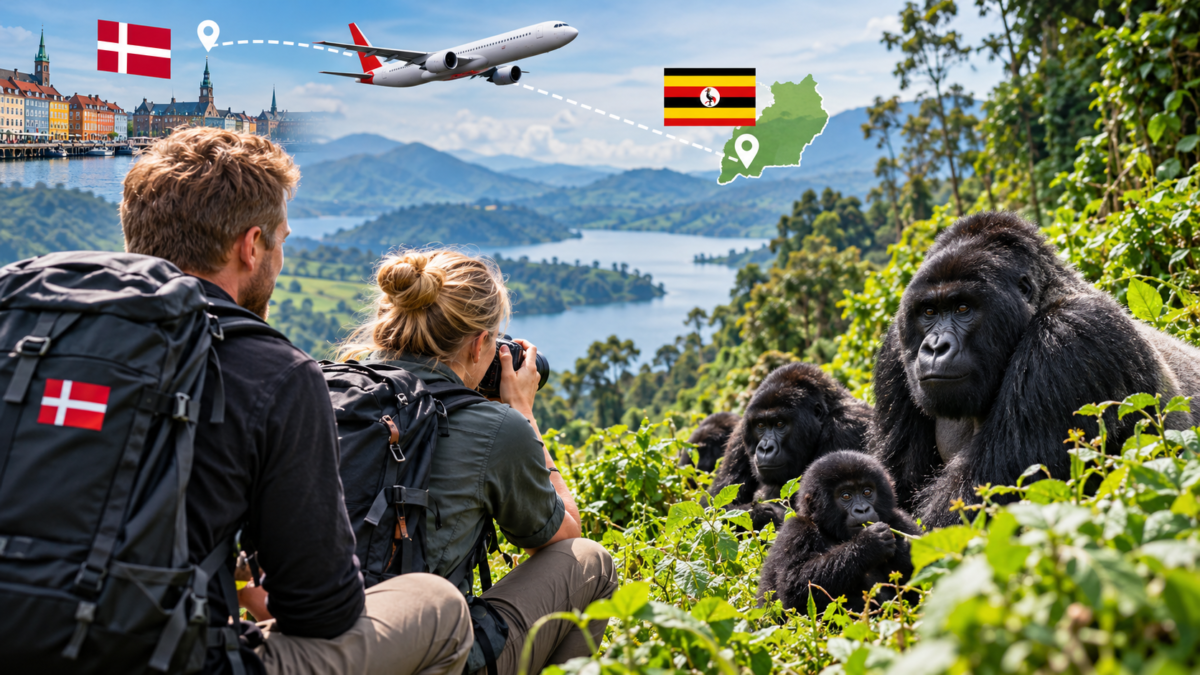
The Mubare group became the first Bwindi family open to tourists in the early 1990s. Since then, the number of habituated families has grown to around twenty. These families live across the Buhoma, Ruhija, Rushaga, and Nkuringo sectors. Habituation takes years, because trackers must teach wild gorillas to accept human presence calmly. Each habituated family has a dominant silverback, several females, and a mix of juveniles and infants. Therefore, a trek often lets you watch real family life, with infants tumbling, juveniles wrestling, and the silverback resting with calm authority. Zamunda Travels arranges permits and lodging in the sector that best matches your fitness and schedule.
Gorilla Trekking Rules That Protect the Animals
Strict rules keep these animals safe. Rangers limit each group to eight visitors per day, and the visit lasts one hour once you find the family. You must keep a distance of seven metres, although curious gorillas sometimes ignore that rule themselves. Moreover, anyone who feels ill must stay behind, because gorillas catch human diseases easily. Researchers have documented scabies in juvenile gorillas from a habituated group, and they warn that close contact raises the risk of infection. As a result, Zamunda Travels recommends that every guest follow ranger instructions closely and travel only when healthy.
Primates Beyond the Gorillas
Bwindi supports around ten primate species, although some sources list up to fourteen. Gorillas dominate the headlines, but the other primates deserve just as much attention. Common chimpanzees live in the forest, yet they stay shy and rarely show themselves to visitors. Meanwhile, L’Hoest’s monkeys forage in the lower canopy and along forest trails. Their dark coats and pale throats make them easy to recognise once you spot them. Black-and-white colobus monkeys move in small troops, and they leap between branches with surprising grace.
Several smaller monkeys complete the picture. Red-tailed monkeys flash their coppery tails as they dart through the trees. Blue monkeys and vervet monkeys also appear, and olive baboons roam the forest edges. Mountain gorillas remain the only primates that rangers habituate for tourism here. For that reason, you should treat every other primate sighting as a bonus. Zamunda Travels guides know the best trails for these encounters, and they share tips on how to watch quietly without startling the animals.
Forest Mammals, Carnivores, and Elusive Giants
Beyond the primates, Bwindi shelters mostly small forest dwellers. Bushbuck and black-fronted duikers are the antelope you will most likely see, and giant forest hogs and bush pigs root through the leaf litter. Buffalo and common warthogs also occur in the park. Sitatunga, a shy antelope, lives in the wetter areas. In addition, the forest holds more than 45 small mammal species, from squirrels to shrews and bats.
Forest elephants add an element of mystery. They live in Bwindi, but sightings are rare because the dense vegetation hides them so well. Travellers have a better chance in the Ruhija sector, where trekkers occasionally meet elephants while tracking primates. Therefore, patience and a good guide make all the difference.
Wildlife in Bwindi That Hides in the Undergrowth
The carnivores of Bwindi prefer to stay out of sight. Side-striped jackals, African civets, honey badgers, and African clawless otters all live here, and most of them hunt at night or near streams. The African golden cat is the rarest prize of all. This medium-sized predator walks silently through the forest, and even experienced rangers see it only occasionally. Nevertheless, its presence tells you something important. A healthy forest needs predators, so each golden cat track signals a functioning ecosystem.
Birds, Butterflies, and Smaller Creatures
Bird lovers consider Bwindi one of the finest destinations in Africa. The park hosts about 350 bird species, including 23 Albertine Rift endemics that live almost nowhere else on the continent. The African green broadbill, a tiny emerald bird of the mid-elevation forest, is a favourite target for visiting birders. Similarly, colourful turacos, sunbirds, and barbets liven up the canopy at dawn. Because the forest is dense, you will often hear a bird before you see it. A good guide therefore turns every call into a clue.
Butterflies add another burst of colour. Estimates range from just over 200 to around 310 species, and three of them occur only in Bwindi. The cream-banded swallowtail is one of the showiest. Meanwhile, the forest floor and streams hide reptiles such as chameleons and geckos, along with about 27 frog species. Tree ferns, giant trees, and trailing vines frame all of these creatures. As a result, even a short walk feels like a lesson in rainforest ecology.
How to Experience Wildlife in Bwindi With Zamunda Travels
Gorilla trekking remains the highlight, yet Zamunda Travels encourages guests to look beyond it. First, consider a guided nature walk. These walks follow forest trails and give you a chance to meet primates, rare birds, and medicinal plants. For example, the short Munyaga River trail near the Buhoma park office offers good chances of seeing L’Hoest’s monkeys and black-and-white colobus. Next, join the Batwa cultural trail. This half-day experience introduces you to the original inhabitants of the forest, who lived in harmony with its wildlife for generations. Community village walks in Buhoma add yet another perspective on life beside the park.
Sector choice also shapes what you see. Buhoma suits visitors who want easy access to trails and birdwatching, while Ruhija offers a chance of elephant sign and superb highland birding. Rushaga and Nkuringo, in the south, hold many of the gorilla families. Zamunda Travels matches each guest to the right sector based on fitness, budget, and interests.
Preparation helps you enjoy the forest even more. Wear sturdy boots, long sleeves, and a waterproof jacket, because trails can be steep and muddy. Pack binoculars for birds and a camera without flash. Hire a porter, since this supports local families and eases the climb. Finally, keep your voice low and move slowly. Wildlife in Bwindi rewards quiet observers far more than noisy ones.
Why Protecting Wildlife in Bwindi Matters
Conservation sits at the heart of every visit. Gorilla tourism funds the Uganda Wildlife Authority rangers who patrol the forest, and it supports anti-poaching work and nearby communities. In the 1990s, only about 3,000 people visited Bwindi each year. Today the park draws far more travellers, and that income gives local people a strong reason to protect the forest. Zamunda Travels believes that responsible tourism is the best long-term defence for these animals.
However, serious threats remain. Habitat loss, poaching, and conflict between people and wildlife still pressure the ecosystem. Disease also worries scientists, because tourists and villagers can pass infections to gorillas. For this reason, you should follow every park rule, stay home if you feel unwell, and respect the viewing distance. Each small act of care helps these rare animals thrive for future generations.
Plan Your Bwindi Safari With Zamunda Travels
Bwindi offers one of the richest wildlife experiences in Africa. Mountain gorillas, shy chimpanzees, forest elephants, rare birds, and glittering butterflies all share one ancient forest. Careful planning lets you see as much of this diversity as possible. Zamunda Travels handles gorilla permits, lodging, transport, and expert guides, so you can focus on the forest itself. Contact Zamunda Travels today to design a Bwindi safari that fits your dates, budget, and dreams.