Is Lake Bunyonyi Good for Honeymoon Vacations?
May 21, 2026
Is Rwanda Safe for Tourists?
May 21, 2026
If you’ve ever dreamed of going on an African safari, you’ve probably heard people talk about the Big Five animals. It’s one of those phrases that comes up again and again in travel conversations, especially when planning trips across East and Southern Africa. Today, travelers visiting countries like Uganda, Kenya, Tanzania, South Africa, and Botswana still treat the Big Five animals as the ultimate safari checklist.
The term originally came from old hunting days, when hunters used it to describe the five most difficult and dangerous animals to track on foot. Today, the meaning has completely changed. It now represents the most iconic wildlife species that travelers hope to see in the wild. These animals are the lion, elephant, leopard, buffalo, and rhinoceros.
At Zamunda Travels, we often meet travelers who think the Big Five animals are just about size. But the truth is deeper. It’s about behavior, rarity, power, and the thrill of seeing these animals living freely in their natural environment.
Understanding the Big Five Animals in a Real Safari Context
The Big Five animals are not grouped together because they live together or behave similarly. In fact, they are completely different species with very different lifestyles. What connects them is their reputation in African wildlife history and safari culture.
On a real safari, spotting all Big Five animals is not something that happens in a single hour or even a single day. It takes patience, knowledge of animal behavior, and often a bit of luck. That’s why experienced guides matter so much. Companies like Zamunda Travels focus heavily on skilled guiding because it increases your chances of meaningful sightings rather than rushed wildlife viewing.
Today, these animals are also a major part of conservation efforts. Instead of being hunted, they are now protected and studied across national parks and reserves. This shift has helped transform tourism into one of the strongest tools for wildlife protection in Africa.
The Big Five Animals Explained One by One
Lion – The Most Famous of the Big Five Animals
Lions are usually the first animal people think of when they hear “African safari.” They are social cats that live in groups called prides. Unlike most big cats, lions spend a lot of time together, resting, grooming, or coordinating hunts.
In real safari settings, lions are not always roaring or hunting as movies suggest. Most of the time, they are resting under trees or lying in tall grass. However, when they do hunt, the coordination between females is impressive and highly strategic.
In Queen Elizabeth National Park, especially the Ishasha sector, lions are famous for climbing fig trees. This behavior is rare in Africa and makes Uganda one of the most interesting places to observe lions in a different light.
Elephant – The Largest of the Big Five Animals
Elephants are often called gentle giants, and that description fits well. They are intelligent, emotional, and highly social animals. They live in close family groups led by older females who guide the herd through daily survival decisions.
Elephants communicate using sounds, body language, and even vibrations through the ground. They also remember water sources and migration routes for many years, which shows just how intelligent they are.
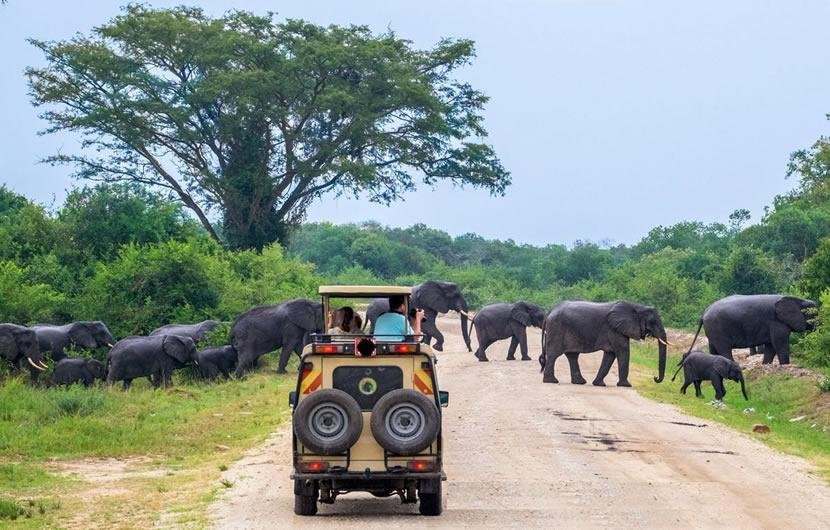
In places like Murchison Falls National Park, elephants are commonly seen near the Nile River. Watching them cross open savannahs or gather near water is one of the most peaceful safari experiences you can have.
Zamunda Travels often includes elephant viewing in guided safari itineraries because they are reliable sightings in many Ugandan parks.
Leopard – The Most Secretive of the Big Five Animals
Leopards are the hardest members of the Big Five animals to spot. They prefer staying alone and are extremely good at hiding. Their spotted coat blends perfectly into trees and grass, making them almost invisible unless they move.
Unlike lions, leopards rely on stealth rather than strength. They hunt quietly, often at night, and drag their prey into trees to protect it from scavengers like hyenas.
In parks like Kidepo Valley National Park, leopards are present but rarely seen. Spotting one usually depends on a skilled guide who understands animal tracks and behavior patterns.
Seeing a leopard during a safari is often considered a “lucky moment,” even for experienced travelers.
Rhinoceros – The Most Protected of the Big Five Animals
Rhinos are among the most endangered animals in Africa, mainly due to poaching. Their horns have been illegally traded for many years, which has significantly reduced their population in the wild.
Despite their size, rhinos are shy and prefer staying away from humans. They rely heavily on smell and hearing because their eyesight is weak. When threatened, they can charge at surprising speeds.
In Uganda, most rhino experiences happen at Ziwa Rhino Sanctuary, where conservation programs protect and breed rhinos safely. Walking safaris here allow visitors to track rhinos on foot with trained rangers, which is both exciting and educational.
Buffalo – The Most Unpredictable of the Big Five Animals
Buffaloes are often underestimated, but safari guides respect them deeply. They may look calm while grazing, but they can become extremely defensive when threatened.
They live in large herds, which helps protect them from predators. However, older males sometimes live alone and are known for being particularly aggressive.
In parks such as Lake Mburo National Park, buffaloes are frequently seen in large numbers. Watching a herd move across open plains gives you a real sense of African wilderness at work.
Where You Can See the Big Five Animals in Uganda
Uganda is one of the best places in East Africa to experience wildlife in a less crowded and more natural setting. The Big Five animals can be found across several protected areas, although some require more effort and planning than others.
Key destinations include:
- Queen Elizabeth National Park
- Murchison Falls National Park
- Kidepo Valley National Park
- Ziwa Rhino Sanctuary
- Lake Mburo National Park
Each park offers something slightly different. Some are better for elephants and buffaloes, while others are known for predators like lions and leopards. Rhinos, on the other hand, are mainly found in protected sanctuaries.
Zamunda Travels designs safari routes that connect these destinations in a practical way, helping travelers maximize wildlife sightings without feeling rushed.
Why the Big Five Animals Still Matter Today
The Big Five animals are more than just a tourism attraction. They play a real role in maintaining ecosystem balance. Lions control herbivore populations, elephants shape vegetation, and predators like leopards keep prey species healthy and alert.
Beyond ecology, these animals also support local communities. Tourism revenue helps fund park management, anti-poaching efforts, and conservation education. In many areas, tourism has become a direct reason why these animals are still alive today.
That is why responsible travel matters. Choosing ethical safari operators like Zamunda Travels supports conservation work and ensures that wildlife tourism benefits both nature and people.
Final Thoughts
The Big Five animals represent more than just a safari checklist. They reflect Africa’s natural heritage, wildlife diversity, and conservation journey. Seeing them in the wild is not just about photography or ticking boxes it’s about understanding nature on a deeper level.
If you are planning a safari in Uganda or anywhere in Africa, take your time with it. The best experiences often come slowly, not quickly. With the right planning and guidance from Zamunda Travels, your chances of meaningful encounters with the Big Five animals become much higher.
In the end, it’s not just about seeing the Big Five animals. It’s about feeling Africa the way it truly is wild, real, and unforgettable.