How to get to Kibale national park by road
August 18, 2026
5 Best Places To See Gorillas in Africa
August 19, 2026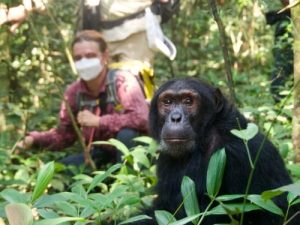
If you have ever wanted to look into the eyes of a wild chimpanzee, Kibale National Park is one of the best places in Uganda to do it. The forest is famous for its large population of chimpanzees and its remarkable variety of other primates. More than 1,500 chimpanzees are estimated to live in the wider Kibale ecosystem. The park also supports species such as red colobus monkeys, black-and-white colobus monkeys, L’Hoest’s monkeys and grey-cheeked mangabeys.
Chimpazee trekking in Kibale national park is not simply a walk through the forest in search of an animal. It is an experience that combines wildlife, nature, patience and a little adventure. You enter the rainforest with an experienced guide and follow clues left by the chimpanzees. Their calls may come from somewhere deep in the canopy. A few minutes later, you may hear branches moving above you. Then, almost without warning, a chimpanzee appears.
That unpredictability is part of what makes Kibale special.
The main trekking activity starts at the Kanyanchu Visitor Centre. Uganda Wildlife Authority provides designated chimpanzee tracking at Kanyanchu, with morning and afternoon sessions. Normal chimpanzee tracking begins at 8:00 am in the morning and 2:00 pm in the afternoon. Visitors can spend up to one hour with the chimpanzees once they find them.
The trek itself can take several hours because the chimpanzees do not stay in one place for visitors. They move through the forest, feed in different trees and sometimes travel long distances. Your guide and trackers follow their movements and help the group locate them.
For travelers planning a wider Uganda safari, Kibale also fits naturally into an itinerary. You can combine the forest with Queen Elizabeth National Park, Bwindi Impenetrable National Park, Semuliki National Park, Murchison Falls National Park and other destinations. Zamunda Travels can arrange these connections and build the safari around your available time and interests.
Why choose Chimpazee trekking in Kibale national park?
There are several reasons why travelers choose Kibale for a chimpanzee experience. The biggest attraction is the forest itself. Kibale is a tropical rainforest with tall trees, thick vegetation and a rich network of wildlife trails. You are not simply visiting an enclosure. You are entering the natural environment where chimpanzees live.
Kibale also has a long history of chimpanzee monitoring and habituation. Uganda Wildlife Authority notes that the Kanyanchu chimpanzee community has been intensively monitored and habituated for many years. This makes the area particularly suitable for visitors who want to observe chimpanzees in their natural surroundings.
Another reason to visit is the variety of wildlife you can encounter during the walk. Chimpanzees may be the main attraction, but they are not the only animals in the forest. You may see several species of monkeys moving through the trees. Birds provide another constant source of interest, especially for travelers who enjoy birdwatching.
The forest also gives you a chance to slow down. Unlike a traditional game drive, where you sit in a vehicle and scan open grasslands, chimpanzee trekking involves walking and listening. Your guide may stop regularly to identify sounds or examine signs of animal movement.
For many visitors, that makes the experience feel personal and immersive.
Chimpazee trekking in Kibale national park experience
The experience normally begins with a briefing at Kanyanchu. Rangers and guides explain the rules before you enter the forest. They also provide information about chimpanzee behavior and responsible wildlife viewing.
After the briefing, you start walking along the forest trails. The pace depends on the location of the chimpanzees. Sometimes you find them relatively quickly. At other times, you may walk for a while before the trackers locate the group.
This is where patience becomes important.
Chimpanzees are intelligent and highly mobile animals. They can spend time high in the trees or move through dense vegetation. They also communicate through a range of calls. When trackers hear chimpanzees in the distance, they may change direction to follow the sound.
Eventually, the forest can become surprisingly quiet. Then you may hear a loud call from the canopy. Your guide stops and points upward. Suddenly, the search becomes much more exciting.
Once the chimpanzees are located, visitors observe them while following the instructions of the guide. You may see them feeding, grooming, resting, climbing, playing or moving between trees. Sometimes they remain high above the ground. On other occasions, they come closer to the trail.
According to Uganda Wildlife Authority guidelines, normal chimpanzee tracking allows a maximum of one hour of viewing after the animals are found. The Chimpanzee Habituation Experience allows up to four hours.
Photography is possible, but it is important to avoid disturbing the animals. Loud noises, sudden movements and attempts to attract chimpanzees can affect their natural behavior. A good guide will help you enjoy the encounter without interfering with the animals.
Chimpanzee habituation experience in Kibale
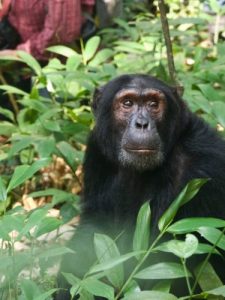
Travelers who want a longer and more detailed encounter can choose the Chimpanzee Habituation Experience. This activity differs from normal tracking because it involves chimpanzee communities that are still becoming accustomed to human presence.
The experience starts much earlier than normal tracking. UWA guidelines place the start of the Chimpanzee Habituation Experience at 6:30 am. Visitors can spend up to four hours observing the chimpanzees.
That extra time changes the character of the experience. Instead of simply trying to find the chimpanzees and observe them for a short period, you have more opportunity to watch their behavior as the day develops.
You may see them leave their nests, feed, interact with one another and move through the forest. Nothing happens according to a fixed script. That is precisely what makes the experience interesting.
The habituation experience can be particularly appealing to photographers, wildlife enthusiasts and travelers who have more time in Kibale. Zamunda Travels can help you choose between standard tracking and habituation depending on your itinerary and budget.
Best time for Chimpazee trekking in Kibale national park
Chimpanzee tracking in Kibale takes place throughout the year. However, weather can influence the experience. Uganda Wildlife Authority notes an interesting difference between the seasons. During the rainy season, food can be easier for chimpanzees to find, while during drier periods they may move deeper into the forest.
For travelers, this means there is no single month that guarantees a perfect experience.
The drier months can make walking more comfortable because some trails may be less muddy. On the other hand, rain is part of life in a tropical forest. The wet season can make Kibale look exceptionally green and can provide rewarding conditions for nature lovers and birdwatchers.
Your choice should therefore depend on the kind of safari you want. If you prefer easier walking conditions, a generally drier period may suit you. If lush vegetation and fewer crowds appeal to you, you may enjoy traveling during a wetter period.
Zamunda Travels can also help you coordinate your Kibale visit with other Uganda safari activities. This is useful because the best travel period for chimpanzees may not always be the same as the preferred period for every other destination.
What you can see besides chimpanzees
One of the pleasant surprises of Kibale is that the chimpanzees are only part of the story.
Uganda Wildlife Authority describes Kibale as one of Uganda’s most important primate destinations. The park supports 13 primate species, including red colobus, black-and-white colobus, L’Hoest’s monkeys and grey-cheeked mangabeys.
You may also encounter olive baboons and other forest wildlife during your journey. The park supports more than 120 mammal species and around 370 bird species, making it attractive to travelers who want more than one wildlife experience.
Birdwatchers should consider adding extra time to their itinerary. Forest birds can be difficult to spot, but an experienced guide can make a major difference. Listening carefully is often just as important as looking.
This variety is one reason Kibale works so well for couples, photographers and nature lovers. Even when the chimpanzees are moving farther into the forest, there is usually something else to observe.
Activities in Kibale National Park
Chimpanzee tracking remains the main attraction, but you can do much more around Kibale.
Chimpanzee tracking
The Kanyanchu Primate Walk is the best-known activity. It focuses on chimpanzees but also gives visitors opportunities to see other primates. UWA identifies Kanyanchu as the main location for the park’s flagship primate experience.
Chimpanzee habituation
The habituation experience provides a longer encounter with chimpanzees. It starts early and can last for several hours, giving visitors more time to observe natural behavior.
Nature walks
Kibale is also suitable for visitors who simply want to explore the forest. Nature walks provide opportunities to learn about plants, birds, insects and smaller wildlife.
Birdwatching
With hundreds of bird species recorded in the park, Kibale is an excellent destination for bird enthusiasts. A specialized guide can help you identify forest species that you might otherwise miss.
Bigodi Wetland experience
Bigodi, located near Kibale, offers a community-based wetland experience. Visitors can explore the wetland with local guides while looking for birds, monkeys and other wildlife. The activity also provides a direct connection with communities living around the forest.
Cultural experiences
You can also spend time learning about the communities surrounding Kibale. Depending on the itinerary, visitors may experience local food, farming, traditional practices and community projects.
Combining several of these activities can turn a one-night Kibale stop into a much richer western Uganda experience.
Where to stay near Kibale National Park
Choosing where to sleep can make a noticeable difference to your safari. If chimpanzee trekking is your main reason for visiting, staying close to Kanyanchu can make the morning easier.
Kanyanchu is the principal trailhead for chimpanzee tracking. It is roughly 33 kilometres from Fort Portal, although exact distances vary depending on the accommodation and route.
The area has several accommodation choices. Travelers can find luxury lodges, mid-range properties, budget guesthouses and camps. Your choice will depend on your budget and the kind of safari experience you want.
Luxury travelers may prefer a lodge with comfortable rooms, good meals and views of the surrounding landscape. Mid-range travelers can find comfortable accommodation without paying luxury rates. Budget travelers can also find simpler options around Fort Portal and the communities near the forest.
If your trek starts early, staying closer to the park is usually more convenient. However, Fort Portal can be a good choice if you also plan to explore crater lakes, tea plantations and other attractions in the area.
Zamunda Travels can recommend accommodation based on your travel style and arrange transfers between your lodge and the trekking centre.
Distance from Entebbe International Airport to Kibale National Park
The distance from Entebbe International Airport to Kibale National Park depends on the exact route and destination within the park. Travelers normally continue from Entebbe through Kampala, Mubende and Fort Portal before heading toward Kanyanchu.
Kibale is roughly 330 kilometres from Kampala by road, while Entebbe is farther because it lies outside Kampala. Safari travel sources commonly place the Entebbe-to-Kibale road journey at roughly 330 to 360 kilometres, depending on the route used.
The journey can take around six hours or more. Traffic around Kampala can add significant time, so travelers should not plan the transfer too tightly.
For international visitors, Zamunda Travels can collect you from Entebbe International Airport and begin the journey toward western Uganda. Depending on your arrival time, you can travel directly to Kibale or spend the first night elsewhere.
There is also an air option. There are no scheduled flights directly into Kibale or Fort Portal. Travelers can fly toward Kasese and continue by road. SafariBookings notes that the road transfer from Kasese to Kanyanchu can take up to about two hours.
Distance from Kigali International Airport to Kibale National Park
Kibale can also be reached from Rwanda, making it a useful stop for travelers combining Rwanda and Uganda.
The road journey from Kigali to Kibale is considerably longer than a trip from Fort Portal, but the route can fit well into a cross border safari. Travelers may start in Kigali, visit southwestern Uganda, continue to Kibale and then explore western Uganda.
The exact distance depends on the border crossing and route. Travel time can also change because of border procedures, traffic and road conditions.
A cross border itinerary requires careful planning. Your passport, Uganda entry requirements and any other necessary travel documents should be arranged before departure.
Zamunda Travels can organize the road transfer and build the Kigali to Kibale journey into a wider Uganda and Rwanda itinerary.
Distance from Kasese Airstrip to Kibale National Park
Kasese is one of the closest practical air access points for travelers heading to Kibale.
There are no scheduled flights directly into Kibale National Park or Fort Portal. SafariBookings identifies Kasese as the closest scheduled-flight option and estimates the road transfer to Kanyanchu at about 70 kilometres, taking up to two hours.
The actual distance depends on the road and the exact point where you are staying. However, flying to Kasese can save considerable time compared with driving from Entebbe.
This option works especially well for travelers combining Kibale with Queen Elizabeth National Park. Your safari can therefore use a flight for one section and a private vehicle for the remaining transfers.
Zamunda Travels can coordinate these arrangements so that your flight arrival connects smoothly with your road transfer.
Distance from Queen Elizabeth National Park to Kibale National Park
Kibale and Queen Elizabeth National Park are among the easiest western Uganda destinations to combine.
The exact distance depends on which part of Queen Elizabeth you are leaving. Mweya, Ishasha and other sectors have different road connections. One current travel source places Mweya to Kibale at about 157 kilometres, while other route estimates vary according to the selected route.
The drive can take several hours. It is therefore wise to leave enough time for the journey rather than trying to fit too many activities into one day.
The combination itself is excellent. Queen Elizabeth offers savannah wildlife and the famous Kazinga Channel. Kibale then changes the scenery completely, taking you into a rainforest environment dominated by primates.
A safari that combines the two parks gives you a nice balance between traditional game viewing and forest wildlife.
Distance from Bwindi National Park to Kibale National Park
The distance between Bwindi and Kibale varies considerably because Bwindi has several tourism sectors. Buhoma, Ruhija, Rushaga and Nkuringo are not located in the same part of the forest.
This matters when planning a combined gorilla and chimpanzee safari.
For example, a traveler staying in Buhoma may follow a different route from someone trekking gorillas in Rushaga. Road conditions and the chosen route can also affect the journey time.
Despite the distance, combining the two destinations is highly rewarding. Kibale is known for chimpanzees and other primates. Bwindi is famous for mountain gorilla trekking. Together, they create one of Uganda’s strongest primate-focused safari combinations.
Zamunda Travels can plan the route around your gorilla trekking sector and chimpanzee trekking schedule. This avoids unnecessary backtracking and makes the journey more comfortable.
Distance from Murchison Falls National Park to Kibale National Park
Murchison Falls and Kibale are separated by a long road journey, but they can work very well together on a longer Uganda safari.
The exact distance depends on the park gate and route. Travel estimates can vary considerably because Murchison Falls covers a large area. One route source places the journey between Murchison Falls and Kibale at roughly 370 kilometres, while other estimates are higher depending on the starting point.
Rather than focusing only on the number of kilometres, travelers should consider the time involved. A transfer of this length can take most of a day.
Still, the contrast between the destinations makes the journey worthwhile. Murchison Falls offers open savannah, elephants, giraffes, buffaloes, hippos and Nile scenery. Kibale replaces those landscapes with dense forest and primates.
Zamunda Travels can arrange the journey with suitable stops so that the long transfer does not become exhausting.
Distance from Semliki to Kibale National Park
Semuliki is another destination that fits naturally into a Kibale itinerary.
The two areas are relatively close compared with many other Ugandan parks. Travel sources place the distance between the Toro-Semliki area and Kanyanchu at around 86 kilometres.
The landscape changes noticeably between the two destinations. Semuliki is associated with lowland forest, hot springs and unusual wildlife. Kibale, meanwhile, is especially famous for its primates.
If you have an extra day, combining Semuliki and Kibale can make your western Uganda safari much more varied.
Distance from Fort Portal to Kibale National Park
Fort Portal is one of the most useful bases for visiting Kibale.
The chimpanzee trekking trailhead at Kanyanchu is about 33 kilometres from Fort Portal, with the journey taking roughly 40 minutes under good road conditions.
This short transfer makes Fort Portal convenient for travelers who want to explore more of the region. The town also provides access to crater lakes, tea-growing areas and other attractions.
If your main goal is chimpanzee trekking, however, staying closer to Kanyanchu can save time on the morning of your activity.
Your accommodation choice should therefore depend on your itinerary. If you have several days in the region, Fort Portal can be a useful base. If you have limited time, a lodge near Kanyanchu may make more sense.
What to pack for Chimpazee trekking in Kibale national park
You do not need expensive specialist equipment for chimpanzee trekking. Good preparation matters more than having a large amount of gear.
Start with comfortable walking shoes or hiking boots. The forest floor can become muddy, especially after rain. Long trousers and a long-sleeved shirt are also useful because they provide protection from vegetation and insects.
Carry a lightweight rain jacket. Rain can arrive unexpectedly in a rainforest.
A small backpack should be enough for drinking water, snacks, sunscreen, insect repellent and your camera. Binoculars can also be useful for watching chimpanzees and birds high in the canopy.
Avoid carrying unnecessary luggage into the forest. A lighter backpack makes walking much easier.
Chimpanzee trekking rules and responsible tourism
A close encounter with chimpanzees comes with responsibility. Visitors must follow the instructions of the guides and Uganda Wildlife Authority staff.
UWA’s current chimpanzee management guidelines specify Kanyanchu as a designated chimpanzee tracking entry point in Kibale. They also require tracking to take place with authorized guides and valid permits or tickets.
Do not feed the chimpanzees. Do not try to touch them. Avoid shouting or making unnecessary noises. You should also maintain the distance instructed by your guide.
Health precautions matter too. Great apes can be vulnerable to diseases carried by humans, so visitors should follow the health guidance provided before entering the forest.
Responsible tourism also benefits communities around Kibale. Local guides, accommodation providers, drivers and community projects all form part of the tourism economy.
Choosing a responsible safari company such as Zamunda Travels can therefore help create a more organized and respectful experience.
How Zamunda Travels can organize your Kibale safari
A chimpanzee trek may last only part of a day, but the journey around it requires good planning. You need to consider your arrival point, transport, accommodation, trekking session, meals and the destinations you want to visit afterward.
This is where a local tour operator can make the experience easier.
Zamunda Travels can organize a Kibale itinerary from Entebbe, Kampala, Kigali or another safari destination. The company can also combine chimpanzee trekking with gorilla trekking, game drives and other activities.
For example, a traveler arriving in Entebbe might begin with a road journey toward Fort Portal and Kibale. After the chimpanzee experience, the safari could continue to Queen Elizabeth National Park before moving toward Bwindi.
Another traveler might start in Kigali, cross into Uganda and combine gorilla trekking with Kibale chimpanzees.
There is no single itinerary that suits everyone. Couples may want more time at comfortable lodges. Families may prefer shorter travel days. Photographers may choose the habituation experience. First-time safari travelers may want to combine Kibale with Uganda’s classic wildlife parks.
Zamunda Travels can build the itinerary around those differences rather than forcing every traveler into the same schedule.
In conclusion, Chimpazee trekking in Kibale national park is one of those experiences that can stay with you long after you leave Uganda. The excitement does not come only from seeing a chimpanzee. It comes from walking through an ancient-feeling rainforest, following calls through the trees and watching these intelligent primates behave naturally.
Kibale also works particularly well as part of a bigger Uganda safari. You can combine the forest with Queen Elizabeth National Park, Bwindi, Semuliki or Murchison Falls. That variety allows you to experience Uganda beyond a single type of wildlife.
With thoughtful planning, the journey can be just as enjoyable as the trek itself. Zamunda Travels can arrange your transport, accommodation and activities while creating an itinerary that fits your travel dates and interests.
For anyone fascinated by primates and rainforest wildlife, Kibale deserves a place high on the Uganda safari list.