Best Time for a Kazinga Channel Boat Cruise
September 4, 2026
Best Lodges in Queen Elizabeth National Park
September 4, 2026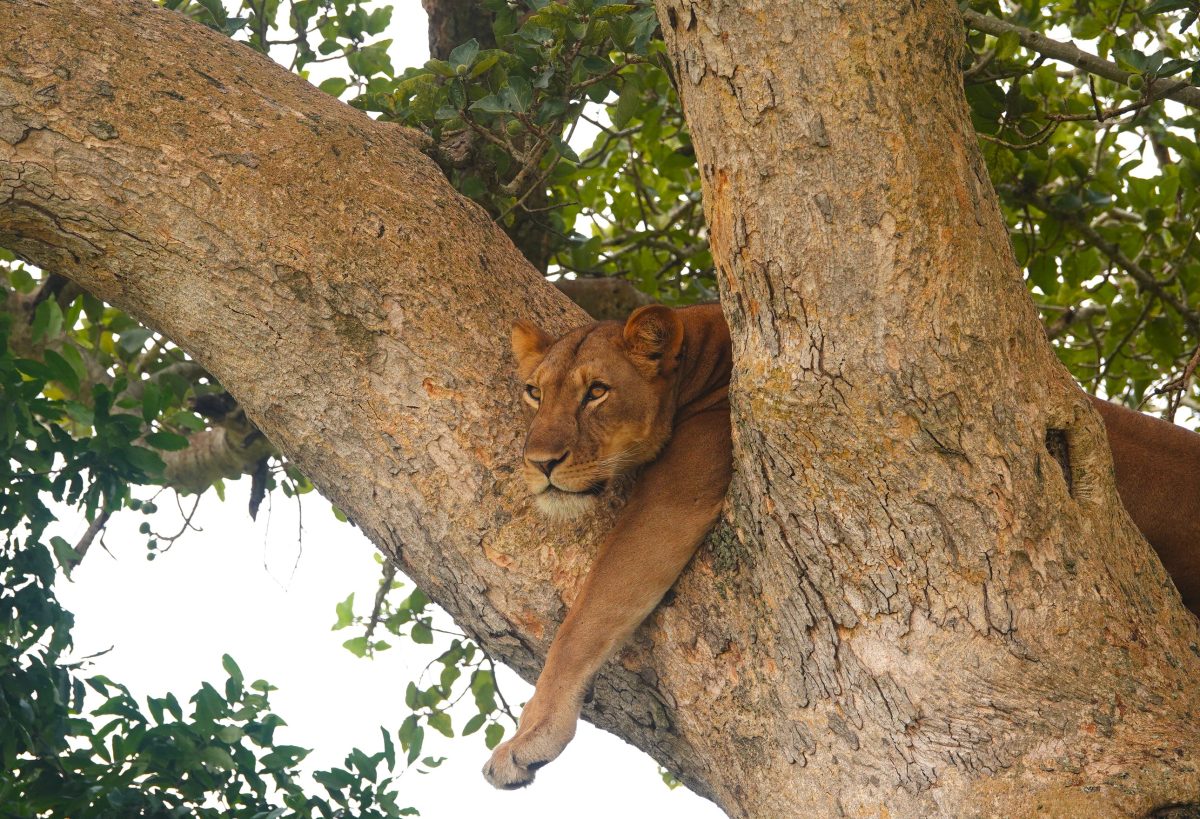
The Ishasha Sector is one of the most remarkable wildlife areas in Uganda. It lies in the southern part of Queen Elizabeth National Park and is famous for its unusual tree-climbing lions. These lions often rest on the broad branches of fig trees while overlooking the surrounding savannah. The sight of a lion relaxing several metres above the ground creates one of Uganda’s most memorable safari experiences. For travelers who want something beyond the usual game drive, Ishasha offers a quieter and more remote side of Queen Elizabeth National Park. Zamunda Travels includes this area in carefully planned Uganda safari experiences for travelers who want to discover its unique wildlife and landscapes.
What Makes the Ishasha Sector Special?
The Ishasha Sector stands apart from many other parts of Queen Elizabeth National Park because of its remote character and distinctive landscape. The Ishasha River forms the western boundary of the sector and also marks part of Uganda’s international border with the Democratic Republic of Congo. Across the river lies Virunga National Park. This location gives Ishasha a strong wilderness character and connects it to a wider landscape that supports wildlife on both sides of the border.
The scenery also changes as you explore the sector. Riverine woodland grows around the Ishasha River, while extensive woody grassland covers much of the surrounding area. These habitats support many species of mammals, birds, and primates. The area also supports a large population of Uganda kob and one of the park’s notable concentrations of topi. Therefore, a game drive in Ishasha can offer much more than a search for lions. You can also enjoy wide views, grazing antelopes, elephants, buffaloes, warthogs, and numerous bird species.
Why Are the Lions in Ishasha Famous?
The tree-climbing lions are the biggest attraction in the Ishasha Sector. Lions usually spend most of their time on the ground. However, the lions in this part of Queen Elizabeth National Park regularly climb trees and rest on strong, low branches. According to Uganda Wildlife Authority, the sector’s fig trees provide suitable branches that allow the lions to display this unusual behavior.
Seeing one of these lions in a tree can feel almost surreal. You may drive across the savannah and suddenly notice a large lion stretched across a branch. The animal may appear completely relaxed as it watches the plains below. Sometimes several lions can be found resting in the same general area. Their position also gives safari visitors a different perspective of these powerful predators.
Researchers and wildlife observers continue to study why lions climb trees. Several explanations have been proposed. Trees may provide relief from insects, offer shade, or give lions a better position above the ground. The behavior may also help them avoid certain disturbances on the ground. However, it is important not to present one explanation as a confirmed reason for every tree-climbing lion. Lion behavior can vary between individuals and locations.
Ishasha Sector and the Uganda Kob
The Ishasha Sector is also important because of its healthy savannah habitat and abundance of Uganda kob. These antelopes are an important part of the local ecosystem. They graze across open areas and form part of the prey base for large predators such as lions. This relationship helps explain why the area can be productive for predator sightings.
During a game drive, you may see Uganda kob spread across the grassland. Some animals remain alert while others continue grazing. Lions can use the vegetation and terrain to approach prey without being easily noticed. Consequently, the presence of herbivores adds another layer to the wildlife experience.
Ishasha also supports topi, which are particularly associated with the sector’s extensive grasslands. Uganda Wildlife Authority’s management plan identifies Ishasha as an important area for topi. The same document highlights the sector’s riverine woodland, primates, birds, and wider wildlife diversity.
Wildlife You Can See in Ishasha
Although the tree-climbing lions receive the most attention, Ishasha supports a broad range of wildlife. A safari here can produce sightings of elephants, buffaloes, Uganda kob, topi, warthogs, and other savannah species. The riverine areas also provide habitat for birds and primates.
Leopards and spotted hyenas also occur in Queen Elizabeth National Park. However, wildlife sightings remain unpredictable. No responsible safari company should promise that visitors will see a particular animal on a specific drive. At Zamunda Travels, we encourage travelers to enjoy the complete safari experience. Every sighting becomes part of the adventure.
The wetlands near Lake Edward add another important habitat. Uganda Wildlife Authority notes that the Edward Flats support wildlife such as elephants, buffaloes, and warthogs. The wetlands also attract diverse birdlife.
Exploring the Ishasha River and Lake Edward
The Ishasha River adds considerable beauty to the southern part of Queen Elizabeth National Park. It forms the western boundary of the sector and provides an important ecological connection between Uganda and the neighboring Virunga landscape in the Democratic Republic of Congo. Wildlife can move across the broader border landscape, which supports ecological connectivity between the two countries.
Lake Edward lies along the northern side of Ishasha. Its shoreline includes wetland areas that support both mammals and birds. These habitats make the sector attractive to travelers who enjoy landscapes as much as wildlife. A drive through Ishasha can therefore combine open savannah, woodland, wetlands, and river scenery within one safari experience.
How to Experience Ishasha on Safari
The best way to explore the area is through a guided game drive. A knowledgeable guide can help identify animal tracks, explain wildlife behavior, and choose suitable routes based on current conditions. Early morning and late afternoon drives are especially useful because wildlife often becomes more active during cooler periods.
However, patience remains important. Tree-climbing lions do not follow a timetable. A lion may remain hidden in vegetation, move to another tree, or rest somewhere that is difficult to see. Your guide may need to check several areas before finding them.
A 4WD safari vehicle is also highly useful for exploring the region. Roads in and around Queen Elizabeth National Park can vary with weather and seasonal conditions. Uganda Wildlife Authority recommends suitable safari vehicles for accessing the wider Queen Elizabeth and Bwindi areas, while routes through Ishasha can form part of journeys toward southern Bwindi sectors.
Ishasha Sector as Part of a Uganda Safari
One advantage of the Ishasha Sector is that travelers can combine it with other attractions in southwestern Uganda. Queen Elizabeth National Park offers diverse ecosystems, including savannah, wetlands, forests, lakes, and the famous Kazinga Channel. Visitors can therefore combine traditional game drives with boat cruises and primate experiences.
Ishasha can also fit naturally into a safari that continues toward Bwindi Impenetrable National Park. The southern route through Queen Elizabeth National Park can provide an opportunity to search for tree-climbing lions before continuing toward the gorilla trekking areas. Uganda Wildlife Authority identifies the Ishasha route as one approach toward Bwindi and notes that Ishasha lies roughly 64 kilometres from the Bwindi side of Buhoma, although actual travel time depends on road and weather conditions.
Zamunda Travels can organize such routes as part of a wider Uganda safari. This allows travelers to combine wildlife viewing with gorilla trekking, chimpanzee tracking, bird watching, cultural experiences, or other activities depending on the available time.
When Is the Best Time to Visit Ishasha?
The Ishasha Sector can be visited throughout the year. However, the experience can vary between seasons. During drier periods, animals may gather around reliable water sources and visibility can improve in some areas. The vegetation can also become less dense, which may make wildlife easier to spot.
The wetter seasons bring greener landscapes and can create excellent photographic conditions. Rain can also affect some roads, so travelers should allow flexibility in their schedules. Instead of focusing only on one month, it is better to consider your priorities. Wildlife viewing, photography, road conditions, accommodation, and your wider Uganda itinerary should all influence the timing of your trip.
Zamunda Travels can help travelers select a suitable travel period based on the activities they want to combine with Ishasha.
Where Is Ishasha Sector Located?
Ishasha is located in the southern part of Queen Elizabeth National Park in southwestern Uganda. The sector sits close to the border with the Democratic Republic of Congo. The Ishasha River forms part of the western international boundary, while Lake Edward lies to the north.
Its location makes Ishasha especially useful for travelers combining Queen Elizabeth National Park with Bwindi Impenetrable National Park. The route can create a logical connection between savannah wildlife and mountain gorilla trekking. However, road conditions and journey times can change, so travelers should plan transfers with an experienced operator.
Is Ishasha Worth Visiting?
Yes, Ishasha is worth visiting for travelers who want a distinctive Uganda safari experience. Its biggest attraction is the opportunity to search for tree-climbing lions. Few wildlife encounters compare with seeing a lion resting high in a fig tree above the savannah.
Yet the lions are only part of the story. Ishasha also offers open grasslands, riverine woodland, wetlands, Uganda kob, topi, elephants, buffaloes, birds, and other wildlife. Its remote setting adds to the sense of wilderness. The area can feel less crowded than some of the better-known safari circuits, although visitor numbers and conditions vary.
For travelers who want to combine several experiences, Ishasha becomes even more valuable. You can explore its savannah during a game drive and then continue toward Bwindi for gorilla trekking. You can also connect the visit with other Queen Elizabeth attractions, including the Kazinga Channel and surrounding wildlife areas.
Conservation of Ishasha’s Tree-Climbing Lions
Protecting the lions of Ishasha remains important because these predators contribute to both the ecosystem and Uganda’s tourism economy. Uganda Wildlife Authority has identified threats to lion populations in protected areas, including snaring, poisoning, and conflicts linked to pride competition. Its annual performance report specifically highlights concern about the declining number of tree-climbing lions in Ishasha.
Responsible tourism can contribute to conservation by creating economic value from living wildlife and protected landscapes. Travelers should follow park rules, maintain a safe distance from animals, avoid loud disturbances, and never attempt to attract wildlife for photographs. These simple practices help protect the animals and preserve the quality of the safari experience.
Zamunda Travels supports responsible travel that respects wildlife, local communities, guides, and protected areas. When visitors choose responsible safari practices, they help ensure that Uganda’s wildlife remains an attraction for future generations.
Why Choose Zamunda Travels for an Ishasha Safari?
A successful safari involves more than reaching a national park. It requires thoughtful route planning, suitable accommodation, reliable transportation, experienced guiding, and enough time for wildlife viewing. Zamunda Travels can combine Ishasha with other destinations in southwestern Uganda to create a safari that matches your interests and available time.
For example, a longer itinerary can combine Queen Elizabeth National Park, Ishasha, Bwindi Impenetrable National Park, and other destinations. Travelers can enjoy game drives before moving into Uganda’s forested mountain landscapes. This combination provides a strong contrast between savannah wildlife and primate experiences.
Zamunda Travels can also help travelers choose between road and air travel when appropriate. Uganda Wildlife Authority notes that nearby airstrips, including Kihihi for the Ishasha area, can serve visitors traveling by scheduled or chartered aircraft.
In conclusion,
The Ishasha Sector is one of Uganda’s most distinctive safari destinations. Its tree-climbing lions have made it internationally famous, but the area offers much more than an unusual predator sighting. Savannah plains, fig trees, riverine woodland, wetlands, Uganda kob, topi, elephants, buffaloes, and birdlife all contribute to its appeal.
The sector also provides an excellent link between Queen Elizabeth National Park and southwestern Uganda’s primate destinations. With careful planning, travelers can combine a search for tree-climbing lions with gorilla trekking and other wildlife experiences.
For anyone planning a Uganda safari, Ishasha deserves a place on the itinerary. With Zamunda Travels, travelers can explore this remarkable landscape while enjoying a professionally planned safari focused on wildlife, conservation, comfort, and authentic experiences.