Golden Monkey Tracking in Rwanda
October 11, 2026
Mount Karisimbi Hiking Guide
October 11, 2026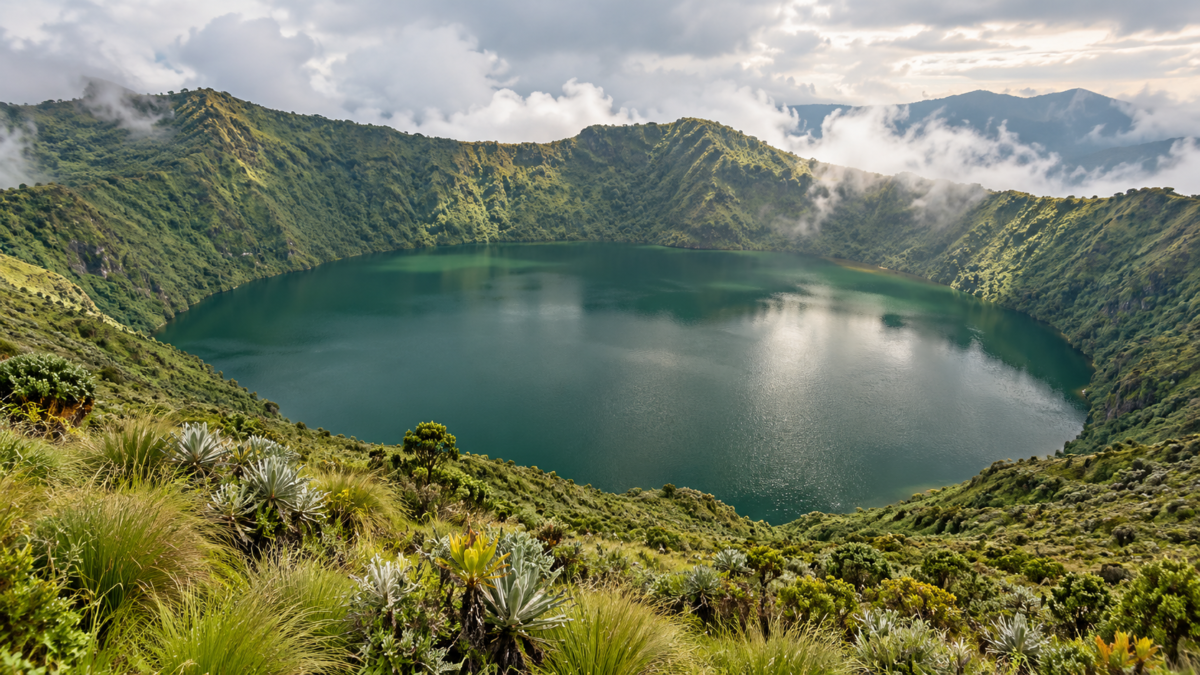
The Mount Bisoke hike Rwanda experience takes you through mountain forest towards a beautiful summit crater lake. However, reaching the top requires more effort than many visitors expect. Steep slopes, slippery ground and thinner air make this a demanding day outdoors.
For adventurous travellers, the reward goes beyond the summit photograph. Along the way, changing vegetation and quiet forest moments reveal another side of Rwanda’s volcanic landscape.
Zamunda Travels can include Bisoke in a private Rwanda safari, alongside wildlife, cultural experiences and time to rest. This guide explains the costs, trail conditions and practical choices that help you prepare.
Mount Bisoke Hike Rwanda: What to Expect
Mount Bisoke rises to 3,711 metres in the Virunga mountain range, along Rwanda’s border with the Democratic Republic of Congo. The Rwanda hiking experience takes place in Volcanoes National Park. Its main attraction is the crater lake near the summit.
Unlike a technical mountain climb, the standard hike does not normally require ropes or climbing equipment. Nevertheless, you need stamina, suitable footwear and patience on steep ground.
Visit Rwanda describes the summit trail as taking five hours to a whole day. Therefore, reserve the entire day rather than planning around the fastest advertised time.
A quick planning overview
| Detail | What to expect |
|---|---|
| Main destination | Summit crater lake |
| Hiking style | Guided, non-technical mountain hike |
| Difficulty | Strenuous, especially in wet conditions |
| Practical time allowance | Approximately six to eight hours, sometimes longer |
| Best overnight base | Musanze or Kinigi |
| Main challenges | Steep slopes, mud, altitude and descent |
| Recommended approach | Stay nearby before hiking and keep the afternoon flexible |
Zamunda Travels can arrange the surrounding travel logistics while park guides lead the protected-area hike. This makes the experience easier to fit into a wider safari.
Before booking, explain your hiking experience honestly. For example, regular countryside walks provide a useful foundation, but steep mountain trails demand more sustained effort.
The Bisoke Crater Lake and Forest Experience
The Bisoke crater lake provides a striking finish to the climb. Its water sits within a volcanic crater, surrounded by steep slopes. However, mist can hide part or all of the view.
Consequently, approach the summit with realistic expectations. Clear skies offer memorable scenery, but cloudy conditions remain part of this mountain environment.
The journey itself also deserves attention. Volcanoes National Park protects bamboo forest, montane woodland, grassland, swamp and heath. As you climb, the changing landscape becomes an important part of the experience.
Listen for birds and notice how the forest changes with height. Meanwhile, moss-covered vegetation and shifting cloud create excellent photographic subjects.
The summit lake is different from Lake Ngezi
Lake Ngezi is a separate, lower hiking destination near Bisoke. Visit Rwanda describes that outing as relatively easy, taking around three hours overall. It does not reach the summit crater lake.
Therefore, check the exact activity name before paying. A “Bisoke area hike” may describe a different experience from the summit climb.
Tell Zamunda Travels whether your priority is the crater lake, forest scenery or a gentler walk. That distinction helps match the route to your interests.
Can you see gorillas?
A wildlife encounter is possible, but it should never determine your booking decision. Bisoke hiking does not provide a scheduled gorilla visit.
Instead, book gorilla trekking separately if that experience matters to you. If wildlife appears during your hike, follow the ranger’s instructions immediately.
How Difficult Is the Mount Bisoke Hike?
Mount Bisoke hike difficulty comes from several challenges working together. The climb is sustained, the ground can be slippery, and the summit stands high above sea level.
Although the route is non-technical, it is still strenuous. Mud and roots can slow progress, while the descent demands concentration after several tiring hours.
For this reason, judge the hike by terrain and time rather than distance alone. A short stretch of steep mud can feel harder than several kilometres on a smooth path.
Who is likely to enjoy it?
Travellers who regularly hike hills usually have a better starting point. However, mountain conditions can challenge even active visitors.
A useful preparation exercise is a long walk with repeated uphill sections. Afterwards, notice how your legs feel when walking downstairs.
If that effort leaves you exhausted, build more preparation time into your plans. Alternatively, discuss a shorter hiking option with Zamunda Travels.
Prepare for the descent
Many visitors focus entirely on reaching the crater lake. However, the return journey still requires energy, balance and careful foot placement.
Take smaller steps on slippery sections. Also, use walking poles if you feel comfortable with them.
Keep your pace steady rather than chasing faster hikers. If you feel unwell or unusually weak, tell your guide promptly.
Hiring a porter can also reduce the burden of carrying your daypack. Nevertheless, porter support does not remove the physical demands of the mountain.
Mount Bisoke Hiking Permit and Costs
The Mount Bisoke hiking permit currently costs US$75 for an adult foreign visitor. Rwanda Development Board lists other adult rates according to nationality and residency. The following figures were checked in October 2026.
| Visitor category | Official adult permit fee |
|---|---|
| Foreign visitor | US$75 |
| Foreign resident in Rwanda | US$60 |
| Rwandan citizen | RWF4,000 |
| East African citizen | US$55 |
| East African foreign resident | US$65 |
Eligibility documents matter when claiming a reduced rate. Therefore, confirm your category before payment and carry the required identification. Fees may change before your travel date.
Permit price versus complete tour price
The permit is only one part of your Bisoke hiking cost. Transport, accommodation, meals and porter services can increase the total substantially.
Consequently, compare written inclusions instead of headline prices. A Kigali departure and a Kinigi departure involve different transport arrangements.
Ask Zamunda Travels for a quotation showing your full travel plan. It should clarify accommodation, transfers, meals, permit arrangements and optional extras.
A simple budgeting example
For two foreign visitors, the permits total US$150 at the listed rate. Then add your quoted vehicle, hotel and meal costs.
Shared transport can reduce the amount each traveller pays. However, solo travellers usually carry more of the vehicle cost themselves.
Porter charges, equipment hire and tips should also remain separate budget items. Confirm current charges locally rather than treating online estimates as fixed prices.
Finally, ask about cancellation conditions and weather-related changes before paying. A hiking permit does not guarantee reaching the summit.
Booking, Reporting Time and Getting There
Rwanda Development Board lists 7:00 a.m. as the reporting time. It also sets the minimum hiking age at 15, with a maximum of 16 hikers per group.
Book ahead once your travel dates are clear. Although availability varies, early arrangements reduce uncertainty around transport and accommodation.
Zamunda Travels can coordinate your permit arrangements with your wider Rwanda itinerary. Provide accurate passport details and mention any residency category you intend to claim.
Stay near the park before hiking
Musanze and Kinigi provide practical overnight bases. Staying nearby gives you more time for breakfast and avoids a lengthy transfer before the climb.
A Kigali departure remains possible, but it requires a very early start. Moreover, the return drive can feel tiring after a demanding hike.
For greater comfort, arrive near the park the previous afternoon. Then prepare your bag, request breakfast and sleep early.
Remember the trailhead transfer
Registration at headquarters does not mean you have reached the walking start. Rwanda Development Board advises arranging a 4×4 for the transfer to the parking base.
Therefore, check that your vehicle arrangement covers this section. A hotel transfer alone may leave an important gap.
Also, avoid booking a fixed evening activity immediately afterwards. Trail conditions, group pace and weather can delay your return.
A flexible schedule gives your guide room to manage the day properly. It also lets you enjoy the hike without watching the clock.
Best Time to Hike Mount Bisoke
For easier trail conditions, consider June to early September. Visit Rwanda identifies June to mid-September as the main dry period, although occasional rain still occurs.
The shorter, generally drier window around late December, January and early February can also suit hiking. However, mountain weather remains unpredictable.
Rwanda’s rainy seasons generally run from mid-February to May and mid-September to mid-December. Consequently, October and November often require greater tolerance for wet conditions.
Dry season does not mean dry boots
Even during favourable months, shaded ground can retain moisture. Therefore, pack waterproof clothing and footwear with dependable grip.
Likewise, a sunny morning does not promise a clear summit. Cloud can develop while you climb.
Choose your dates around overall comfort rather than guaranteed views. Zamunda Travels can help balance hiking conditions with your other safari activities.
Photography tips for changing weather
Keep your camera accessible, but protect it from moisture. A waterproof pouch is useful when rain arrives suddenly.
Also, photograph the forest during the ascent. These images tell the story even when mist hides the lake.
At the summit, take a quick photograph when visibility opens. However, do not leave the approved route while searching for a better angle.
A lightweight camera setup can make the climb more comfortable. Consider whether each extra lens justifies the weight you must carry.
What to Pack and How to Prepare
Good equipment improves comfort, especially when the trail becomes wet. Prioritise footwear, rain protection and a manageable daypack.
Pack these essentials:
- Hiking boots with reliable grip.
- Long trousers and comfortable hiking layers.
- A waterproof jacket and warm layer.
- Walking poles, if you use them confidently.
- Drinking water, snacks and a packed lunch.
- Gloves and gaiters for muddy sections.
- Sun protection and waterproof storage for valuables.
- Required identification and booking documents.
Long trousers also help protect against stinging nettles. Meanwhile, Rwanda Development Board notes that some clothing and equipment can be hired at headquarters. Check availability beforehand.
Practise before travelling
In the weeks before departure, include hills or stairs in your walking routine. Gradually increase the time you spend moving uphill.
Also, wear your hiking boots during preparation. Discovering uncomfortable footwear on Bisoke can spoil an otherwise rewarding day.
Practise carrying your intended daypack. Afterwards, remove anything unnecessary.
Small details that improve the day
Ask your lodge to prepare breakfast early and organise lunch beforehand. Then fill water bottles before leaving.
Carry a spare pair of socks and leave clean footwear in the vehicle. These simple additions make the return journey more comfortable.
Finally, discuss porter support before starting. Arranging help early is easier than waiting until you feel exhausted.
Zamunda Travels can include these practical preparations in your pre-departure guidance.
Combining Bisoke with a Zamunda Travels Safari
Bisoke works well within a longer Rwanda journey. However, avoid stacking demanding activities without recovery time.
For example, arrive in Musanze or Kinigi on your first day. Enjoy an unhurried evening and listen to the dawn chorus before your hiking departure.
Use the following day for Bisoke, with another nearby overnight afterwards. Then choose a relaxed transfer or a lighter activity.
Add primates on separate days
Gorilla trekking and golden monkey tracking offer different experiences from a volcano hike. Each needs its own arrangements.
Therefore, allow separate days rather than assuming you can combine everything. Also, remember that gorilla trekking can involve substantial walking.
Zamunda Travels can shape the sequence around your priorities and fitness. A flexible itinerary helps you enjoy each activity properly.
Choose alternatives when needed
If the summit climb feels unsuitable, consider Lake Ngezi or other lower-level experiences. Meanwhile, more experienced hikers may consider Karisimbi.
Visit Rwanda describes Karisimbi as a strenuous two-day hike with camping. Therefore, it requires a different level of planning from Bisoke.
Before booking with Zamunda Travels, share your dates, group size, accommodation preference and hiking experience. Contact info@zamundatravels.com or WhatsApp +256704705606 for a tailored quotation.
Frequently Asked Questions
How long does the Mount Bisoke hike take?
Allow approximately six to eight hours, with extra flexibility for slow progress. However, Visit Rwanda gives a broader range of five hours to a full day. Avoid planning around the quickest completion time.
Is Mount Bisoke suitable for beginners?
Fit beginners may enjoy it, especially after practising uphill walking. Nevertheless, steep terrain, mud and altitude make it demanding. Discuss your experience with Zamunda Travels before choosing the summit route.
How much does hiking Mount Bisoke cost?
The listed adult foreign visitor permit is US$75. However, a complete trip costs more once you add transport, accommodation and meals. Request a quotation with clear inclusions before comparing packages.
Can you swim in the Bisoke crater lake?
No. Rwanda Development Board prohibits swimming in the crater lake. Instead, enjoy the view from the approved area and follow your guide’s instructions.
Can you hike Bisoke without a guide?
No. Visit Rwanda states that these protected-area hikes require a permit and guide. Zamunda Travels can coordinate your travel arrangements, while authorised park guides lead the mountain activity.