Manyattas in East Africa
August 15, 2026
Family Safari Volcanoes National Park
August 15, 2026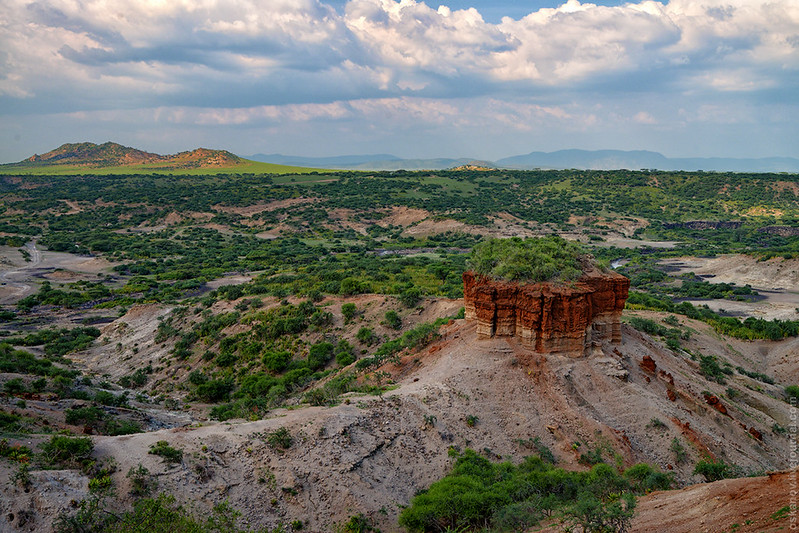
East Africa holds the deepest record of human history on the planet, and nowhere is that record older than at Lomekwi 3. This remote site sits west of Lake Turkana in Kenya, and it houses stone tools dated to 3.3 million years. Researchers now recognize Lomekwi 3 as the oldest Stone Age site in East Africa, and indeed the oldest known toolmaking site on Earth. The discovery rewrote textbooks, because it proved that hominins shaped stone long before the genus Homo ever appeared. For travelers who love history as much as scenery, Zamunda Travels treats this corner of Kenya as one of the most important stops on the African continent.
Where Is the Oldest Stone Age Site in East Africa Located?
Lomekwi 3 lies in the arid badlands west of Lake Turkana, within Kenya’s Turkana Basin. The landscape today looks harsh and dry, yet 3.3 million years ago it held a mosaic of woodland and grassland near ancient rivers. A team led by French archaeologist Sonia Harmand identified the site in 2011, and her group published the findings in Nature in 2015. Their excavation uncovered stone cores, flakes, and anvils buried in sediment layers that geologists could date with precision. This careful dating is why scientists confidently call Lomekwi 3 the oldest Stone Age site in East Africa rather than merely an old one. Zamunda Travels routes its Turkana Basin expeditions directly through this region, pairing the archaeology with visits to Lake Turkana’s striking jade waters.
What Makes Lomekwi 3 the Oldest Stone Age Site in East Africa
Three qualities set Lomekwi 3 apart from every other early archaeological site in the region. First, its tools predate the previously accepted oldest stone technology, the Oldowan industry, by roughly 700,000 years. Second, the site preserves a distinct toolmaking style that researchers named the Lomekwian, marking a technological stage of its own. Third, the tools appear alongside fossils from Kenyanthropus platyops, a hominin species that lived in the same landscape at the same time. Together, these facts confirm why archaeologists treat Lomekwi 3 as the true origin point of the archaeological record.
The Lomekwian Toolkit and Its Makers
The Lomekwian toolkit looks primitive next to later Stone Age technology, but it still shows real skill. The toolmakers combined core reduction with battering, striking large stones to remove flakes and shape working edges. They selected fissile rocks that fractured predictably, a choice that reveals an early grasp of stone mechanics. Unlike the sharper, more standardized Oldowan flakes that followed, Lomekwian tools favor heavier, cruder forms suited to pounding tasks. This toolkit therefore represents a transitional stage between simple stone use and the deliberate flaking traditions that later hominins refined.
Kenyanthropus platyops and the Toolmaker Mystery
Nobody has proven exactly which hominin species produced the Lomekwi 3 tools. Fossils of Kenyanthropus platyops, a flat faced hominin discovered nearby by Meave Leakey’s team, lived in the area at the right time, so many researchers consider this species a strong candidate. The find challenges an old assumption that toolmaking began only with the genus Homo. Instead, the evidence suggests that stone tool use emerged earlier in human evolution than scientists previously believed, among ancestors that were not yet fully human in the modern sense.
Beyond Lomekwi: Other Ancient Stone Age Sites in East Africa
Lomekwi 3 holds the record for age, but it stands within a wider constellation of early sites across East Africa. Two locations in particular round out the story of humanity’s first tools, and Zamunda Travels includes both on its longer heritage circuits through Kenya and Tanzania.
Nyayanga, the Oldest Oldowan Site
On Kenya’s Homa Peninsula, near the shores of Lake Victoria, archaeologists uncovered a site called Nyayanga that dates to roughly 2.9 to 3 million years ago. This site holds the oldest confirmed examples of Oldowan technology, the toolkit that eventually spread across much of Africa and beyond. Excavators recovered 330 artifacts and 1,776 animal bones, along with two large molars belonging to Paranthropus, another hominin relative. Wear patterns on the Nyayanga tools show that their makers butchered hippos and pounded plant material, which gives rare insight into daily survival strategies from that era.
Olduvai Gorge, the Cradle of Stone Age Archaeology
No discussion of East African prehistory feels complete without Olduvai Gorge in northern Tanzania. Louis and Mary Leakey began excavating there in the 1930s, and their work eventually named the Oldowan tool culture itself. The gorge stretches about 30 miles across the eastern Serengeti Plain and exposes deposits spanning 2.1 million to 15,000 years ago. Mary Leakey’s 1959 discovery of an early hominin skull cemented the site’s fame worldwide. UNESCO recognized the surrounding Ngorongoro Conservation Area as a World Heritage property in 1979, and the gorge remains the most continuously studied archaeological record of human tool development anywhere on Earth. Many guests booking with Zamunda Travels first ask about Olduvai, then discover that Lomekwi and Nyayanga push the timeline back even further.
Why the Oldest Stone Age Site in East Africa Matters Today
Lomekwi 3 forces scientists to rethink a fundamental assumption about human evolution. For decades, researchers linked toolmaking directly to the genus Homo and to the spread of savanna grasslands. The Lomekwi discovery breaks that link, because it places sophisticated stone use in a wooded environment among pre Homo hominins. This shift matters far beyond academic circles, since it reshapes how museums, textbooks, and documentaries present the human story. It also elevates East Africa’s status as the true birthplace of technology, long before agriculture, writing, or cities existed anywhere else. Understanding the oldest Stone Age site in East Africa, in short, means understanding the very first spark of human ingenuity.
Visiting East Africa’s Stone Age Heritage with Zamunda Travels
Travelers rarely get the chance to stand at the literal starting point of human technology, yet the Turkana Basin offers exactly that experience. Zamunda Travels designs itineraries that combine the Lomekwi 3 region, the Nyayanga excavation area near Lake Victoria, and Olduvai Gorge into one connected journey across Kenya and Tanzania. Expert guides working with Zamunda Travels explain each site’s geology, dating methods, and fossil discoveries in accessible language, so guests leave with genuine understanding rather than just photographs. Zamunda Travels also arranges visits to the Turkana Basin Institute and the National Museums of Kenya, where many original artifacts remain on display. Because these regions sit far from typical safari routes, planning through Zamunda Travels ensures safe transport, knowledgeable local guides, and access to research areas that casual travelers might otherwise miss entirely.
Final Thoughts
Lomekwi 3 stands as the oldest Stone Age site in East Africa, and its 3.3 million year old tools reshape the entire story of human origins. Nyayanga and Olduvai Gorge add depth to that story, showing how toolmaking evolved and spread across the continent over millions of years. Together, these sites confirm that East Africa deserves its reputation as the true cradle of humankind. Travelers who want to witness this history firsthand can do so through Zamunda Travels, which turns a scientific milestone into an unforgettable, guided journey.