Understanding Rwandan Culture Before Your Trip
August 25, 2026
A Complete Guide to Rwandan Markets
August 25, 2026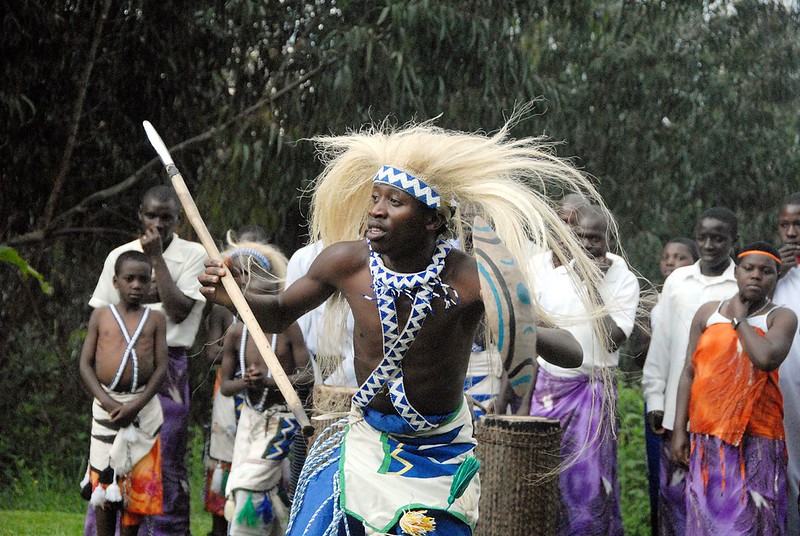
Rwandan Music and Dance forms one of the richest cultural inheritances on the African continent, and it still beats at the heart of daily life in the Land of a Thousand Hills. Long before radios and stages existed, drummers, dancers, and storytellers used rhythm to honor kings, celebrate harvests, and prepare warriors for battle. Today, that same heartbeat welcomes travelers who arrive with Zamunda Travels to witness a tradition that has survived centuries of change. This blog explores the history, instruments, dance forms, and modern revival of Rwandan Music and Dance, and it explains why this heritage deserves a place on every cultural itinerary through Rwanda.
Understanding Rwandan Music and Dance as a Cultural Cornerstone
Music and dance in Rwanda are never treated as separate art forms; instead, they function as one unified language. Communities have used this language since the pre-colonial era to mark ceremonies, festivals, weddings, and even moments of mourning. Consequently, Rwandan Music and Dance carries meaning far beyond entertainment, because every drumbeat and every foot movement tells a story about identity, courage, or gratitude. Elders often refer to this broader tradition as gakondo, a term that captures the full spectrum of ancestral customs still practiced today. As a result, visitors who travel with Zamunda Travels quickly discover that a single performance can reveal more about Rwandan values than an entire history lesson.
The collective nature of these performances also stands out. Rwandan dancers rarely perform alone, and drummers typically play in ensembles rather than as soloists. This communal approach mirrors the country’s broader emphasis on unity, a theme that resurfaces constantly throughout Rwandan culture. Therefore, watching a live show becomes less about individual talent and more about the harmony created when many performers move as one body.
The Origins and History of Rwandan Music and Dance
The roots of Rwandan Music and Dance stretch back to the royal courts that governed the region for centuries. Kings, known locally as mwami, relied on skilled performers to entertain guests, honor military victories, and reinforce royal authority. Because of this royal patronage, many dance forms carried strict rules about who could perform and under what circumstances.
The Royal Courts and the Birth of Intore
Intore, meaning “the chosen ones” in Kinyarwanda, remains the most celebrated dance to emerge from this royal tradition. Historians trace its formal development to the era of King Kigeli IV in the seventeenth century, although earlier forms likely existed long before his reign. Dancers earned the right to perform Intore through rigorous selection, since the routine demanded both physical strength and unwavering discipline. The full performance unfolds in three connected parts: an elegant ballet performed by women, a vigorous dance of heroes performed by men, and a powerful drumming section that ties both halves together. Male drummers usually perform in groups of seven to nine, and their coordinated rhythm gives the entire show its unmistakable energy. Over time, several specialized troupes carried this tradition forward, including Ishyaka, Indashyikirwa, Indemarugamba, and Imbasharugamba, each of which trained warriors to dance with pride before heading into battle.
Beyond Intore, Rwandan chiefs also established ceremonial dances known collectively as kwiyereka. These performances honored specific weapons: one dance celebrated the bow, another paid tribute to the shield, and a third glorified the spear. Meanwhile, graceful female-led dances such as umushayayo and umushagiriro brought softer, more lyrical movement into royal celebrations, while umuhamiriza served as a fierce warfare dance meant to intimidate rivals and rally troops.
The Sacred Ingoma Drums of the Monarchy
No discussion of Rwandan Music and Dance feels complete without the royal drums, collectively known as ingoma. During the monarchy, these drums fell into three distinct categories: ritual drums that announced a king’s arrival, royal drums that symbolized political power, and musical drums reserved for festive entertainment. Among the royal drums, Karinga held the highest status. King Ruganzu II Ndori inaugurated Karinga in the late sixteenth century, and it quickly replaced an older instrument called Rwoga as the supreme symbol of the kingdom. Three additional royal drums, Cyimumugizi, Mpatsibihugu, and Kiragutse, completed the sacred ensemble that represented the strength of the nation.
An ensemble called Umutagara w’ingoma, typically made up of eight to twelve musical drums, provided the lively rhythms heard during festivals and diplomatic visits. However, everything changed after Rwanda abolished its monarchy in 1961, since the royal drums lost their ritual function almost overnight. Drumming then shifted firmly into the realm of entertainment, and women gained access to a role that had once belonged exclusively to men.
The Instruments That Shape Rwandan Music and Dance
A wide range of handcrafted instruments gives Rwandan Music and Dance its distinctive sound. Musicians typically group these instruments into three families: chordophones, idiophones, and aerophones, and each family contributes a different texture to the overall performance.
Chordophones: Inanga and Umuduri
The inanga stands as one of the oldest and most cherished instruments in Rwandan culture. Craftsmen traditionally carve it from a single hollowed piece of wood and string it with up to eight strands of cow tendon or plant fiber. Because the inanga is tuned to a pentatonic scale, it produces gentle, melodic tones that pair naturally with storytelling, poetry, and reflections on love or history. Musicians usually play the inanga solo, allowing its soulful sound to fill intimate gatherings without competing against louder instruments.
The umuduri offers a strikingly different experience. This single-stringed musical bow measures between 125 and 135 centimeters in length, and a hollow gourd attached near its base acts as a natural resonator. Players once strung the umuduri with plant fiber or animal gut, though metal wire has become more common in recent decades. By pressing a finger against the string, a musician can shorten its length and produce additional notes, which explains why this seemingly simple instrument can create such a surprising range of tones. Traditionally, members of the Twa community built the umuduri, while Hutu musicians frequently performed with it during festivals such as ikinimba.
Idiophones and Aerophones: Ikembe, Amakondera, and More
The ikembe, a small lamellophone built from iron strips fixed to a wooden soundbox, adds a bright, plucked accompaniment to narrative songs. Although many assume the ikembe is ancient, it actually arrived in Rwanda during the early twentieth century, brought over from the Congo region during the colonial period. Alongside it, idiophones such as amayugi, small bells tied around dancers’ ankles, and ikinyuguri, a hand-held rattle, add rhythmic texture that highlights every footstep and turn.
On the wind instrument side, amakondera horns produce a long, resonant tone that once carried messages across the hills and now accompanies powerful warrior dances. Additional aerophones, including the bamboo flute called urusengo and the lobelia-stem flute known as umwirongi, contribute softer, breathier melodies that balance the boldness of the drums and horns.
Popular Dance Forms Beyond Intore
Although Intore receives the most international attention, Rwanda’s dance heritage extends far beyond a single routine. Ikinimba, for example, blends drumming, singing, and instrumental accompaniment from the inanga, umuduri, ikembe, and iningiri to narrate stories of heroic kings and legendary battles. Performers treat this dance almost like a spoken history book, since every verse preserves an event that shaped the nation.
By contrast, imishayayo offers a gentler experience, using slow, rocking movements designed to soothe rather than energize an audience. Meanwhile, the cow horn dance, sometimes called imidigudu, celebrates Rwanda’s deep cultural connection to cattle. Young men once balanced real cow horns on their heads or held them against their chests while performing coordinated steps, and the entire routine paid tribute to the herders who shaped rural Rwandan life. Warlike dances such as imyiyereko, a parade that imitates charging warriors, round out this diverse dance vocabulary and demonstrate just how varied Rwandan Music and Dance can be.
Cultural Significance and Modern Revival of Rwandan Music and Dance
Rwandan Music and Dance carries weight that extends well past aesthetics, particularly when viewed through the lens of the country’s recent history. Traditional performance nearly collapsed during the 1994 genocide against the Tutsi, since many gifted musicians lost their lives and entire troupes disbanded overnight. Consequently, rebuilding this art form became an essential part of Rwanda’s broader journey toward healing.
Healing, Unity and National Identity After 1994
In the years following the genocide, Intore performances took on a new and powerful purpose. Instead of glorifying past warfare, the dance became a symbol of shared identity and collective resilience. Communities used group performance to rebuild trust, and government-backed cultural programs actively promoted traditional arts as a tool for reconciliation. As a result, watching an Intore troupe perform today often feels less like observing history and more like witnessing a nation actively choosing unity.
Preservation Efforts and Amatorero Troupes
Dedicated training groups known as amatorero now safeguard this heritage for future generations. Well-known troupes such as Amasimbi n’Amakombe, Irindiro, and the Ballet National Urukerereza teach young Rwandans the exact choreography, drumming patterns, and costume traditions passed down from earlier centuries. These organizations perform regularly at national events, cultural centers, and heritage sites such as the King’s Palace Museum in Nyanza and the Ethnographic Museum in Huye. Consequently, anyone who books a cultural tour through Zamunda Travels can witness performances that remain remarkably faithful to their historical roots.
Experiencing Rwandan Music and Dance with Zamunda Travels
Travelers rarely need to search hard for opportunities to witness Rwandan Music and Dance firsthand, since Zamunda Travels builds cultural encounters directly into its Rwanda itineraries. Guides from Zamunda Travels understand the history behind each drumbeat, and they can explain the symbolism of a costume or the meaning behind a specific footwork pattern long before the performance even begins.
Best Places to Watch Live Performances
Several destinations across Rwanda offer authentic access to traditional performance. Cultural villages near Musanze, close to Volcanoes National Park, regularly host Intore troupes alongside hands on drumming lessons for visitors. Meanwhile, Kigali’s cultural venues showcase contemporary interpretations of traditional music, blending ingoma rhythms with modern instrumentation. Zamunda Travels arranges visits to both settings, so guests can compare the raw, historical version of a dance with its evolving modern expression.
Travel Tips for Cultural Immersion
Guests who want the richest experience should ask their Zamunda Travels guide about joining a drumming session, since many cultural centers now invite visitors to sit behind an ingoma drum and learn a basic rhythm. Additionally, travelers should plan performance visits around local festivals whenever possible, because these events often gather multiple troupes in one location. Photography is usually welcome, though guests should always ask permission before capturing close-up images of performers in traditional attire.
Why Rwandan Music and Dance Deserves a Place on Your Journey
Rwandan Music and Dance offers far more than a colorful show for passing tourists; it offers a direct window into centuries of royal history, communal resilience, and national healing. From the thunderous drumming of Intore to the delicate plucking of an inanga, every element of this tradition carries deep cultural meaning. Consequently, travelers who explore Rwanda with Zamunda Travels leave with more than photographs, since they carry home a genuine understanding of what makes this small nation’s culture so remarkable. Anyone planning a trip to the Land of a Thousand Hills should place a live cultural performance near the top of their itinerary, because few experiences capture the spirit of Rwanda quite like its music and dance.