Wildlife in Murchison Falls National Park
September 20, 2026
Leopard Tracking Experience in Queen Elizabeth National Park
September 22, 2026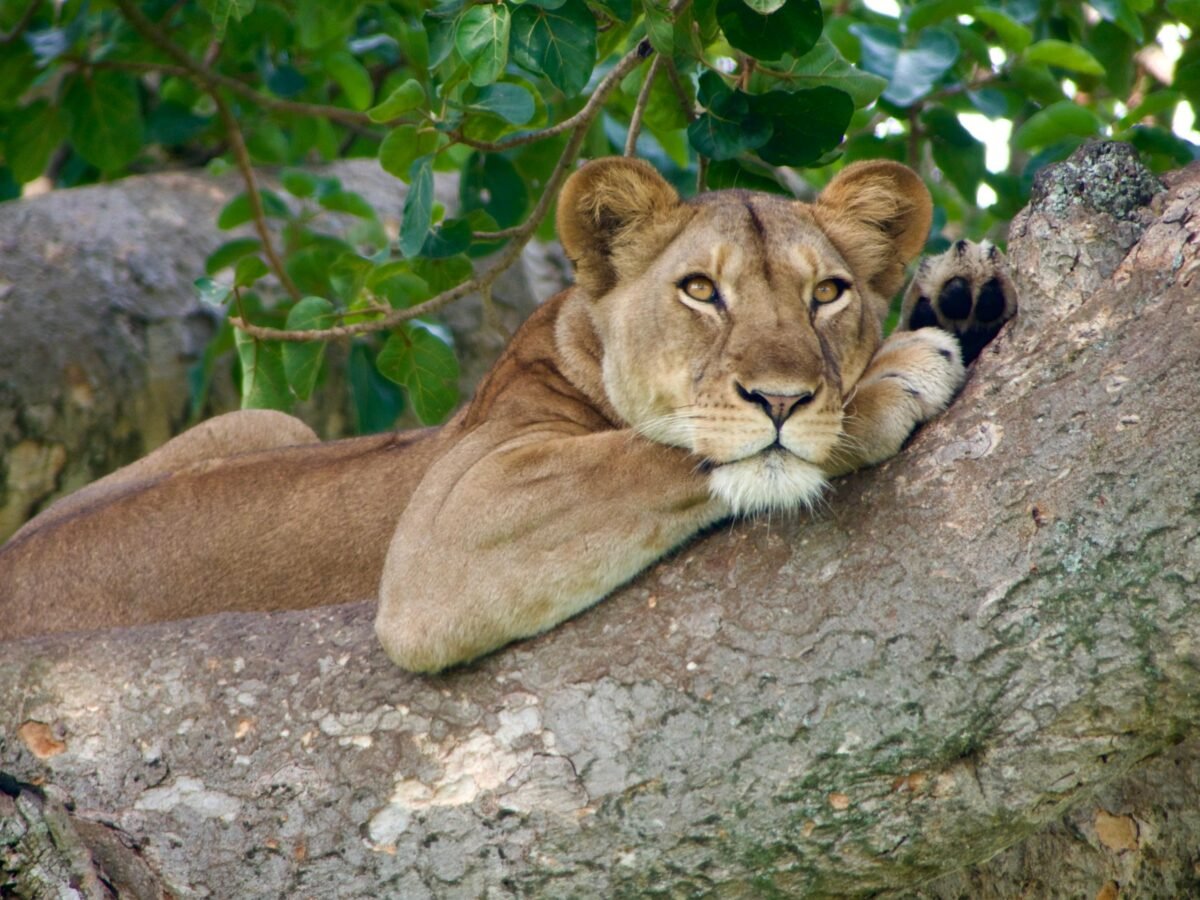
Queen Elizabeth National Park hides one of Africa’s strangest wildlife secrets in its southern corner. In the golden plains of Ishasha sector, lions climb into fig and acacia trees and doze there for hours. Most lions stay firmly on the ground, so this habit surprises first-time visitors. Guests who travel with Zamunda Travels often ask one question again and again: why do these tree climbing lions in Ishasha prefer branches over open grass? Researchers have studied the tree climbing lions Ishasha is famous for, and several convincing answers have emerged over the years. This guide from Zamunda Travels breaks the mystery down in full, so you know exactly what to expect before you set out on safari.
What Makes the Tree Climbing Lions of Ishasha So Rare
Very few lion populations on earth climb trees on a regular basis. Lake Manyara in Tanzania holds a small group, but sightings there stay unpredictable and rare. Ishasha, however, offers something different. Whole prides settle into the branches here, and guides can locate them with real consistency. As a result, Queen Elizabeth National Park has become the most reliable place in East Africa to watch this behavior unfold. Zamunda Travels builds many of its Uganda safari itineraries specifically around this rare spectacle, because nowhere else delivers the same guarantee.
Locating the Tree Climbing Lions in Ishasha Sector
Ishasha sits in the far south of Queen Elizabeth National Park, roughly five to six hours from Kampala by road. The sector borders Bwindi Impenetrable Forest, so many travelers combine both stops in one trip. Candelabra trees dominate the landscape here, alongside sturdy acacia and sycamore fig trees with wide, sheltering branches. Large herds of Uganda kobs graze across the open plains below, and their presence draws lions to the area in the first place. Three prides, totaling around fifty lions, patrol this stretch of savannah. Guides from Zamunda Travels know these territories well and can usually pinpoint a resting pride within a short game drive.
Why Do Lions Climb Trees in Ishasha?
Scientists have studied this question for decades, and no single theory explains everything on its own. Instead, several factors work together to push these lions upward into the canopy.
They Escape the Punishing Ground Heat
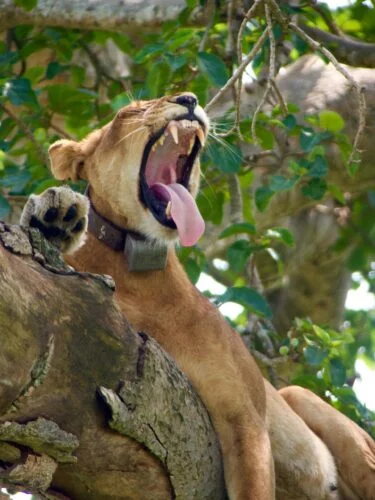
Temperatures in Ishasha regularly climb above 28 degrees Celsius during the dry season. The bare ground absorbs this heat and becomes uncomfortable for any animal resting on it. Tree canopies, by contrast, stay shaded and catch a light breeze. Lions therefore climb up to cool their bodies and escape the worst of the midday sun. This single factor explains why sightings peak during the hottest hours of the afternoon.
They Avoid Biting Tsetse Flies and Insects
During the rainy season, the wetlands and grasslands around Ishasha breed swarms of tsetse flies and mosquitoes. These insects bite constantly and irritate any animal resting near the ground. Height offers real protection, since wind at branch level keeps most flying pests away. Consequently, lions retreat into the trees whenever insect activity rises, and they often stay there until the irritation passes.
They Get a Clear View of Grazing Kobs
Uganda kobs move across the open plains in large, visible herds. From ground level, tall grass blocks much of that view. Once a lion climbs a few meters up, though, the whole savannah opens up below. This elevated position lets the lion scan the herd, choose a target, and time its next hunt with far more precision. Many guides consider this the most practical explanation among all the theories.
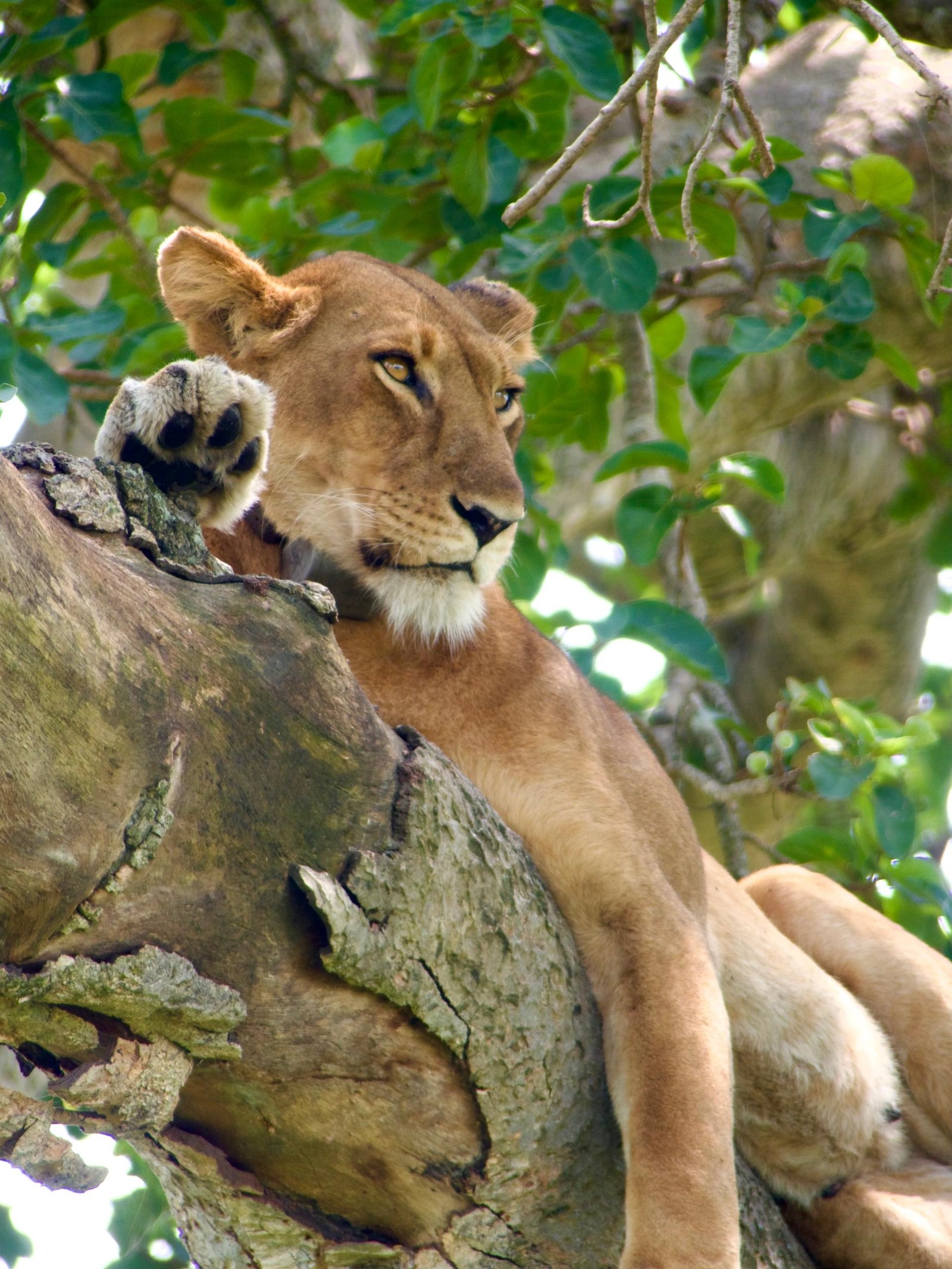
tree climbing lion
They Rest Quietly After a Hunt
A successful hunt drains a lion’s energy completely, and safety becomes the next priority. Ground-level resting spots expose lions to scavengers and rival predators. Branches, however, keep a full belly out of reach and provide a private, secure place to sleep. Cubs often learn this trick early, since older lions in the pride appear to pass the habit down across generations.
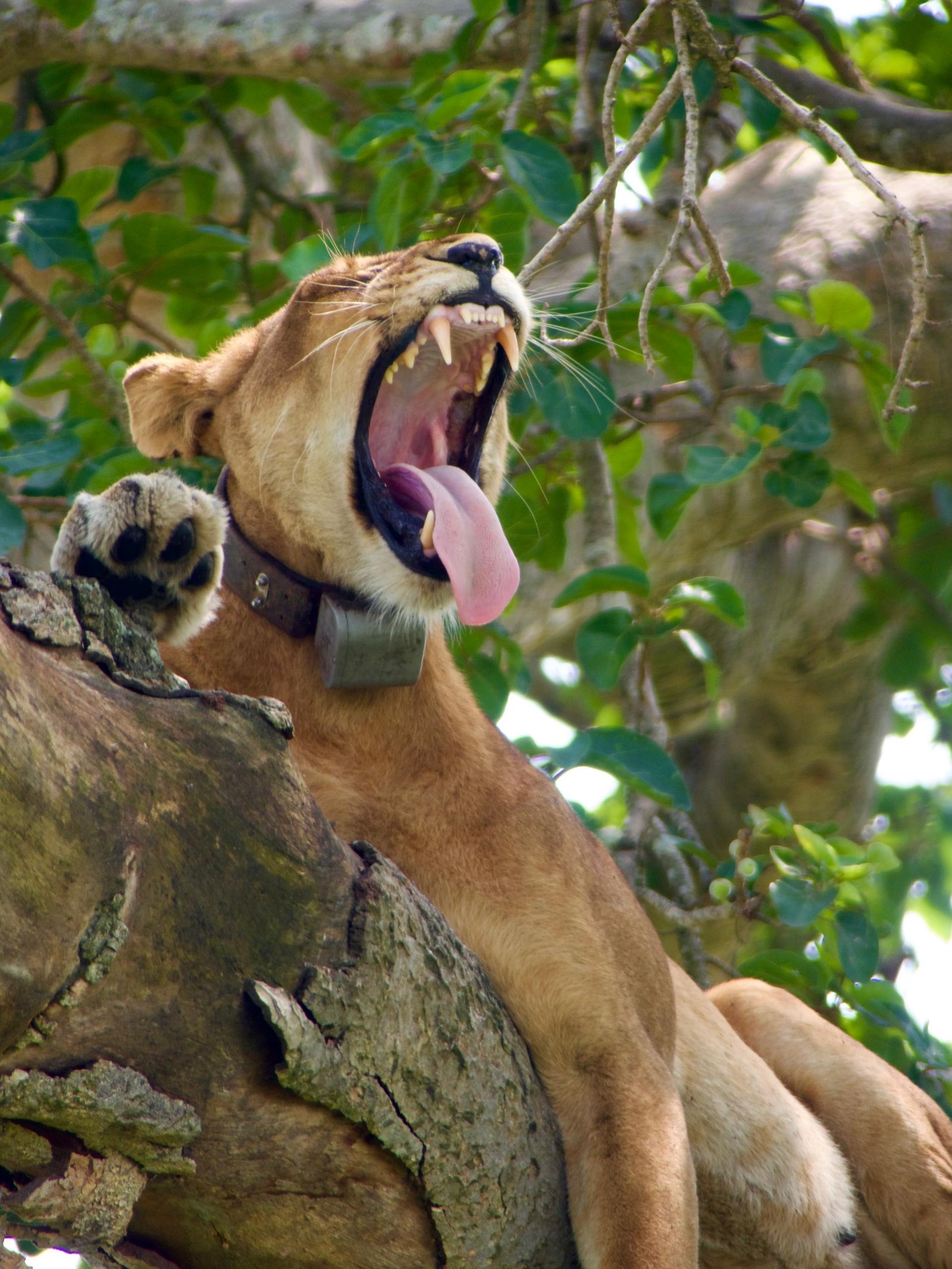
tree climbing lions
Best Time to See the Tree Climbing Lions in Ishasha
The dry season, running roughly from June to September and again from December to February, offers the best viewing conditions. Roads stay firm and passable throughout this period, unlike the muddy tracks of the rainy months. Grass also grows shorter during dry spells, so lions become far easier to spot against thinning vegetation. Afternoon game drives work particularly well, since heat drives more lions into the branches around midday. Zamunda Travels schedules its Ishasha safaris around these exact windows to maximize every guest’s chances of a sighting.
Plan Your Safari to See the Tree Climbing Lions with Zamunda Travels
A trip to Ishasha rewards patience, sharp eyes, and a guide who knows the terrain. Zamunda Travels arranges full game drives through the sector, paired with expert trackers who read fresh signs on the ground. Most itineraries also link Ishasha with gorilla trekking in Bwindi, so travelers get two rare wildlife experiences in a single journey. Whether you’re planning a short weekend escape or a full Uganda circuit, Zamunda Travels can build a route around the tree climbing lions and the rest of Queen Elizabeth National Park’s highlights. Few sights in Africa match the image of a lion draped lazily across a fig branch, so this detour is well worth the extra hours on the road.