Birdwatching in Akagera National Park
October 13, 2026
Camping in Akagera National Park
October 13, 2026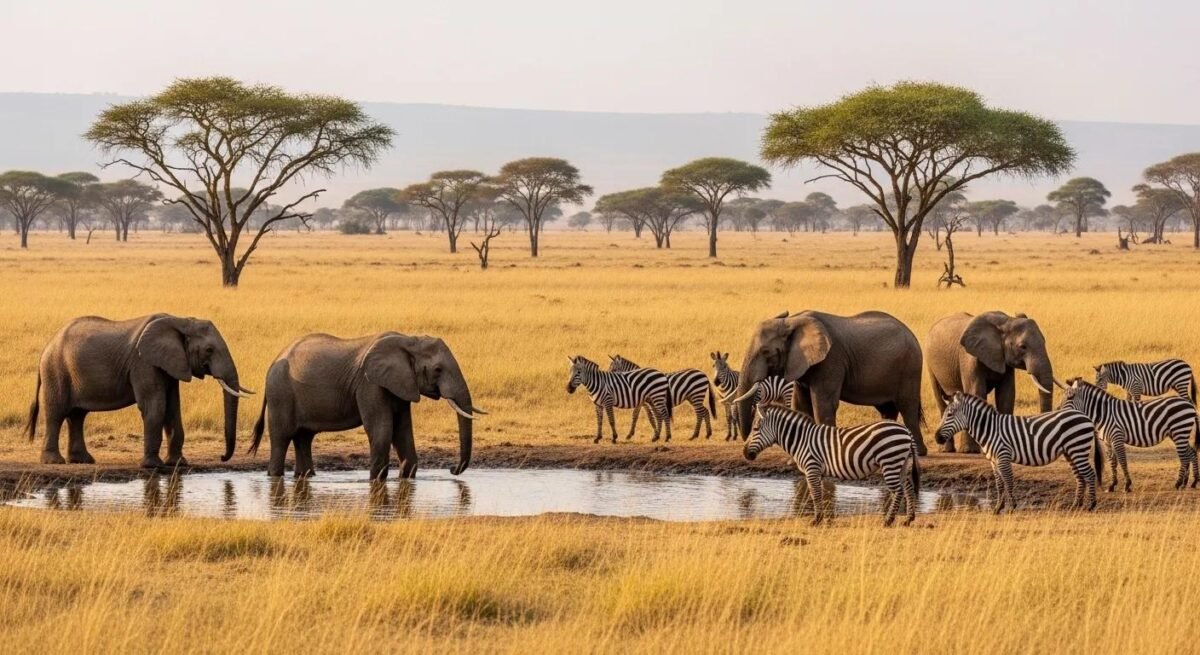
Wildlife in Akagera National Park offers one of Rwanda’s most exciting safari experiences. This beautiful park protects lions, elephants, rhinos, leopards, buffaloes, giraffes, zebras, and many other animals.
Located in eastern Rwanda, Akagera National Park combines open savannah, rolling hills, woodlands, lakes, and wetlands. These different habitats support an impressive variety of African wildlife.
Unlike Rwanda’s mountain forests, Akagera offers classic African game drives. Visitors can watch grazing animals, search for predators, and explore wetlands filled with birds.
Moreover, Akagera is the only national park in Rwanda where visitors can encounter Africa’s famous Big Five.
With Zamunda Travels, you can explore this remarkable destination through guided wildlife safaris. Whether visiting for one day or several nights, Akagera promises memorable encounters with nature.
Wildlife in Akagera National Park: What Makes It Special?
Akagera National Park covers approximately 1,122 square kilometres along Rwanda’s eastern border with Tanzania. It is Rwanda’s only protected savannah national park.
The park also forms part of one of Central Africa’s most important protected wetland landscapes. Its diverse ecosystems support large mammals, predators, reptiles, and hundreds of bird species.
Furthermore, Akagera has become an important example of successful wildlife conservation in Africa.
The park suffered serious wildlife losses during previous decades. However, conservation efforts have helped restore several important animal populations.
Lions returned in 2015, while eastern black rhinos returned in 2017. Southern white rhinos followed in 2021, with another 70 introduced in June 2025.
Consequently, Akagera now offers opportunities to see both black and white rhinos.
Visitors can also enjoy quieter safari experiences compared with some larger East African destinations. However, animals move freely, so sightings are never guaranteed.
Main Wildlife Habitats in Akagera
Understanding the landscape helps visitors know where different animals live.
- Open savannah: Supports zebras, buffaloes, topis, giraffes, and hunting predators.
- Acacia woodlands: Provide shelter for leopards, bushbucks, giraffes, and elephants.
- Lakes and wetlands: Attract hippos, crocodiles, waterbirds, buffaloes, and other wildlife.
- Rolling hills: Offer scenic viewpoints and opportunities to spot grazing animals.
- Papyrus swamps: Shelter specialised wetland birds and secretive antelope species.
Therefore, exploring several habitats improves your chances of seeing different animals.
The Big Five Animals in Akagera National Park
The Big Five are among Africa’s most celebrated safari animals. They include lions, leopards, elephants, rhinoceroses, and African buffaloes.
Historically, hunters used this term for animals considered difficult and dangerous to hunt on foot. Today, wildlife enthusiasts use it to describe five iconic safari species.
Akagera is Rwanda’s only Big Five safari destination.
1. African Lions: The Kings of Akagera
African lions are among the most exciting animals to encounter during an Akagera safari.
Lions disappeared from the park during the 1990s. Fortunately, conservationists reintroduced them in 2015.
Since then, successful breeding has helped establish a growing lion population.
Lions commonly rest during hot afternoons. However, they become more active during cooler mornings and evenings.
Visitors may encounter lions resting beneath trees, walking across grasslands, or watching grazing animals.
Best viewing areas: Open northern plains, grasslands, and areas with concentrations of prey.
Safari tip: Start your game drive early and watch for antelope alarm calls.
2. African Elephants: Giants of the Savannah
African savannah elephants are some of Akagera’s largest and most impressive animals.
These intelligent mammals travel through woodlands, grasslands, and wetland edges. They often visit lakes to drink, feed, or cool themselves.
Visitors might observe elephant families moving together or bulls feeding quietly among trees.
Additionally, elephants play an important ecological role. They shape vegetation, disperse seeds, and create opportunities for other animals.
Best viewing areas: Woodland areas, lake edges, and suitable grazing habitats throughout the park.
Safari tip: Maintain a respectful distance, especially around mothers with calves.
3. Rhinoceroses: Black and White Rhinos
Akagera protects two African rhinoceros species: eastern black rhinos and southern white rhinos.
Black rhinos usually browse shrubs and woody plants. Meanwhile, white rhinos mainly graze on grass.
Black rhinos tend to be more solitary and secretive. White rhinos can sometimes be observed grazing in small groups.
The introduction of additional southern white rhinos in 2025 strengthened Akagera’s conservation importance.
However, seeing a rhino still requires patience and favourable conditions.
Best viewing areas: Suitable northern grasslands and bush habitats, depending on the species.
Safari tip: Ask your guide about recent sightings without expecting access to sensitive rhino locations.
4. African Buffaloes: Powerful Herd Animals
African buffaloes are among the most commonly encountered Big Five animals in Akagera.
They often gather in herds and move between grasslands, woodland edges, and wetlands.
Visitors can observe buffaloes grazing, resting, or gathering around water.
Sometimes, yellow-billed oxpeckers perch on their backs and feed on ticks and other organisms.
Although buffaloes may appear calm, they remain powerful wild animals.
Best viewing areas: Northern grasslands, lakeshores, and wetland margins.
Safari tip: Use binoculars to watch herd behaviour without approaching too closely.
5. Leopards: The Elusive Spotted Predators
Leopards are among Akagera’s most difficult large mammals to find.
These solitary predators use camouflage to hide in dense vegetation. They also rest in trees and secluded woodland areas.
Leopards hunt various animals, including smaller antelopes and other mammals.
Because they are secretive, sightings often require patience and considerable luck.
However, spotting one can become a highlight of an entire Rwanda wildlife safari.
Best viewing areas: Woodland habitats, rocky areas, and suitable forested slopes.
Safari tip: Examine tree branches and shaded areas carefully during game drives.
Other Popular Animals in Akagera National Park
Although the Big Five attract attention, Akagera supports many other fascinating animals.
In fact, visitors often encounter herbivores more frequently than large predators.
These animals create the classic scenes associated with an African savannah safari.
6. Giraffes: Africa’s Tallest Land Animals
Giraffes are among Akagera’s most beautiful and recognisable animals.
Their long necks allow them to browse leaves beyond the reach of many other herbivores.
Visitors can watch giraffes walking gracefully across the savannah or feeding among acacia trees.
They also provide excellent wildlife photography opportunities.
Best viewing areas: Open woodland, acacia habitats, and northern savannah landscapes.
7. Plains Zebras: Striped Savannah Grazers
Zebras are commonly seen grazing in 2Akagera’s open grasslands.
Each zebra has a unique pattern of black and white stripes.
These social animals often travel in groups and occasionally graze near other herbivores.
Consequently, they are among the most rewarding animals for first-time safari visitors.
Best viewing areas: Open grasslands and northern plains.
8. Hippopotamuses: Giants of Lake Ihema
Hippos are among Akagera’s most remarkable aquatic mammals.
They spend much of the day submerged in water to protect their sensitive skin.
However, they usually leave the water after sunset to graze.
Visitors can observe hippos resting, opening their mouths, and interacting within groups.
Lake Ihema offers particularly rewarding viewing opportunities.
Best viewing experience: A guided boat safari on Lake Ihema.
9. Warthogs: Entertaining Savannah Residents
Warthogs are common members of Akagera’s wildlife community.
These animals have distinctive facial tusks and often kneel while grazing.
Visitors may also notice warthogs running with their tails raised.
They frequently use burrows for shelter and protection.
Best viewing areas: Open grasslands, roadsides, and woodland clearings.
10. Spotted Hyenas and Other Carnivores
Spotted hyenas are important predators and scavengers in Akagera.
Despite their reputation, they are skilled hunters with complex social behaviour.
Visitors may occasionally encounter them crossing tracks or travelling across open terrain.
Other smaller carnivores include mongooses, genets, and civets.
However, many smaller predators are nocturnal, making daytime sightings less frequent.
Antelope Species You Can See in Akagera
Antelopes form an essential part of Akagera’s wildlife ecosystem.
They provide food for predators while helping maintain the balance of grassland vegetation.
Furthermore, the park supports several antelope species adapted to different habitats.
Impalas
Impalas are graceful, medium-sized antelopes commonly seen in open woodland and savannah.
Their reddish-brown coats and impressive jumping abilities make them easy to recognise.
Topis
Topis have reddish-brown bodies, darker upper legs, and distinctive curved horns.
They prefer open grasslands and often stand on elevated ground to watch for danger.
Defassa Waterbucks
Waterbucks are large antelopes commonly associated with wetlands and lakeshores.
Their shaggy coats and strong bodies help distinguish them from other grazing animals.
Bushbucks
Bushbucks prefer dense vegetation and woodland habitats.
Because they remain close to cover, they are sometimes difficult to photograph.
Elands and Oribis
Elands are Africa’s largest antelopes and can appear surprisingly agile despite their size.
Meanwhile, oribis are much smaller antelopes that inhabit suitable open grassland areas.
Other antelopes include the secretive sitatunga, which is specially adapted to swamp habitats.
Safari tip: Do not rush past antelopes. Their alarm calls and behaviour can reveal nearby predators.
Birds in Akagera National Park: A Paradise for Birdwatchers
Akagera is one of Rwanda’s leading birdwatching destinations.
According to African Parks, almost 500 bird species have been documented in the park.
Its lakes, grasslands, woodlands, and swamps create excellent habitats for resident and migratory birds.
Moreover, birdwatching adds another exciting dimension to a traditional game drive.
Common Birds to Look For
Some notable birds include:
- African fish eagle
- African jacana
- Pied kingfisher
- Malachite kingfisher
- Grey crowned crane
- African darter
- Saddle-billed stork
- Goliath heron
- African openbill
- Hamerkop
- Lilac-breasted roller
- African grey hornbill
Visitors may hear the famous African fish eagle calling over the lakes.
Meanwhile, colourful kingfishers perch near water while searching for small fish.
Can You See the Shoebill in Akagera?
The shoebill is one of Africa’s most unusual and sought-after birds.
This large wetland bird has an enormous bill adapted for catching fish and other aquatic prey.
Akagera’s papyrus wetlands provide suitable habitat for this rare species.
However, sightings are exceptionally difficult and should never be expected during a short safari.
Visitors specifically interested in shoebills should discuss realistic viewing opportunities before travelling.
Best Birdwatching Areas
Lake Ihema is particularly rewarding for waterbirds.
Additionally, papyrus wetlands support specialised birds, including the papyrus gonolek.
Woodland tracks provide opportunities to see hornbills, rollers, and other savannah birds.
For the best experience, begin birdwatching shortly after sunrise.
This period is often called the dawn chorus, when birds become especially vocal and active.
Reptiles and Smaller Wildlife in Akagera
Akagera’s biodiversity extends beyond mammals and birds.
The park also supports reptiles, amphibians, insects, and other smaller animals.
Nile Crocodiles
Nile crocodiles inhabit Akagera’s lakes and waterways.
Visitors can sometimes observe them resting along shorelines or swimming near the surface.
These powerful reptiles play an important role as aquatic predators.
Monitor Lizards and Snakes
Monitor lizards may appear near wetland edges and suitable sunny habitats.
Snakes also inhabit the park, although most visitors rarely encounter them.
For safety, never approach or attempt to handle reptiles.
Butterflies and Other Insects
Akagera supports a rich diversity of butterflies and insects.
African Parks reports 179 recorded butterfly species.
These smaller creatures contribute to pollination, decomposition, and the wider food web.
Therefore, they deserve attention alongside the park’s larger animals.
Best Places to See Wildlife in Akagera National Park
Different areas offer different safari experiences.
Choosing suitable routes can improve wildlife viewing and reduce unnecessary driving.
Northern Savannah Plains
The northern plains provide some of Akagera’s most rewarding game-driving landscapes.
Open grasslands offer opportunities to spot zebras, buffaloes, giraffes, topis, and sometimes lions.
They also provide wider views, making distant animals easier to detect.
Lake Ihema and Surrounding Wetlands
Lake Ihema is famous for hippos, crocodiles, and waterbirds.
A boat safari allows visitors to observe wildlife from a different perspective.
Moreover, elephants and buffaloes sometimes visit suitable lake edges.
Acacia Woodlands
Woodlands offer excellent opportunities to look for giraffes, bushbucks, elephants, and other mammals.
They also provide important shelter for secretive predators.
However, thick vegetation can make some animals difficult to see.
Hills and Scenic Viewpoints
Akagera’s rolling hills reveal impressive views of grasslands, lakes, and distant wildlife habitats.
These viewpoints also help visitors appreciate the park’s varied ecosystems.
Ask your guide to choose accessible viewpoints along your planned safari route.
Best Time to See Wildlife in Akagera National Park
Akagera offers wildlife viewing throughout the year.
However, seasonal conditions influence vegetation, road access, and animal visibility.
June to September: Main Dry Season
This is generally the best period for wildlife viewing.
Vegetation becomes thinner, while animals often gather near reliable water sources.
Additionally, open grasslands make spotting wildlife easier.
December to February: Shorter Dry Period
This period can also provide rewarding game drives.
Conditions vary between years, but wildlife viewing often remains excellent.
Therefore, it is a useful alternative for visitors travelling outside the main dry season.
March to May: Main Rainy Season
Rainfall transforms Akagera into a beautiful green landscape.
The scenery becomes especially attractive for photography.
However, tall vegetation and wet roads can make some wildlife sightings more challenging.
October to November: Short Rains
These months bring greener vegetation and seasonal changes.
Birdwatchers may enjoy increased activity from resident and migratory birds.
Although rainfall can affect driving conditions, safaris remain possible.
How to Increase Your Chances of Seeing Wildlife
A successful Akagera safari requires more than simply driving through the park.
Good timing, patient observation, and knowledgeable guiding can make a significant difference.
Follow these practical tips:
- Start early: Wildlife often becomes more active during the cooler morning hours.
- Use an experienced guide: Guides understand animal behaviour, habitats, and recent sightings.
- Carry binoculars: They help identify distant mammals and birds.
- Drive slowly: Slower movement makes it easier to notice hidden animals.
- Visit different habitats: Combine grasslands, woodlands, and wetlands.
- Allow enough time: Two days usually provide more flexibility than a rushed day trip.
- Remain quiet: Avoid unnecessary noise around wild animals.
- Respect park regulations: Remain inside vehicles unless your guide permits otherwise.
Additionally, remember that wildlife sightings depend on natural animal movements.
A safari should focus on observing wild animals rather than chasing guaranteed sightings.
One-Day Versus Two-Day Akagera Wildlife Safaris
Visitors often wonder how much time they need in Akagera.
Fortunately, the park offers options for both short visits and longer adventures.
One-Day Akagera Wildlife Safari
A one-day safari usually begins with an early departure from Kigali.
After reaching Akagera, visitors enjoy a game drive through selected wildlife habitats.
Depending on the schedule, the experience may include Lake Ihema or a northern game-drive route.
However, covering every major wildlife area in one day can be difficult.
Two-Day Akagera Wildlife Safari
A two-day safari provides more time to explore different sections of the park.
Visitors can combine game drives with a boat safari on Lake Ihema.
An overnight stay also allows an early-morning game drive without travelling from Kigali first.
As a result, visitors enjoy a more relaxed wildlife experience.
For photographers and serious wildlife enthusiasts, a three-day safari offers even greater flexibility.
Plan Your Akagera Wildlife Safari with Zamunda Travels
Exploring wildlife in Akagera National Park becomes more rewarding with thoughtful planning and experienced guiding.
At Zamunda Travels Uganda Ltd, we organise personalised Rwanda wildlife safaris for individuals, couples, families, and small groups.
Our safari experiences can include guided game drives, Lake Ihema boat trips, birdwatching, and comfortable accommodation.
Furthermore, we can combine Akagera with gorilla trekking in Volcanoes National Park or chimpanzee tracking in Nyungwe Forest.
Whether you want a short Kigali wildlife escape or a longer Rwanda safari, we can help create a suitable itinerary.
- Website: www.zamundatravels.com
- Email: info@zamundatravels.com
- WhatsApp: +256 704 705 606
Discover Rwanda’s wild side with Zamunda Travels — Beyond Expeditions.
Frequently Asked Questions About Wildlife in Akagera National Park
1. What animals can you see in Akagera National Park?
Visitors can see lions, elephants, rhinos, buffaloes, giraffes, zebras, hippos, crocodiles, warthogs, and several antelope species.
Leopards, spotted hyenas, and other secretive animals also inhabit the park.
However, individual sightings depend on luck, habitat, and timing.
2. Can you see the Big Five in Akagera National Park?
Yes. Akagera supports lions, leopards, elephants, rhinoceroses, and African buffaloes.
It is Rwanda’s only Big Five safari destination.
However, seeing all five during one visit is not guaranteed.
3. What is the best time to see animals in Akagera?
The main dry season, from June to September, generally provides excellent wildlife viewing.
During this period, vegetation becomes thinner and animals often gather around water.
Early mornings are especially rewarding throughout the year.
4. Are there giraffes and zebras in Akagera National Park?
Yes. Giraffes and plains zebras are established members of Akagera’s wildlife population.
They are frequently encountered in suitable savannah and woodland habitats.
The northern plains are particularly rewarding for viewing grazing animals.
5. Is one day enough to see wildlife in Akagera National Park?
One day can provide a rewarding introduction to Akagera’s wildlife.
However, two or three days allow more time for different habitats, game drives, and boat safaris.
Therefore, an overnight safari is often the better choice for wildlife enthusiasts.