Rwanda Safari Tipping Guide
October 29, 2026
How Many Nights in the Masai Mara: Two, Three or Four?
October 29, 2026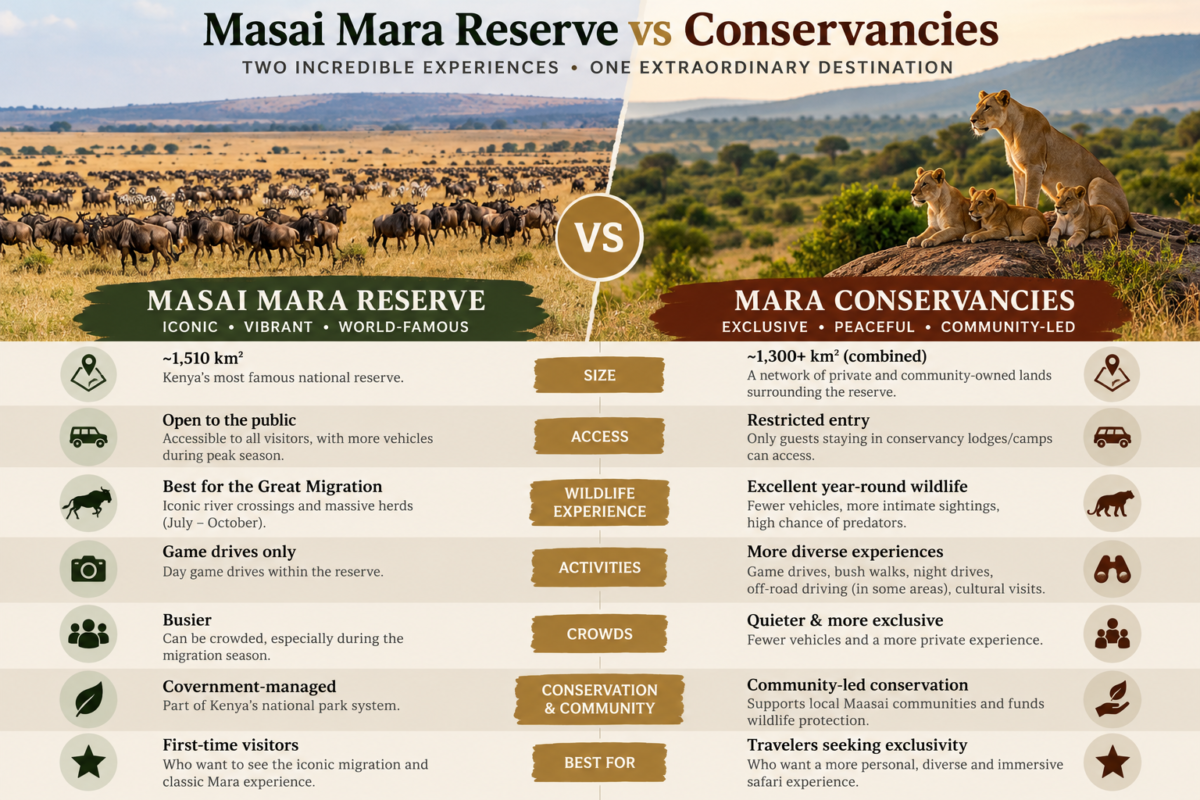
Planning a Kenya safari raises one big question. Should you stay inside the national reserve or in a private conservancy? The Masai Mara Reserve vs conservancies choice shapes your crowds, your activities, and your budget. Therefore, it deserves a clear answer before you pay a deposit.
At Zamunda Travels, we help travellers weigh this choice every season. This guide explains the real differences, the costs, and the best time to go. Next, you will see a sample itinerary and the mistakes to avoid.
Quick answer: Book the Masai Mara Reserve if you want Mara River crossings and a lower price. Book a private conservancy if you want fewer vehicles, night drives, and walking safaris. However, a combined stay often works best: two nights in a conservancy, then one full day in the reserve.
Masai Mara Reserve vs Conservancies: The Core Difference
The Masai Mara National Reserve is public land. Local and national authorities manage it, and anyone can enter after paying the park fee. Kenya established it in 1961, and it covers about 1,510 square kilometres.
Most visitors picture the reserve when they think of the Mara. It holds the open plains, the river, and the best-known sightings. However, it is only one part of the wider Mara ecosystem.
Private conservancies work differently. Maasai landowners lease their land for wildlife and tourism, and a small number of camps operate there. Only guests who sleep in a conservancy camp can drive in it. As a result, far fewer vehicles share each sighting.
The two areas are not separate worlds. No physical fence divides them, so animals move freely across both. For example, a lion that hunts in the reserve at noon may rest in a conservancy by dusk.
Conservancies also change who benefits from tourism. Lease payments and camp jobs go to local Maasai families. Therefore, your stay gives landowners a reason to keep the land open for wildlife.
This split makes the Masai Mara Reserve vs conservancies choice easier. You are not picking between good and bad wildlife. Instead, you are picking between two ways to enjoy the same landscape.
Inside the Masai Mara National Reserve
The reserve’s biggest strength is the Great Migration. The main Mara River crossing points sit inside its boundaries. From roughly July to mid-October, huge herds of wildebeest and zebra gather here. Because timing shifts each year, check recent sightings before you book.
The reserve also costs less. Nightly rates for camps inside it are usually lower than conservancy rates. Moreover, transfers from Nairobi are shorter, since the airstrips sit close by. A budget traveller or first-timer often finds this the simplest option.
However, the reserve has real drawbacks. Peak season brings crowds, and 20 or more vehicles can surround a single cheetah or lion. In addition, rules limit what you can do. Night drives and guided bush walks are not permitted there, and off-road driving is tightly restricted.
Who enjoys the reserve most? First-time visitors and travellers watching their budget often do. Families on a short trip also benefit from the shorter transfers. Moreover, the reserve suits anyone who wants to see the river scenes with their own eyes.
Our guides at Zamunda Travels recommend leaving camp at first light. Early starts reach sightings before the vehicles build up. Also, ask your guide to try quieter tracks between the famous viewpoints.
Life in a Private Conservancy
Several conservancies border the reserve, including Mara North, Naboisho, Olare Motorogi, Ol Kinyei, and Olare Orok. Each one limits how many beds and vehicles it allows. Typically, that means about one tent for every 350 to 700 hectares.
Fewer vehicles change the whole experience. You can stay with a sighting as long as you like. Moreover, your guide may leave the track to follow a cat, within conservancy rules. Some conservancies, such as Olare Motorogi, Mara North, and Naboisho, are known for big cat sightings.
Conservancies also add activities you cannot do in the reserve. Night drives use spotlights to reveal nocturnal animals such as hyenas and genets. Guided walks teach you about tracks, plants, and insects. Meanwhile, many camps employ Maasai guides who explain local culture.
Who enjoys a conservancy most? Photographers and repeat visitors tend to gain the most. Walkers and night-drive fans also love the extra freedom. In addition, couples who want privacy often prefer the calm.
The trade-offs are simple. Nightly rates run higher, and conservancy fees may come on top of your camp rate. Also, the main crossing points lie inside the reserve, so you will need a day trip there.
Masai Mara Reserve vs Conservancies at a Glance
| Feature | National Reserve | Private Conservancy |
|---|---|---|
| Access | Open to anyone who pays the park fee | Only guests staying in the conservancy |
| Crowds | Busy in peak season | Limited by bed and vehicle caps |
| Activities | Day game drives | Day and night drives, walks, off-road driving |
| Mara River crossings | Inside the reserve | Mostly a day trip to the reserve |
| Nightly rates | Usually lower | Usually higher |
| Nairobi transfers | Shorter | Varies by conservancy |
| Community benefit | Indirect | Lease payments and jobs |
Use this table as a starting point. However, neither option wins every category. Your priorities decide the right choice.
Three questions can break a tie. How important are river crossings, do you want walks or night drives, and how firm is your budget? If crossings and budget lead, choose the reserve. If walks and quiet lead, choose a conservancy.
Which Traveller Fits Which Option?
In the Masai Mara Reserve vs conservancies debate, your travel style matters more than any brochure. Use these quick matches to guide your decision.
- First-time visitors: Start with a reserve stay or a mixed trip. You will see the classic Mara scenes.
- Photographers: Choose a conservancy. Fewer vehicles mean more space to frame a shot.
- Walkers and night-drive fans: Choose a conservancy, because the reserve does not offer these activities.
- Budget travellers: Choose the reserve, since nightly rates are usually lower.
- Migration chasers: Base yourself in or near the reserve between July and October.
Next, think about the time you have. With only two nights, one area is usually enough. With four or more, however, a split stay lets you enjoy both.
Costs and Budgeting
Price often decides this debate. Conservancy camps usually charge more per night than reserve camps. Some travel writers say the gap can be large, so compare full quotes, not headline rates.
When you weigh the Masai Mara Reserve vs conservancies on price, compare the whole trip, not one night. Always check what each quote includes. Park or conservancy fees, transfers, and activities can change the final bill. Rates change, so confirm current prices with Zamunda Travels.
Time of year also affects price. Peak migration months usually cost the most. As a result, travelling in the green season can narrow the gap between reserve and conservancy rates. Ask us for a line-by-line quote for several dates so you can compare fairly.
Here is a simple sample budget structure for a four-day trip. Include each cost below in your comparison:
- Camp or lodge nights, which differ most between the reserve and conservancies
- Park or conservancy fees
- Nairobi to Mara transfers, by road or light aircraft
- Optional extras, such as a sunrise balloon flight
- Entry authorisation, tips, and travel insurance
Best Time to Visit: Seasonal Advice
The migration drives peak season. From roughly July to mid-October, the river crossings draw the biggest crowds. Therefore, the reserve fills quickly, and small conservancy camps also book out early. Reserve your dates several months ahead.
The Masai Mara Reserve vs conservancies question also depends on the month. However, the Mara offers good wildlife all year. Kenya has short rains in November and long rains in April. During these months, you will find fewer visitors and often better deals.
Roads can turn muddy in the rains, so allow extra travel time. Pack a light rain jacket as well.
The migration does not follow a strict calendar. Herds may arrive earlier or later than usual. Therefore, build flexibility into your dates if crossings matter most. Our team at Zamunda Travels can talk through current conditions with you before you pay.
Our guides at Zamunda Travels suggest a simple rule. If crossings are your top goal, include a full reserve day between July and October. Otherwise, choose a conservancy for quiet, close sightings in any month.
Sample Itinerary: Combine Both
A four-day plan shows how the two areas work together. Many safari planners use this pattern: two days in a conservancy and one day in the reserve.
- Day 1: Fly or drive from Nairobi to your conservancy camp. Take an afternoon game drive.
- Day 2: Start with a dawn drive. Join a guided bush walk after breakfast. End with a night drive.
- Day 3: Spend a full day in the reserve with a picnic lunch. Visit the Mara River and look for crossings in season.
- Day 4: Take a final sunrise drive. Then return to Nairobi.
Alternatively, swap Day 4 for a sunrise balloon flight. Ask us whether it suits your dates. Want this plan built around your travel window? Request a quote from Zamunda Travels, and we will price both options side by side.
Here is a quick packing tip. Pack soft bags if you fly, because light aircraft usually set tight weight limits [VERIFY with airline]. Also bring neutral clothing, a warm layer for dawn, a hat, and binoculars.
Common Mistakes and Safety Notes
A common error in the Masai Mara Reserve vs conservancies decision is choosing a conservancy only for the migration. Crossings happen mainly inside the reserve, so plan a reserve day. Second, some travellers book only one night. As a result, they spend most of the trip in transit.
Third, many travellers skip questions about vehicle rules. Ask how many guests share each vehicle. Also ask whether the camp offers private vehicles.
Fourth, some travellers underestimate road time from Nairobi. Rough roads slow the trip, so many visitors fly instead. Therefore, ask for both road and flight options before you decide.
Safety matters too. Stay in the vehicle unless your guide says otherwise, and walk only with a trained guide. Always follow your guide’s instructions near elephants, buffalo, and lions.
Health planning also helps. Speak to a travel clinic about malaria prevention and routine vaccines. Requirements can change, so check current health advice before departure [VERIFY]. Finally, carry sunscreen, bottled water, and insect repellent.
Masai Mara Reserve vs Conservancies: Our Verdict
So, which should you book? Choose the reserve if you want river crossings, shorter transfers, and a lower budget. Choose a conservancy if you value quiet sightings, night drives, and walking safaris.
Most travellers gain from a mix. A conservancy gives depth, while the reserve gives the famous scenes. Therefore, we usually suggest at least two nights in a conservancy plus a day in the reserve. Whichever option you pick, ask for every fee in writing.
Ready to settle the Masai Mara Reserve vs conservancies question for your own trip? Zamunda Travels will match your dates, budget, and interests to the right camps. Request a quote today, and our team will reply with clear options.
Frequently Asked Questions
Is the Masai Mara Reserve or a private conservancy better? Neither is better for everyone. The reserve suits travellers who want Mara River crossings and lower nightly rates. A private conservancy suits those who want fewer vehicles, night drives, and walking safaris. Therefore, many visitors combine both, spending two nights in a conservancy and one full day in the reserve.
Can you see the Great Migration from a private conservancy? Yes, but mostly through a day trip. The main Mara River crossing points sit inside the national reserve. Many conservancy camps include or arrange a full day there during migration season. Timing varies each year, so ask Zamunda Travels about current conditions before you book.
Are private conservancies more expensive than the reserve? Usually, yes. Conservancy camps typically charge higher nightly rates than camps inside the reserve, and extra conservancy fees may apply. However, quotes differ by season and camp. Rates change, so confirm current prices with Zamunda Travels and compare full line-by-line quotes.
Can you do night drives and walking safaris in the Masai Mara Reserve? No, not in the reserve itself. Night drives and guided bush walks are available in private conservancies instead. Rules can change, so confirm the latest regulations before you travel. Our team at Zamunda Travels can check which camps offer these activities for your dates.
How many days do I need in the Masai Mara? Plan three to four nights. That gives you time for a conservancy stay plus one full day in the reserve. With only two nights, stay in one area to avoid long transfers. Longer trips let you add walks, night drives, and a sunrise balloon flight.