Tanzania Safari from Norway
November 22, 2026
Tanzania Safari from Ireland
November 22, 2026
Planning a Tanzania safari from Denmark offers the opportunity to explore some of East Africa’s most important wildlife destinations. Tanzania is known for its extensive savannahs, large elephant populations, the Great Migration and the wildlife-rich Ngorongoro Crater.
For Danish travellers, choosing the right parks, travel season and safari duration is essential. The experience can vary considerably depending on whether you want to photograph big cats, watch migrating wildebeest, explore different landscapes or combine a wildlife holiday with time on Zanzibar’s beaches.
This guide explores the best Tanzania safari destinations, explains how to travel from Denmark, discusses the best times to visit and provides practical planning advice. It also helps you understand which safari itinerary may suit your available holiday time.
Why choose Tanzania for a safari from Denmark?
Tanzania is an excellent destination for travellers seeking wildlife experiences across large protected landscapes. Its national parks and conservation areas support elephants, lions, leopards, buffaloes, rhinos, giraffes, zebras and numerous bird species.
The country offers several different safari environments. The northern safari circuit is particularly popular because it connects Serengeti National Park, Ngorongoro Conservation Area, Tarangire National Park and Lake Manyara National Park.
However, Tanzania is not limited to the northern circuit. Southern destinations such as Nyerere National Park and Ruaha National Park offer different landscapes and safari experiences.
Danish travellers can choose between private safaris, tailor-made holidays and organised group departures. The right option depends on your budget, preferred accommodation, travel dates and interest in wildlife photography.
Best Tanzania safari destinations for Danish travellers
Choosing the right parks is one of the most important decisions when organising your safari. Each destination offers different wildlife opportunities and landscapes.
1. Serengeti National Park
Serengeti National Park is one of Tanzania’s most recognised wildlife destinations. Its extensive grasslands, seasonal water sources and open plains support large populations of grazing animals and predators.
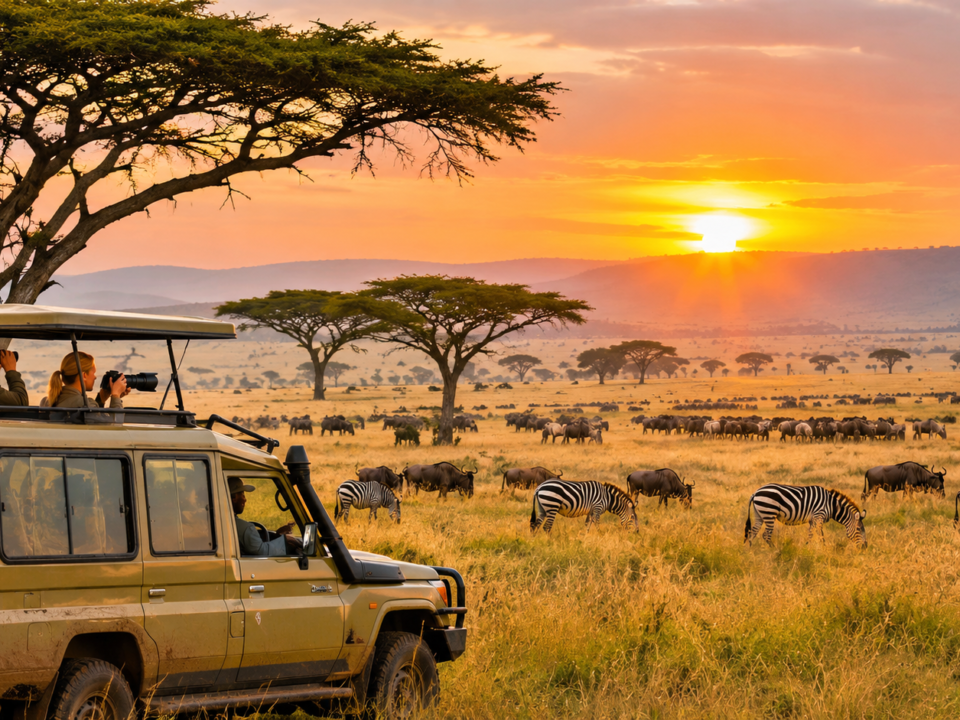
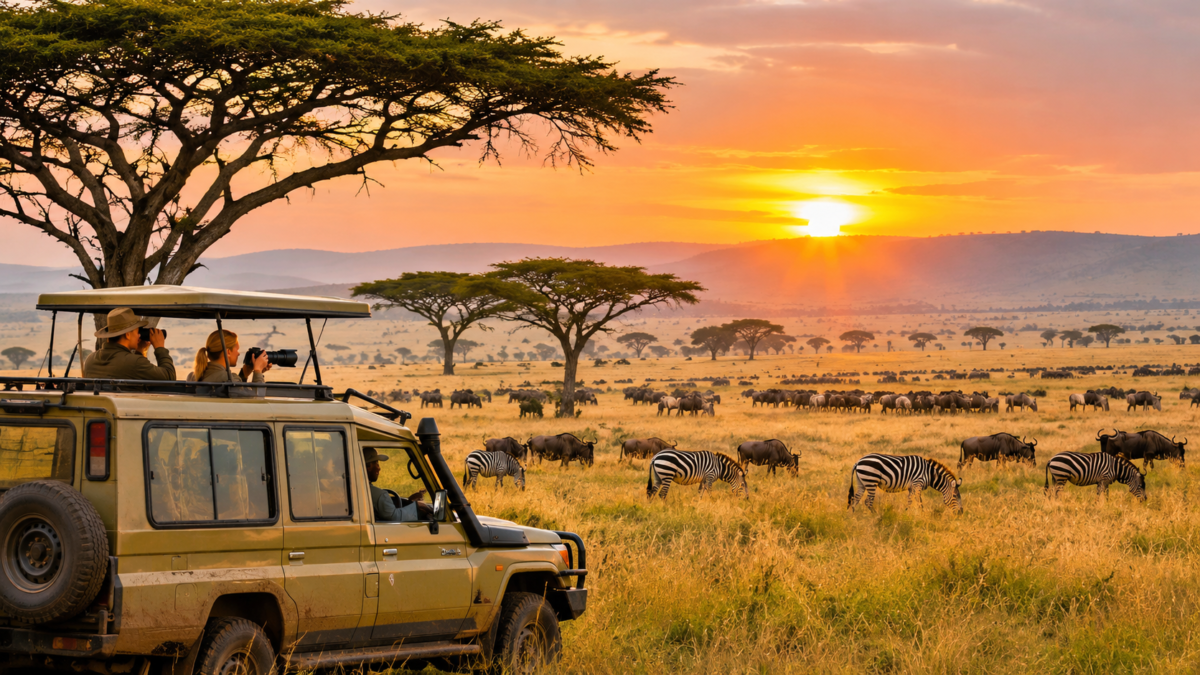
The park is particularly famous for the Great Migration. Millions of wildebeest and zebras move through the wider Serengeti ecosystem in search of fresh grazing and water.
Depending on the season, visitors may encounter large herds, wildebeest calving areas and dramatic river crossings. However, migration movements are influenced by rainfall and grazing conditions. Specific sightings cannot be guaranteed.
Serengeti is also an excellent destination for spotting lions, cheetahs, leopards, hyenas, elephants and giraffes.
For Danish travellers interested in wildlife photography, Serengeti deserves several nights rather than a rushed day visit. Its size makes the location of your accommodation particularly important.
Official information: https://www.tanzaniaparks.go.tz/nationalparks/serengeti
2. Ngorongoro Conservation Area
Ngorongoro Conservation Area is another major destination on Tanzania’s northern safari circuit.
Its most famous attraction is Ngorongoro Crater, a large volcanic caldera with a concentration of wildlife across its grasslands, woodland and water habitats.
Visitors may encounter lions, elephants, buffaloes, zebras, wildebeest, hyenas and other wildlife. The area also provides opportunities to look for the endangered black rhinoceros.
The crater is particularly suitable for travellers who want a concentrated wildlife experience within a relatively limited safari area.
A crater game drive can be combined with visits to other parts of the conservation area. The wider region also has important archaeological and cultural significance.
For first-time visitors from Denmark, Ngorongoro works particularly well when combined with Serengeti.
Official information: https://www.ncaa.go.tz/
3. Tarangire National Park
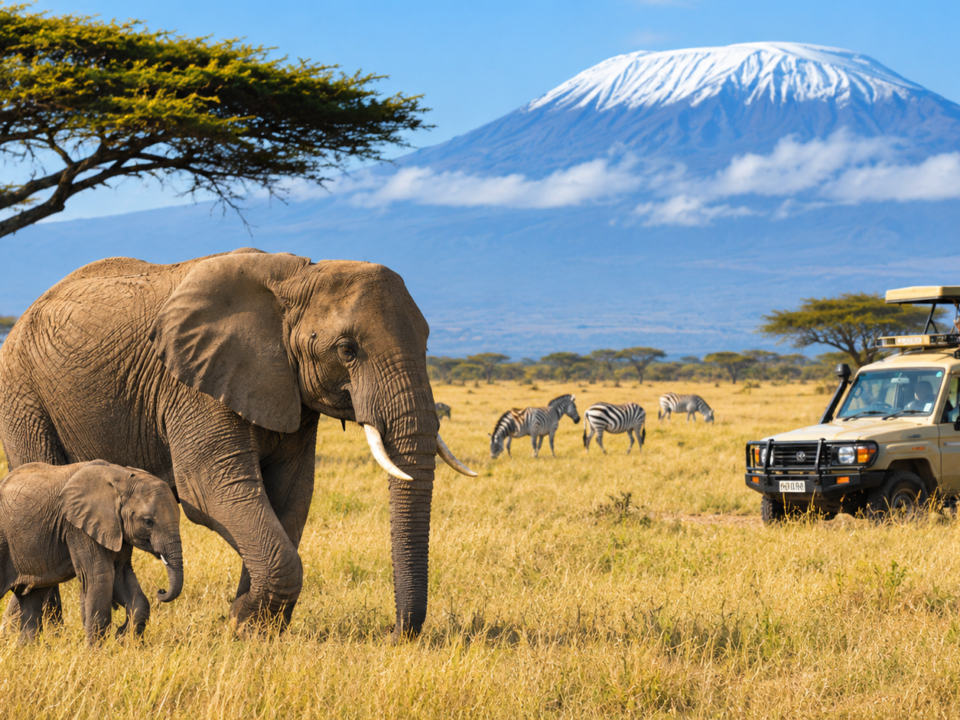
Tarangire National Park is well known for its elephants, baobab trees and seasonal wildlife concentrations.
The Tarangire River is an important water source, particularly during the dry season. Animals from surrounding areas gather around available water, creating good opportunities for wildlife viewing.
Elephants are among the park’s main attractions. Visitors may also encounter lions, leopards, giraffes, zebras, wildebeest, buffaloes and numerous bird species.
Tarangire is a strong choice for photographers interested in elephants and distinctive African landscapes.
It also works well as an early stop on a northern Tanzania safari before continuing towards Lake Manyara, Ngorongoro or Serengeti.
Official information: https://www.tanzaniaparks.go.tz/nationalparks/tarangire
4. Lake Manyara National Park
Lake Manyara National Park offers a different environment from the open plains of Serengeti.
The park features groundwater forests, woodland, open grassland and a large alkaline lake. It is particularly interesting for birdwatchers and visitors interested in varied landscapes.
Lake Manyara is known for tree-climbing lions, although sightings are never guaranteed. Its birdlife includes flamingos and numerous other species.
Elephants, baboons, blue monkeys, giraffes and buffaloes also occur in the park.
It can be included in a northern circuit itinerary, especially when travellers have sufficient time to explore several different ecosystems.
Official information: https://tanzaniaparks.go.tz/nationalparks/lake-manyara
5. Nyerere National Park
Nyerere National Park offers a different safari experience in southern Tanzania.
The park is associated with the Rufiji River system, extensive wilderness and varied habitats. Its wildlife includes elephants, lions, buffaloes, giraffes, hippos, crocodiles and African wild dogs.
The river environment creates opportunities for activities beyond conventional game drives, depending on the available camp and authorised activities.
Travellers looking for a less conventional itinerary may consider Nyerere instead of following the traditional northern circuit.
However, its location requires careful planning. Road transfers and domestic flights should be considered when arranging connections from international arrival airports.
Official information: https://www.tanzaniaparks.go.tz/nationalparks/nyerere
6. Ruaha National Park
Ruaha is an excellent destination for travellers interested in extensive wilderness and varied wildlife.
Its landscapes include baobab-covered areas, rocky hills, river systems and open plains. The park is known for elephants, lions, leopards, cheetahs and African wild dogs.
Birdwatchers will also find considerable diversity, with Tanzania National Parks reporting more than 570 bird species.
Ruaha is particularly worth considering for returning safari travellers and photographers seeking an alternative to the more frequently visited northern circuit.
It is important to allow enough time for travel and game viewing rather than adding the park to an already crowded itinerary.
Official information: https://www.tanzaniaparks.go.tz/nationalparks/ruaha
Which Tanzania safari destinations should you choose?
Your choice should depend on the wildlife you want to see and the amount of time available.
For a first Tanzania safari, Serengeti and Ngorongoro are strong starting points. They offer different wildlife environments and combine well in one itinerary.
If elephants and baobab landscapes interest you, include Tarangire.
If birdwatching and forest environments are important, consider Lake Manyara.
For a quieter southern safari experience, investigate Nyerere and Ruaha.
You do not need to visit every park during one holiday. A carefully planned route with enough time in each destination can provide a better experience than visiting many parks with limited game-viewing opportunities.
Best time to visit Tanzania from Denmark
Tanzania can be visited throughout the year, but the best travel period depends on your wildlife interests, preferred weather and chosen safari destinations.
June to October
These months are generally associated with the dry season across much of Tanzania.
Wildlife viewing can be particularly rewarding because vegetation becomes less dense and animals often concentrate around available water sources.
This period is popular for northern circuit safaris. It can also be attractive for travellers interested in the Great Migration, depending on the herds’ movements.
July and August can be particularly busy, so early accommodation and safari planning is advisable.
January to March
The beginning of the year offers another interesting safari period.
The southern Serengeti and Ndutu ecosystem can provide opportunities to observe wildebeest during the calving season.
This is an appealing period for photographers interested in young animals and predator activity.
Rainfall patterns vary, and wildlife movements should be checked against the expected travel dates before selecting accommodation.
November and December
The shorter rainy season can bring greener landscapes and good photographic conditions.
Some areas may experience showers, but this does not mean that safari activities stop completely.
Travellers should consider flexible arrangements and select accommodation according to the intended route.
April and May
These months generally experience heavier rainfall in many parts of Tanzania.
Some remote roads can become challenging, and certain camps may close seasonally. However, green-season travel can appeal to photographers seeking fewer visitors and different landscapes.
For Danish visitors, the most important consideration is not simply choosing the driest month. It is matching your travel dates with the wildlife experience you want.
How to travel from Denmark to Tanzania
Copenhagen is the main international departure point for many Danish travellers planning a Tanzania safari.
The two important international arrival airports for safari planning are Kilimanjaro International Airport (JRO) and Julius Nyerere International Airport (DAR) in Dar es Salaam.
Kilimanjaro International Airport is particularly convenient for northern circuit safaris. From there, travellers can continue towards Arusha, Tarangire, Ngorongoro and Serengeti.
Dar es Salaam is often more convenient for southern Tanzania itineraries and connections towards Nyerere National Park.
There are no direct Copenhagen–Kilimanjaro flights shown in the flight schedules reviewed for this guide. Connecting options may be available through international hubs, including Amsterdam, Istanbul and Doha. These routes and operating schedules can change.
Airlines such as KLM, Turkish Airlines, Qatar Airways and Ethiopian Airlines are worth checking when comparing connections. Always confirm the complete itinerary and baggage arrangements directly with the airline.
Official airline information: https://www.klm.dk/en-dk/flights-from-denmark-to-tanzania
When booking your international flights, consider the following:
- Allow sufficient connection time between flights.
- Check whether your baggage is transferred automatically.
- Avoid scheduling a demanding game drive immediately after a long international journey.
- Consider an overnight stay near Arusha before beginning a northern circuit safari.
- Check the arrival and departure airports carefully if your itinerary includes domestic flights.
How many days do you need for a Tanzania safari?
A Tanzania safari can be organised around different holiday durations.
For a shorter holiday, approximately five to seven days in Tanzania can provide an introduction to the northern circuit. A route could include Tarangire, Ngorongoro and a selected part of Serengeti.
For a more comprehensive experience, eight to ten days allows additional time for Serengeti and other northern parks.
Travellers with twelve to fourteen days can consider a more relaxed route, spend longer in Serengeti or explore a combination of northern Tanzania and Zanzibar.
Remember to account for international travel days from Denmark. A ten-day holiday does not necessarily provide ten complete days of game viewing.
Suggested Tanzania safari itineraries
Seven-day northern Tanzania safari
A seven-day safari can focus on the main northern destinations.
Day 1: Arrival at Kilimanjaro International Airport and transfer to Arusha.
Day 2: Travel to Tarangire National Park for an afternoon game drive.
Day 3: Morning wildlife viewing in Tarangire, followed by travel towards the Ngorongoro area.
Day 4: Descend into Ngorongoro Crater for a game drive.
Day 5: Travel towards Serengeti National Park.
Day 6: Full-day game viewing in Serengeti.
Day 7: Return towards Arusha or connect to your onward flight, subject to flight arrangements.
This is a compact itinerary. Travellers who want more time in Serengeti should consider extending it.
Ten-day Tanzania safari
A ten-day itinerary provides more flexibility.
It could include arrival in Arusha, two nights around Tarangire and Lake Manyara, two nights in the Ngorongoro region and three or more nights in Serengeti, depending on the selected route.
The remaining time can be used for transfers and departure arrangements.
The exact order should be determined by the migration location, accommodation availability and international flights.
Fourteen-day Tanzania safari and Zanzibar
Travellers with two weeks can combine wildlife viewing with a beach holiday.
A possible programme includes northern Tanzania’s main parks followed by a flight to Zanzibar.
After several days of game drives, Zanzibar provides a change of pace through Stone Town, coastal villages, beaches and marine activities.
This combination is particularly suitable for couples and travellers who want both wildlife and time beside the Indian Ocean.
How much does a Tanzania safari from Denmark cost?
There is no single price for a Tanzania safari. The final cost depends on the travel season, accommodation category, number of travellers and destinations included.
A private safari generally has different pricing from a shared group departure because vehicle and guide costs are distributed differently.
The main expenses to consider include:
- International flights from Denmark.
- Safari accommodation and meals.
- Private 4×4 safari vehicle and professional guide.
- National park and conservation fees.
- Domestic flights, where required.
- Airport transfers.
- Travel insurance and visa expenses.
- Optional activities and additional nights.
Accommodation is another major consideration. Budget camping, comfortable tented camps, mid-range lodges and luxury properties offer different levels of service and facilities.
When comparing quotations, check whether park fees, accommodation, meals, airport transfers and domestic flights are included.
Also confirm whether the quotation covers the Ngorongoro Crater service fee and other applicable conservation charges.
Zamunda Travels can help travellers assess the route and accommodation choices before preparing a safari quotation. The itinerary should reflect your available holiday time and preferred experience rather than adding destinations simply to increase the number of parks visited.
Entry requirements for Danish travellers visiting Tanzania
Danish passport holders require a tourist visa for visits to Tanzania.
According to the Danish Ministry of Foreign Affairs and Tanzania Immigration, the ordinary single-entry tourist visa costs USD 50 and is valid for up to 90 days, subject to approval and the applicable entry conditions.
Travellers can apply through Tanzania’s official electronic visa portal. Tanzania also permits eligible nationalities, including Danish citizens, to obtain a visa on arrival at designated entry points.
The recommended approach is to apply online before departure and allow sufficient processing time.
Your passport should have at least six months’ validity and at least one unused visa page. Immigration authorities may also request evidence of a return or onward ticket.
Each traveller, including children, needs an individual visa application where applicable.
Official visa application: https://visa.immigration.go.tz/
For the latest Danish-specific requirements, consult: https://um.dk/rejse-og-ophold/rejse-til-udlandet/pas-og-visum/tanzania
Health, vaccinations and travel insurance
Before travelling, Danish visitors should arrange a consultation with a travel-health professional.
The Danish Statens Serum Institut provides country-specific vaccination and malaria-prevention guidance. Recommendations depend on travel duration, itinerary, activities and personal circumstances.
Yellow fever vaccination requirements depend on the countries visited before Tanzania and relevant transit arrangements. Travellers arriving from, or meeting the applicable transit conditions for, yellow-fever-risk countries may need a valid vaccination certificate.
Do not assume that every traveller arriving directly from Denmark needs yellow fever vaccination for entry.
Travel insurance is also important. The Danish Ministry of Foreign Affairs states that Tanzania has local insurance requirements. Mainland arrivals are directed to the National Insurance Corporation, while direct arrivals in Zanzibar are directed to Zanzibar Insurance Corporation.
Zanzibar has its own mandatory travel-insurance arrangements. Check the current requirements before travelling and remember that local mandatory insurance may not replace comprehensive international travel insurance.
Your wider insurance should be checked for medical treatment, emergency evacuation, trip cancellation and safari-related activities.
Useful official resources:
- https://rejse.ssi.dk/rejsevaccinationslande/t/tanzania
- https://um.dk/rejse-og-ophold/rejse-til-udlandet/rejsevejledninger/Tanzania
- https://visitzanzibar.go.tz/
Should you combine a Tanzania safari with Zanzibar?
Combining a safari with Zanzibar is a popular option for travellers who want wildlife and coastal experiences in one holiday.
After exploring Serengeti, Ngorongoro or Tarangire, you can arrange a domestic flight towards Zanzibar.
The island offers opportunities to explore Stone Town, enjoy beaches, take boat trips and experience local Swahili culture.
However, adding Zanzibar increases the overall holiday duration and cost.
If your main interest is wildlife photography, you may prefer to spend additional nights in Serengeti. If you want a balanced holiday with time for relaxation, Zanzibar can be an excellent addition.
The decision should depend on your priorities rather than following a standard package.
Common mistakes when planning a Tanzania safari
One common mistake is trying to visit too many parks in a short period. Tanzania has large protected areas, and transferring between them takes time.
Another mistake is choosing accommodation without considering its location. A camp close to your intended game-viewing area can reduce unnecessary transfers.
Travellers should also avoid choosing their Serengeti accommodation without considering seasonal wildlife movements.
Another important consideration is comparing safari quotations without checking the inclusions. Two apparently similar prices may cover very different services.
Finally, do not plan your entire safari around a guaranteed wildlife sighting. Nature is unpredictable, and responsible operators should explain this clearly.
Plan your Tanzania safari with Zamunda Travels Uganda Ltd
A well-organised Tanzania safari starts with understanding your interests, available travel days and preferred accommodation.
Whether you want to explore Serengeti’s migration routes, photograph elephants in Tarangire, descend into Ngorongoro Crater or experience southern Tanzania, your itinerary should provide sufficient time for the destinations you choose.
Zamunda Travels Uganda Ltd helps travellers plan East African safari experiences across Uganda, Rwanda, Kenya and Tanzania.
For Danish travellers considering a Tanzania wildlife holiday, we can assist with destination selection, itinerary planning, accommodation choices and safari arrangements.
Let us help you plan your next African wildlife experience.
Zamunda Travels Uganda Ltd | www.zamundatravels.com | info@zamundatravels.com | WhatsApp +256 704 705 606 | Beyond Expedition
Frequently Asked Questions
1. Is Tanzania a good safari destination for Danish travellers?
Yes. Tanzania offers extensive wildlife areas, diverse national parks and opportunities to see elephants, lions, leopards, giraffes and the Great Migration. Danish visitors can organise private or group safaris and combine their wildlife holiday with Zanzibar.
2. What is the best month for a Tanzania safari?
June to October is generally a good period for dry-season wildlife viewing. January to March is particularly interesting for the wildebeest calving season in the southern Serengeti ecosystem. The best month depends on the parks and wildlife experiences you want.
3. Do Danish citizens need a visa for Tanzania?
Yes. Danish passport holders require a tourist visa. Tanzania’s ordinary single-entry visa costs USD 50 and is valid for up to 90 days, subject to approval. Applications can be submitted through the official Tanzania Immigration website.
4. How long should Danish travellers spend on a Tanzania safari?
Seven to ten days is a useful starting point for exploring the northern safari circuit. Twelve to fourteen days provides more flexibility for longer wildlife-viewing stays or combining Tanzania’s national parks with Zanzibar.
5. Can I combine Serengeti and Zanzibar in one holiday?
Yes. Domestic flights can connect safari destinations with Zanzibar. You can spend several days exploring Tanzania’s national parks before continuing to the island for beaches, Stone Town and coastal activities.
6. Which airport should I fly into for a Tanzania safari?
Kilimanjaro International Airport is generally the most convenient arrival airport for northern Tanzania safaris. Julius Nyerere International Airport in Dar es Salaam is often more suitable for southern Tanzania itineraries. The best choice depends on your route and available flights.
7. Is a private Tanzania safari better than a group safari?
A private safari provides greater control over the itinerary, accommodation and game-viewing schedule. Group safaris can reduce individual costs but usually follow fixed routes and departure dates. Your preferred travel style and budget should guide the decision.