Where to Stay Near Nyungwe Forest National Park
October 14, 2026
Chimpanzee Trekking in Nyungwe Forest
October 14, 2026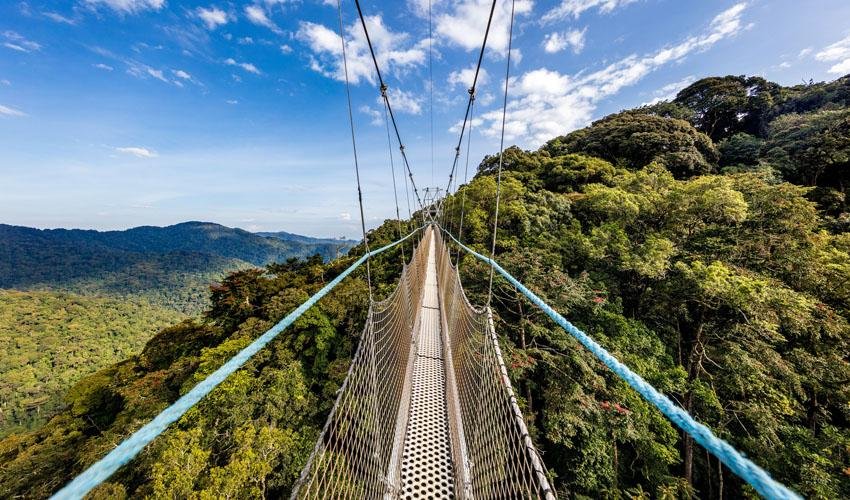
The best things to do in Nyungwe Forest National Park combine wildlife encounters, rainforest adventures, and cultural experiences. This remarkable forest sits in southwestern Rwanda, surrounded by green mountains and rolling tea plantations.
Visitors can track chimpanzees, cross a suspended canopy walkway, hike to waterfalls, and discover rare birds. Moreover, the forest offers peaceful nature walks and exciting outdoor activities.
Nyungwe is one of Africa’s oldest rainforests and a UNESCO World Heritage Site. It protects 13 primate species, hundreds of bird species, and an extraordinary variety of plants.
Whether you love wildlife, photography, or adventure, Nyungwe offers something memorable. This guide explores its top attractions and helps you plan the perfect Rwanda rainforest safari.
Why Visit Nyungwe Forest National Park?
Nyungwe National Park is one of Rwanda’s most important natural attractions. Its protected landscape covers approximately 1,020 square kilometres of mountain rainforest and other habitats.
The park became a UNESCO World Heritage Site in 2023 because of its outstanding biodiversity. Furthermore, it protects important habitats within the Albertine Rift.
Unlike Rwanda’s savannah parks, Nyungwe focuses on forest wildlife and outdoor exploration. Visitors discover primates, birds, waterfalls, wetlands, and spectacular mountain scenery.
The park is particularly famous for chimpanzee trekking and the canopy walkway. However, several lesser-known experiences make longer visits worthwhile.
Here are the most rewarding activities to include in your Nyungwe safari itinerary.
1. Chimpanzee Trekking in Nyungwe Forest
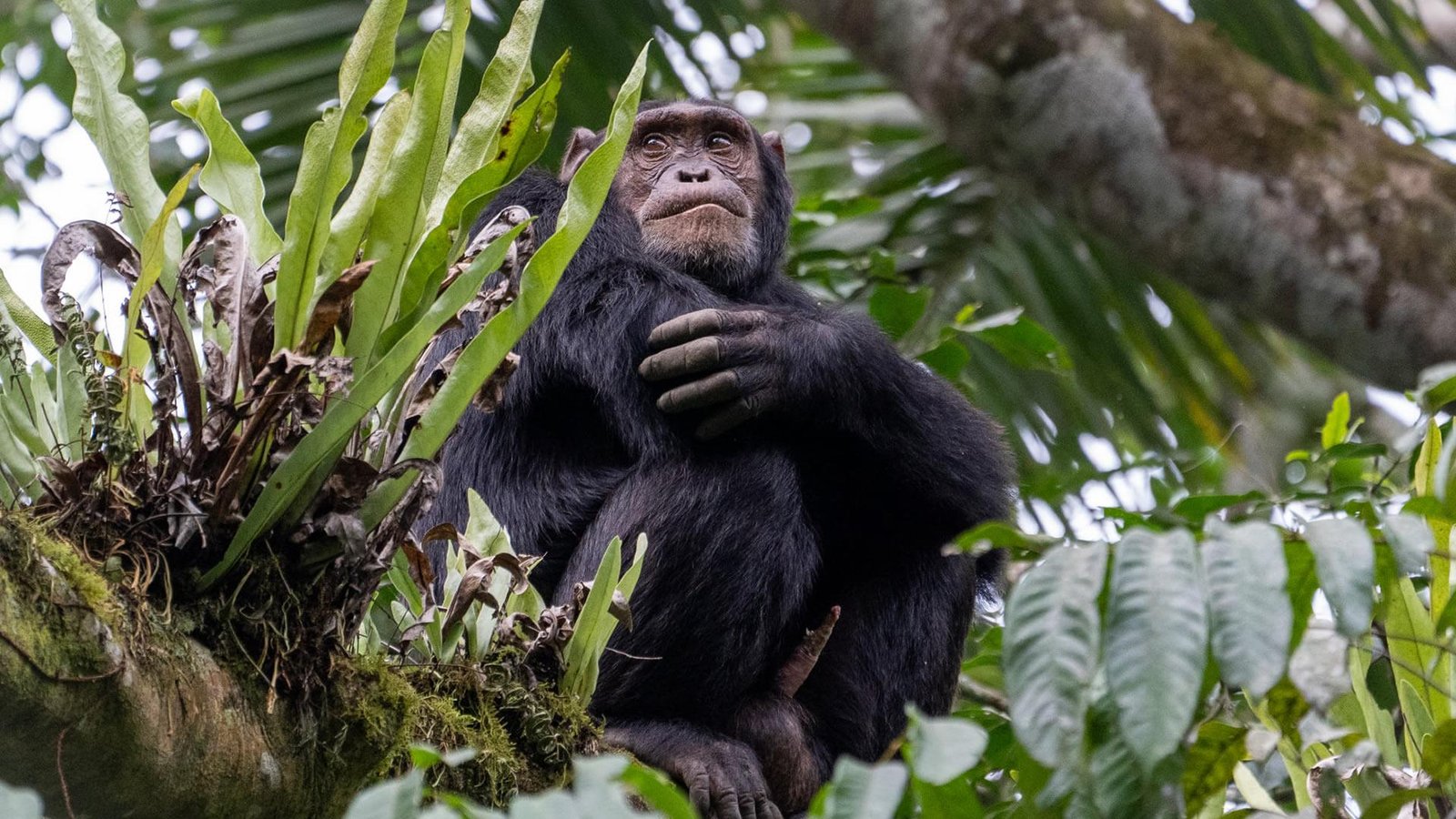
Discover wild chimpanzees in their natural rainforest habitat during a guided Nyungwe trekking experience.
Chimpanzee trekking is among the most exciting Nyungwe Forest activities. It allows visitors to observe wild chimpanzees in their natural rainforest habitat.
These intelligent primates share approximately 98% of their DNA with humans. Therefore, watching their behaviour can feel surprisingly familiar.
What Happens During Chimpanzee Trekking?
Your experience begins with an early briefing from park guides. Afterwards, trackers lead you into the forest to search for chimpanzees.
You may hear loud calls echoing through the trees before seeing the animals. Some chimpanzees climb high branches, while others travel along the forest floor.
The experience reveals fascinating social behaviour, including grooming, feeding, and communication.
However, chimpanzees move quickly, and sightings are never guaranteed. Visitors should prepare for muddy trails, steep slopes, and changing weather.
Where Does Chimpanzee Trekking Take Place?
Tracking currently takes place in areas including Cyamudongo, Mayebe, and Gisovu. Park authorities assign visitors according to bookings and operational arrangements.
Each tracking group has limited spaces. Consequently, advance reservations are important, especially during popular travel periods.
Best for: Wildlife lovers, photographers, and adventurous travellers.
Travel tip: Book chimpanzee trekking early in your itinerary. This gives you more flexibility when arranging other activities.
2. Experience the Famous Nyungwe Canopy Walkway
The Nyungwe canopy walkway offers one of Rwanda’s most memorable forest experiences. This suspended bridge takes visitors high above the rainforest floor.
From the walkway, you can admire towering trees, green valleys, and distant mountain slopes.
Moreover, the elevated viewpoint provides excellent opportunities for landscape photography.
What Should You Expect?
The adventure begins at the Uwinka Visitor Centre. A guided forest walk leads visitors towards the suspended bridges.
As you cross, the bridge may move gently beneath your feet. Meanwhile, the surrounding forest creates a dramatic backdrop.
You might also spot monkeys or birds moving through nearby branches. However, wildlife sightings depend on the day’s conditions.
The return walk includes uphill sections, so comfortable footwear is important.
Best for: First-time visitors, couples, photographers, and adventure lovers.
Travel tip: Choose a clear morning when possible. However, misty conditions can also create beautiful rainforest photographs.
3. Explore Nyungwe Forest Hiking Trails
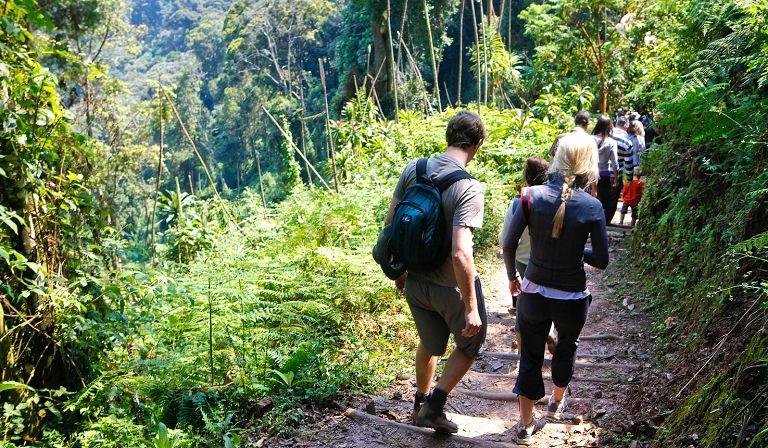
Explore Nyungwe’s peaceful rainforest trails, surrounded by towering trees and rich biodiversity.
Hiking is one of the best ways to experience Nyungwe’s natural beauty. The park offers trails through dense rainforest, mountain ridges, wetlands, and waterfalls.
Some routes suit casual walkers, while others require excellent physical fitness.
Popular Hiking Trails
Igishigishigi Trail: This relatively short trail provides access to the canopy walkway. It suits visitors seeking a manageable forest adventure.
Umuyove Trail: Explore tall trees, forest scenery, and excellent birdwatching areas. This trail appeals to travellers who enjoy longer nature walks.
Kamiranzovu Trail: Discover a remarkable wetland surrounded by rainforest. The trail offers interesting plants, birds, and peaceful scenery.
Bigugu Trail: Climb towards Mount Bigugu, Nyungwe’s highest peak. This demanding hike rewards experienced walkers with impressive mountain views.
Hiking times depend on trail conditions and your walking speed. Therefore, discuss distances and difficulty with your guide beforehand.
Best for: Nature enthusiasts, hikers, botanists, and landscape photographers.
Travel tip: Choose your trail according to fitness rather than distance alone. Steep terrain can make short hikes surprisingly challenging.
4. Discover Nyungwe Forest Waterfalls
Nyungwe’s waterfalls provide a refreshing escape into the heart of the rainforest. Flowing streams, moss-covered rocks, and dense vegetation create spectacular scenery.
Waterfall hikes also provide opportunities to observe birds, butterflies, and unique forest plants.
Visit Ndambarare and Other Forest Waterfalls
Ndambarare is among the park’s rewarding waterfall destinations. Visitors can reach waterfall areas through guided hikes from designated trailheads.
Along the way, listen to flowing water and the dawn chorus of forest birds. Furthermore, look carefully for monkeys moving between branches.
The scenery changes throughout the year. During wetter periods, waterfalls often become more powerful.
However, trails can also become slippery after heavy rainfall.
Best for: Hikers, photographers, couples, and nature lovers.
Travel tip: Carry a waterproof phone case and protect your camera. Mist and sudden showers can affect electronic equipment.
5. Track Black-and-White Colobus Monkeys
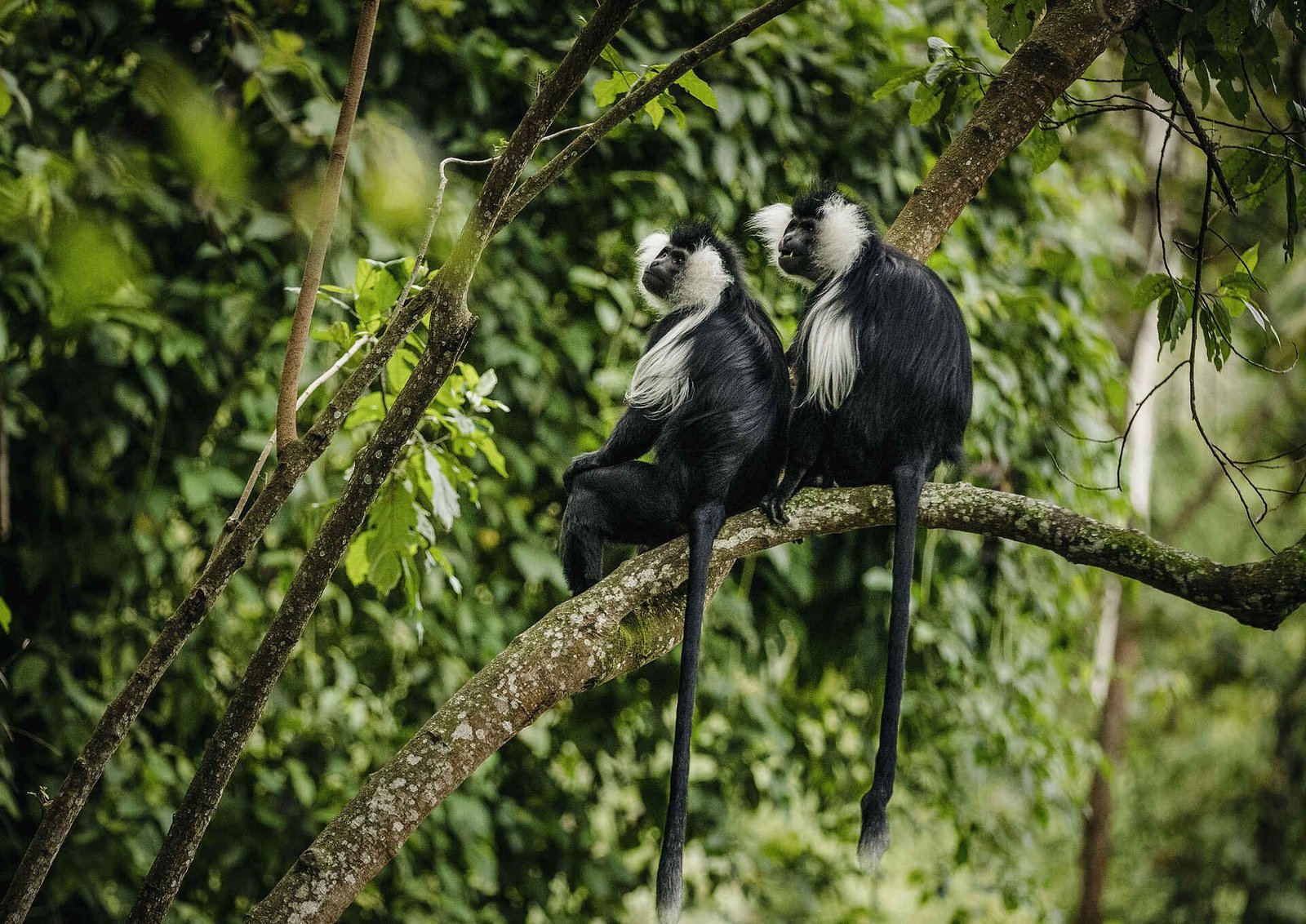
Nyungwe protects remarkable troops of black-and-white colobus monkeys, famous for their flowing white fur.
Nyungwe is famous for its remarkable Angolan black-and-white colobus monkeys.
These beautiful primates have contrasting black fur and long white hair. Their striking appearance makes them especially attractive to wildlife photographers.
What Makes Colobus Tracking Special?
Nyungwe supports exceptionally large colobus monkey groups. Some troops contain hundreds of individuals moving through the rainforest.
Watching so many monkeys leap between branches is an extraordinary experience.
Visitors may observe feeding, grooming, and social interactions. Additionally, their movements offer excellent opportunities to learn about forest ecology.
Colobus tracking is available through designated park visitor centres. Your guide will explain the group’s location and appropriate viewing behaviour.
Best for: Families, primate enthusiasts, and wildlife photographers.
Travel tip: Carry binoculars, even when tracking monkeys. They help you observe animals feeding high in the canopy.
6. Enjoy Birdwatching in Nyungwe Forest
Nyungwe is one of East Africa’s outstanding forest birdwatching destinations. The park records more than 300 bird species, including numerous Albertine Rift endemics.
Its diverse habitats attract specialist birdwatchers from around the world.
Birds to Look For
Among the remarkable species associated with Nyungwe are:
- Great blue turaco
- Rwenzori turaco
- Red-collared mountain babbler
- Regal sunbird
- Rwenzori double-collared sunbird
- Grauer’s swamp warbler
These birds occupy different forest habitats. Therefore, an experienced bird guide can greatly improve your chances of finding them.
Early morning is particularly rewarding because birds become active after sunrise.
The dawn chorus fills the forest with calls, whistles, and songs. Moreover, cooler temperatures often make walking more comfortable.
Best for: Birdwatchers, photographers, conservation enthusiasts, and patient nature lovers.
Travel tip: Consider a dedicated birding excursion rather than combining birdwatching with a demanding chimpanzee trek.
7. Visit Kamiranzovu Swamp
Kamiranzovu Swamp offers a different perspective on Nyungwe’s remarkable ecosystems.
This high-altitude wetland lies within the forest landscape. It supports specialised vegetation and wildlife adapted to wet conditions.
Visitors explore the surrounding environment through guided trails.
Why Is Kamiranzovu Special?
The swamp contrasts beautifully with Nyungwe’s dense mountain forest. Open wetland areas provide different scenery and wildlife habitats.
Birdwatchers may search for specialised species, including Grauer’s swamp warbler.
Additionally, guides explain the ecological importance of wetlands and their role in storing water.
The surrounding landscape offers excellent opportunities for nature photography.
Best for: Birdwatchers, nature enthusiasts, and visitors interested in conservation.
Travel tip: Wear waterproof hiking boots because sections of the trail may be muddy.
8. Experience Nyungwe’s New Adventure Activities
Nyungwe now offers more than traditional trekking and hiking. Adventure activities provide exciting ways to explore the forest landscape.
Try the Nyungwe Zipline
The park’s zipline experience extends approximately 1,935 metres across three sections.
Participants glide above the forest landscape while enjoying spectacular views.
This activity appeals to travellers seeking an adrenaline-filled experience. However, participation depends on safety requirements and weather conditions.
Challenge Yourself on the Gisakura Rope Course
The Gisakura rope course includes suspended obstacles that test balance and coordination.
Visitors navigate challenges such as hanging nets and swinging structures. Consequently, it offers a playful alternative to longer forest hikes.
Before booking, confirm current availability, age requirements, and safety restrictions.
Best for: Adventure seekers, active families, and visitors seeking new experiences.
9. Discover Tea Plantations Near Nyungwe
The tea plantations surrounding Nyungwe create some of Rwanda’s most beautiful agricultural landscapes.
Rows of bright green tea bushes stretch across rolling hills near the forest.
Visitors can explore plantation areas through organised local experiences.
What Happens During a Tea Tour?
A tea plantation visit may introduce you to cultivation, harvesting, and processing techniques.
Local guides explain how tea grows in Rwanda’s cool highland climate.
Some experiences also include opportunities to taste freshly prepared Rwandan tea.
Additionally, plantation visits provide attractive photography locations.
Best for: Couples, families, cultural travellers, and photographers.
Travel tip: Combine a tea experience with an afternoon community visit. This creates a relaxing break between demanding forest activities.
10. Experience Local Culture in Banda and Gisakura
Nyungwe is surrounded by communities with rich cultural traditions.
Visiting nearby villages adds a human connection to your Rwanda rainforest safari.
Community experiences may include traditional crafts, pottery, blacksmithing, music, and local food preparation.
Why Choose Community Tourism?
These activities allow visitors to learn directly from local residents.
They also create opportunities for local businesses and community guides.
For example, travellers can learn about traditional craft techniques before purchasing handmade souvenirs.
However, choose organised experiences that respect local traditions and fairly compensate participants.
Best for: Cultural travellers, families, and responsible tourism enthusiasts.
Travel tip: Ask permission before photographing residents, homes, or cultural performances.
11. Experience the Rainforest After Dark
A guided night walk reveals another side of Nyungwe’s wildlife.
Many forest creatures become active after sunset. These include galagos, pottos, tree hyraxes, and other nocturnal animals.
Visitors may hear unfamiliar calls and movements in the surrounding vegetation.
Moreover, the nighttime forest creates a completely different atmosphere from daytime hiking.
Night walks must follow authorised routes and park arrangements. Therefore, never explore the forest independently after dark.
Best for: Wildlife enthusiasts and travellers interested in unusual nature experiences.
Best Time to Visit Nyungwe Forest National Park
Nyungwe welcomes visitors throughout the year. However, seasonal rainfall can influence hiking conditions and wildlife experiences.
June to September generally provides drier conditions for hiking and canopy activities.
December to February often brings another relatively dry period.
Meanwhile, March to May and October to November are typically wetter.
Rainy periods create lush scenery and beautiful forest photography opportunities. However, muddy paths can make trekking more demanding.
Travel tip: Carry rain protection regardless of your travel dates. Nyungwe is a rainforest, so showers remain possible throughout the year.
How Many Days Do You Need in Nyungwe?
Two to three days provide a rewarding introduction to Nyungwe’s main attractions.
However, travellers interested in birdwatching or longer hikes should consider additional time.
Suggested Three-Day Nyungwe Itinerary
Day 1: Arrival and Canopy Walk
Travel from Kigali towards Nyungwe through Rwanda’s green countryside. After arrival, enjoy a guided canopy walk if your schedule allows.
Spend the evening relaxing near the forest.
Day 2: Chimpanzee Trekking and Tea Experience
Begin early with chimpanzee tracking in the forest.
Afterwards, return for lunch and enjoy a relaxed afternoon. Depending on your energy, visit a nearby tea plantation.
Day 3: Waterfall Hiking and Departure
Start with a guided waterfall hike or shorter nature trail.
Enjoy the surrounding scenery before continuing to your next Rwanda destination.
This schedule balances adventure with recovery time. Nevertheless, trekking assignments and travel distances may require adjustments.
How to Get to Nyungwe Forest National Park
Nyungwe lies in southwestern Rwanda, approximately 225 kilometres from Kigali.
The drive usually takes around five to six hours, depending on road conditions and stops.
Travellers can also fly from Kigali to Kamembe Airport. Afterwards, a road transfer takes you towards the park.
A private safari vehicle offers flexibility for photography stops and sightseeing.
Moreover, visitors can combine Nyungwe with Lake Kivu, Volcanoes National Park, or Akagera National Park.
Where to Stay Near Nyungwe Forest
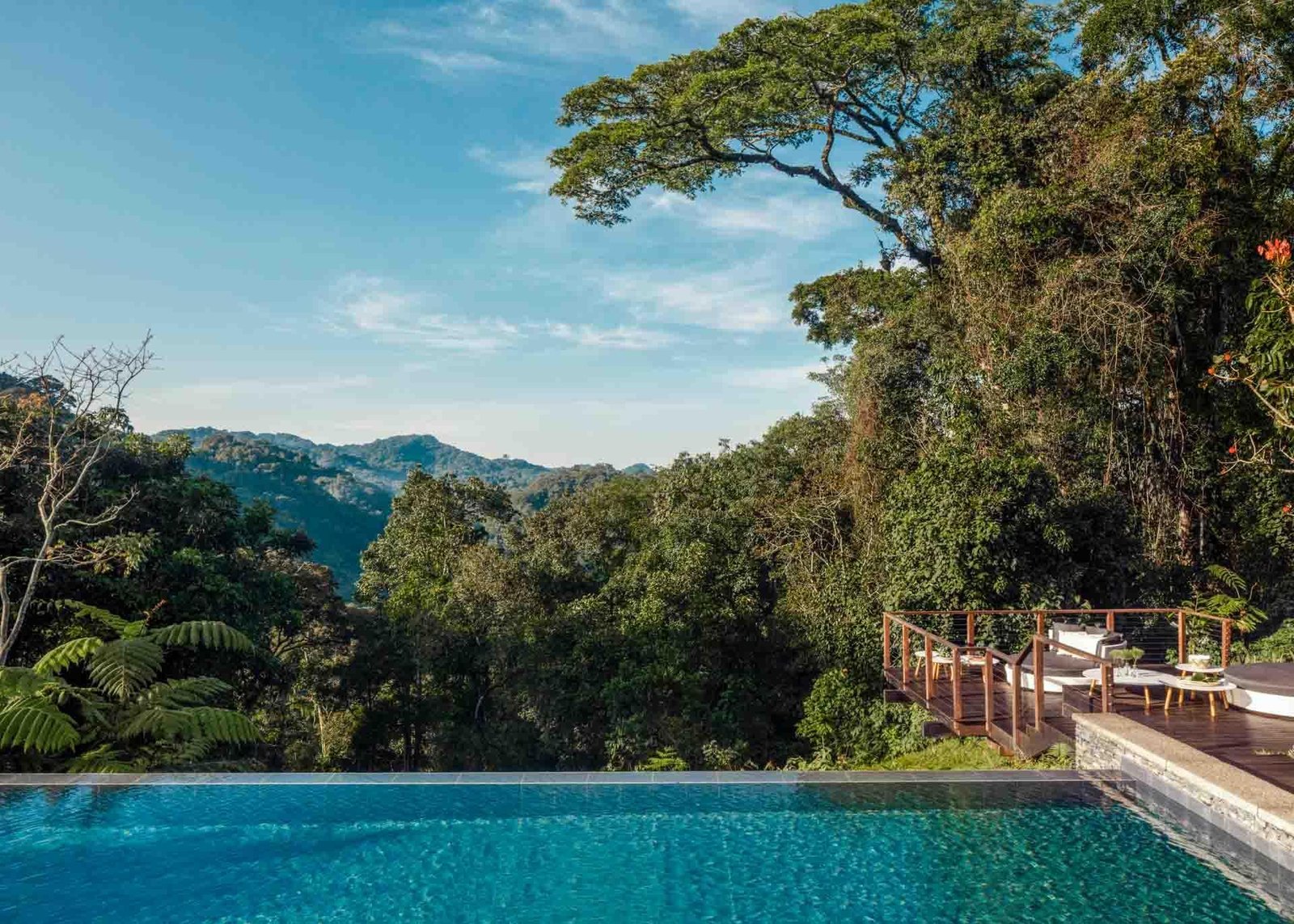
Enjoy luxurious rainforest accommodation surrounded by Nyungwe’s beautiful green landscapes.
Nyungwe offers accommodation options for different travel budgets.
Luxury travellers can consider One&Only Nyungwe House near the forest and tea plantations.
Other accommodation choices include park guesthouses, campsites, and privately operated lodges.
Gisakura provides convenient access to several western forest activities. Meanwhile, accommodation near Uwinka may suit visitors planning activities in that area.
Travel tip: Choose accommodation according to your booked activity meeting point. Chimpanzee trekking often requires a very early departure.
Essential Tips for Visiting Nyungwe Forest
Good preparation makes rainforest exploration safer and more enjoyable.
Wear sturdy hiking boots with reliable grip. Also, bring lightweight waterproof clothing and long trousers.
Carry drinking water, snacks, binoculars, and a small first-aid kit.
Furthermore, book popular activities in advance because group sizes and daily spaces are limited.
Always follow your guide’s instructions and maintain appropriate wildlife distances.
Avoid feeding animals, dropping litter, or disturbing forest vegetation.
Finally, confirm current activity prices and park entry requirements before travelling.
Plan Your Nyungwe Forest Safari with Zamunda Travels
Nyungwe Forest National Park offers one of Rwanda’s most rewarding wildlife and adventure experiences.
From chimpanzee trekking to canopy walks, its attractions reveal the remarkable beauty of this ancient rainforest.
At Zamunda Travels Uganda Ltd, we help travellers arrange personalised Rwanda safari itineraries.
Our safari experiences can combine Nyungwe with gorilla trekking in Volcanoes National Park, wildlife viewing in Akagera, and relaxation along Lake Kivu.
We also help coordinate accommodation, private transport, park activities, and guided excursions.
Start planning your Rwanda rainforest safari today.
Website: https://www.zamundatravels.com
Email: info@zamundatravels.com
WhatsApp: +256 704 705 606
Zamunda Travels Uganda Ltd — Beyond Expeditions.
Frequently Asked Questions About Nyungwe Forest National Park
1. What are the best things to do in Nyungwe Forest National Park?
The most popular activities include chimpanzee trekking, canopy walks, colobus monkey tracking, hiking, birdwatching, and waterfall visits. Visitors can also enjoy ziplining, tea tours, and cultural experiences.
2. Is Nyungwe Forest National Park worth visiting?
Yes. Nyungwe offers exceptional rainforest wildlife, scenic trails, and distinctive adventure activities. It is especially rewarding for primate enthusiasts, birdwatchers, and nature lovers.
3. How much time should I spend in Nyungwe Forest?
Two to three days are ideal for many first-time visitors. However, four days or more provide greater flexibility for birdwatching, challenging hikes, and cultural experiences.
4. Can you see gorillas in Nyungwe Forest?
No. Rwanda’s mountain gorilla trekking takes place in Volcanoes National Park. Nyungwe is famous for chimpanzees, colobus monkeys, and other forest primates.
5. What is the best month to visit Nyungwe Forest?
June to September generally offers favourable hiking conditions. December to February is another popular period. However, wildlife experiences remain possible throughout the year.