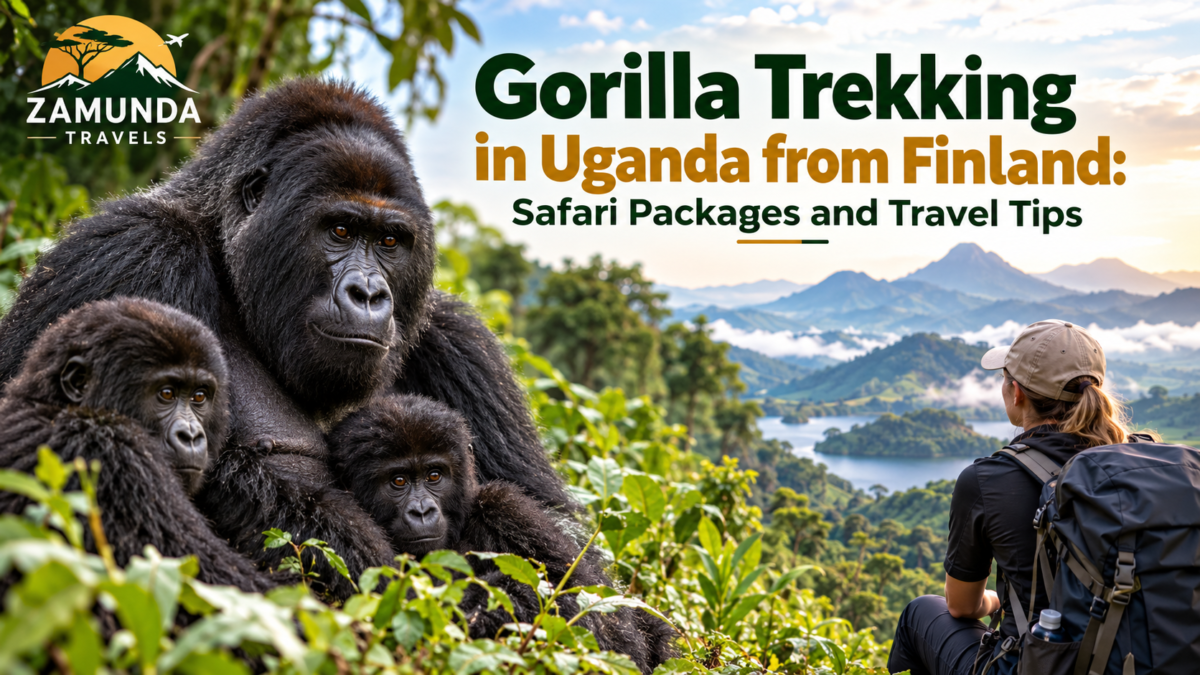
Gorilla Trekking in Rwanda from France
October 12, 2026
Gorilla Trekking in Rwanda from USA
October 13, 2026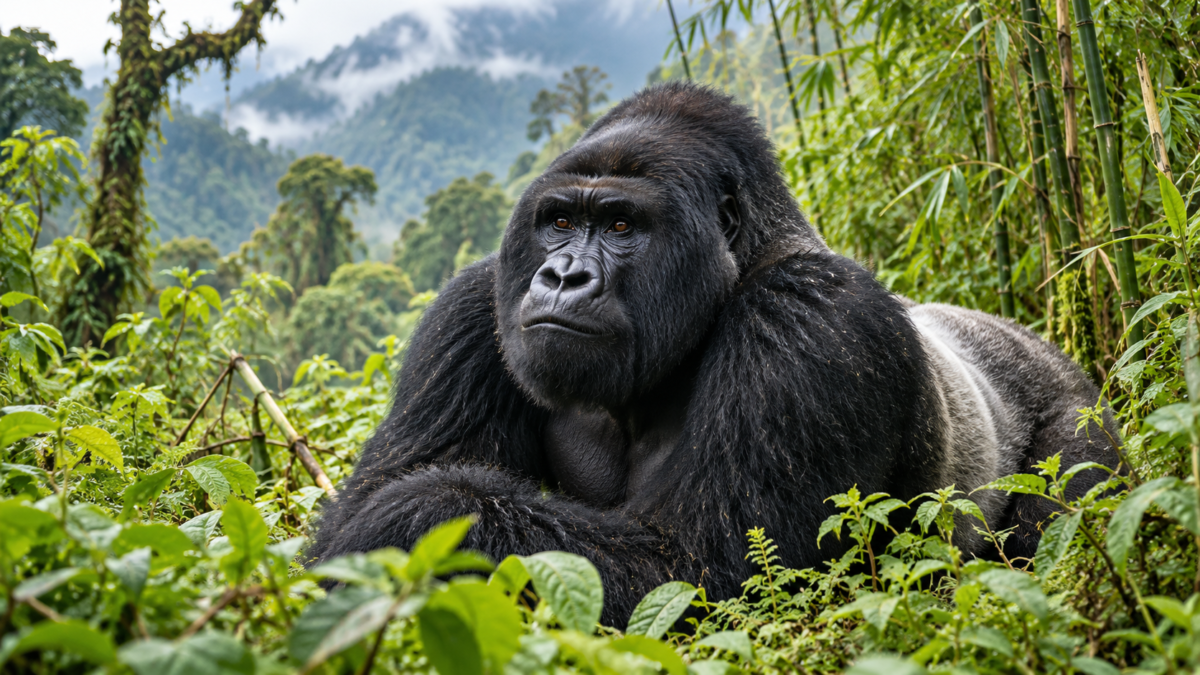
Gorilla trekking in Rwanda from UK brings you into the mountain forests of Volcanoes National Park. Here, expert guides lead visitors to mountain gorillas living freely among bamboo and volcanic slopes. However, a successful trip starts with careful planning.
You need to coordinate flights, permits, accommodation and transfers. Furthermore, your fitness, travel season and arrival schedule can shape the experience.
This guide explains the practical steps for British travellers. It also highlights common booking mistakes, realistic budgeting and ways to build a more rewarding Rwanda gorilla safari.
Planning Gorilla Trekking in Rwanda from UK
Rwanda’s gorilla trekking takes place in Volcanoes National Park, near Musanze and Kinigi. Therefore, Kigali provides the main arrival point for your safari. From there, allow roughly three hours for the road transfer towards the park.
For a comfortable short holiday, consider four nights in Rwanda. This gives you arrival time, your trek and another activity. Additionally, it reduces the pressure of connecting an expensive permit with an international flight.
A sensible booking order is:
- Choose your preferred travel dates.
- Check gorilla permit availability.
- Coordinate the permit with suitable flights.
- Confirm accommodation and private transfers.
- Arrange insurance and travel health advice.
Ideally, start planning six to eight months ahead for popular dates. Treat this as a planning recommendation, rather than an official booking deadline. However, flexible travellers should still ask about availability closer to departure.
Before paying, request written confirmation of the trek date and traveller details. Also, check whether your quote includes the permit or lists it separately.
Zamunda Travels can help coordinate your Rwanda itinerary, transfers and accommodation. Share your arrival airport, budget and walking ability when requesting a proposal.
Flights from the UK to Kigali
RwandAir offers London to Kigali flights, including its established direct Heathrow route. However, check the current timetable for your exact dates. Avoid relying on old articles listing fixed departure days.
For regional UK departures, compare connecting tickets with travelling to Heathrow. Consider the full journey, including baggage, airport transfers and connection times. Furthermore, a cheaper fare may involve a tiring overnight stop.
Whenever possible, book connecting flights on one ticket. This can simplify arrangements if an earlier flight disrupts your connection. However, check the airline’s actual conditions before purchasing.
Protect your trekking date
Arrive before your trekking day and sleep near the park beforehand. Ideally, include an additional arrival buffer when your schedule allows. This protects your plans against delays and gives you recovery time.
Rwanda’s published permit rules exclude refunds for flight delays and late arrival. Therefore, a tightly timed flight connection creates a significant financial risk.
Also, carry your boots, medication and essential trekking clothes in hand luggage. If checked baggage arrives late, you can still prepare for the forest.
For the return journey, avoid depending on an early finish after trekking. Instead, schedule your international departure the following day whenever possible.
Rwanda Visa and Entry Requirements for British Citizens
British citizens currently qualify for a free 30-day visa on arrival. However, this is a visa arrangement, rather than visa-free entry. Your passport must remain valid for six months after arrival and contain one blank page.
These rules apply to travellers using a full British citizen passport. If you hold another nationality, check the requirements for that passport. Living in the UK does not automatically give you British entry privileges.
Keep your accommodation details and return flight confirmation easily accessible. Additionally, save offline copies of your itinerary, insurance and permit confirmation.
Check your complete route
Yellow fever certificate requirements depend on where you arrive from. Therefore, check your transit countries and any regional extensions with your travel clinic. Rwanda requires proof when arriving from a country listed as a transmission risk.
If you combine Rwanda with Uganda or Kenya, review each country’s entry rules separately. Also, confirm whether a regional visa suits your actual route.
Finally, recheck official requirements shortly before departure. Border health measures can change, and Rwanda currently applies additional screening linked to the DRC Ebola outbreak.
Rwanda Gorilla Permit Cost and Safari Budget
The standard Rwanda gorilla permit cost for foreign visitors is US$1,500 per person. Participants must be at least 15 years old. Therefore, two adults should budget US$3,000 for one trek each.
However, the permit represents only part of your holiday cost. Flights, accommodation and transport can substantially increase the total.
| Budget item | What to check |
|---|---|
| Gorilla permit | Confirm inclusion and the correct trekking date |
| International flights | Include baggage and UK airport travel |
| Accommodation | Check room basis, meals and supplements |
| Private transport | Confirm airport, headquarters and trailhead transfers |
| Additional activities | Ask about separate permits and entrance fees |
| Personal expenses | Allow for porters, tips and drinks |
| Travel protection | Include insurance and relevant health preparation |
Build a budget in pounds
Request an itemised quote before comparing operators. Otherwise, a seemingly cheaper package may exclude essential services.
For illustration, suppose the conversion rate were US$1.25 per £1. A US$1,500 permit would equal £1,200 before fees. This is an arithmetic example, not a current exchange rate.
Also, ask which currency applies when paying your balance. Card charges, transfer fees and currency movements can change your final spending.
To control costs, share private transport and choose simpler accommodation. However, changing your hotel does not reduce the standard permit price.
If someone advertises a discounted permit, request its current official conditions. Never assume an older promotion applies to your nationality or travel dates.
Best Time for Gorilla Trekking in Rwanda
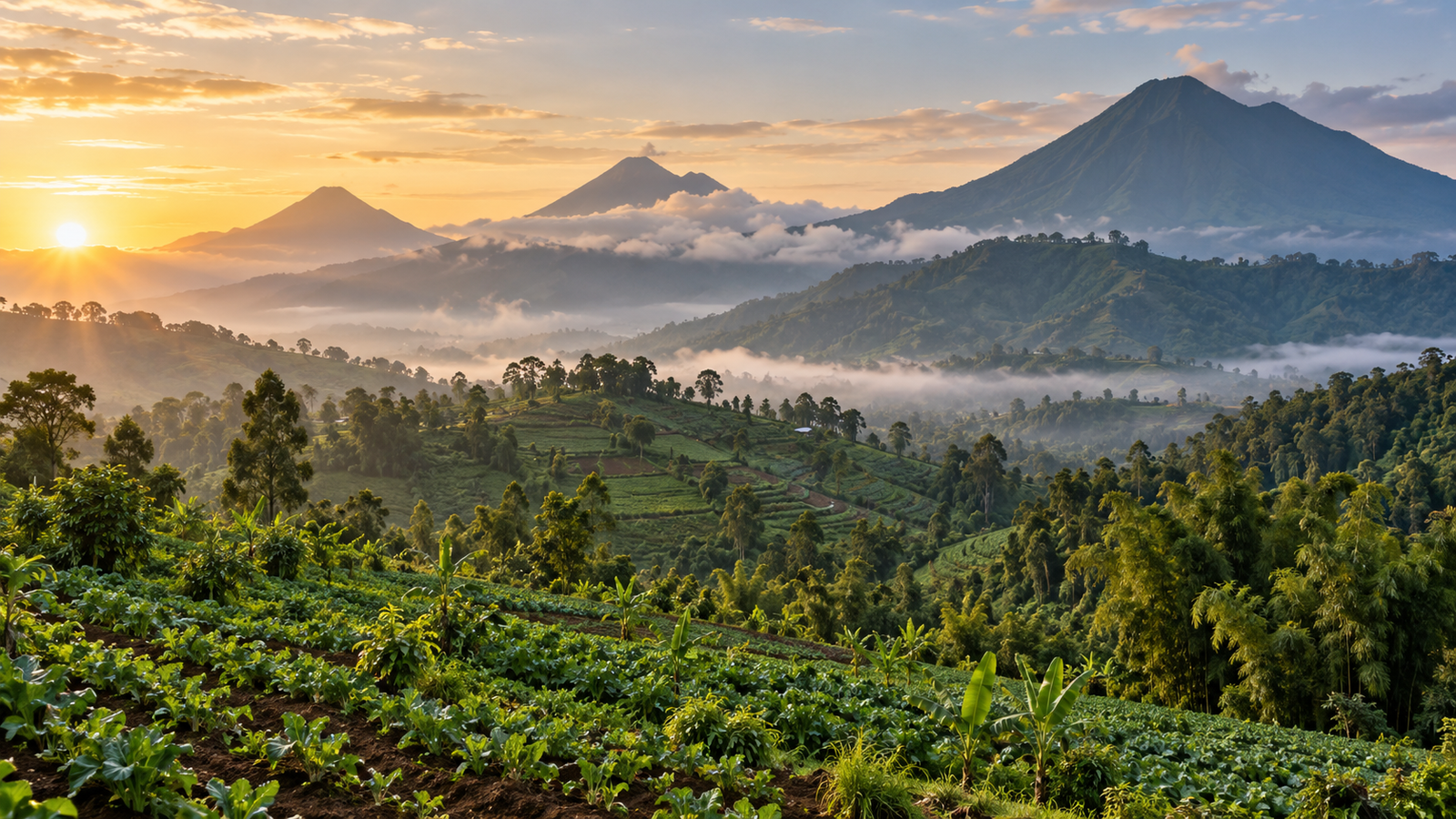
An illustration inspired by the volcanic landscapes of northern Rwanda.
June to mid-September generally offers drier conditions and easier paths. Meanwhile, Rwanda’s main rainy periods run from mid-February to May and mid-September to mid-December.
Therefore, June, July and August suit travellers prioritising walking conditions. January can also suit a winter escape between the main rainy periods. However, mountain weather remains variable.
Match the season to your priorities
Choose your dates around comfort, availability and the wider itinerary. For example, a nervous walker may prefer generally drier conditions. Meanwhile, a photographer may welcome lush vegetation and atmospheric mist.
Rainy periods can still provide rewarding trips. However, allow for slippery ground, wet clothing and less predictable outdoor plans.
Also, compare actual lodge quotes before assuming low-season savings. Accommodation offers do not automatically mean reduced gorilla permit prices.
For UK school holidays, start enquiries early. Nevertheless, remember that children under 15 cannot join the gorilla trek.
Finally, pack waterproof clothing in every season. A dry-season booking does not guarantee a dry trekking morning.
What Happens on Gorilla Trekking Day?
Expect an early breakfast before travelling to Kinigi headquarters. Visitors report around 7am for registration, briefing and group allocation. Guides consider fitness when assigning groups, although gorilla movements influence the eventual route.
Afterwards, you travel towards your assigned trailhead. The walk may cross farmland before entering bamboo or mountain forest.
Listen for the dawn chorus as the landscape wakes around you. However, keep conversation quiet once your guides bring you near the gorillas.
How long does the experience last?
Finding a family can take around 30 minutes or several hours. Afterwards, you still need to walk back. Therefore, keep the day flexible rather than planning a fixed lunchtime finish.
Once located, visitors spend a maximum of one hour with the gorillas. Groups contain no more than eight visitors. You might observe feeding, grooming, resting or youngsters playing. However, wildlife behaviour remains unpredictable, and no operator can promise a particular scene.
For photographs, practise your camera settings before travelling. Furthermore, spend part of the hour simply watching. Constantly checking your screen can distract from the encounter.
Trek Difficulty, Fitness and Gorilla Rules
Gorilla trekking involves uneven ground, mud and potentially steep climbs. Furthermore, the altitude can make ordinary walking feel harder. Official guidance describes routes reaching approximately 2,500 to 4,000 metres.
You do not need to train like a mountaineer. However, regular walking, hills and stair climbing provide useful preparation.
Practise wearing your boots and carrying a small daypack. Also, tell your operator about knee problems, breathing conditions or limited mobility before booking.
An easier group request cannot guarantee a short walk. Gorillas move, so the final route remains uncertain.
Use a porter and follow your guide
Porters can carry your backpack and provide assistance along the route. Therefore, consider hiring one even if you usually walk independently. Confirm the current charge locally.
During the encounter, maintain the instructed distance and speak quietly. Rwanda’s published rules specify at least seven metres. Also, flash photography is prohibited
Wear a face mask during the gorilla visit, following current guidance. Moreover, report any cold, flu or other contagious illness before trekking. Protecting gorillas takes priority over completing the activity.
Never touch, feed or approach the animals. If they move towards you, follow your guide’s instructions calmly.
Where to Stay and What to Pack
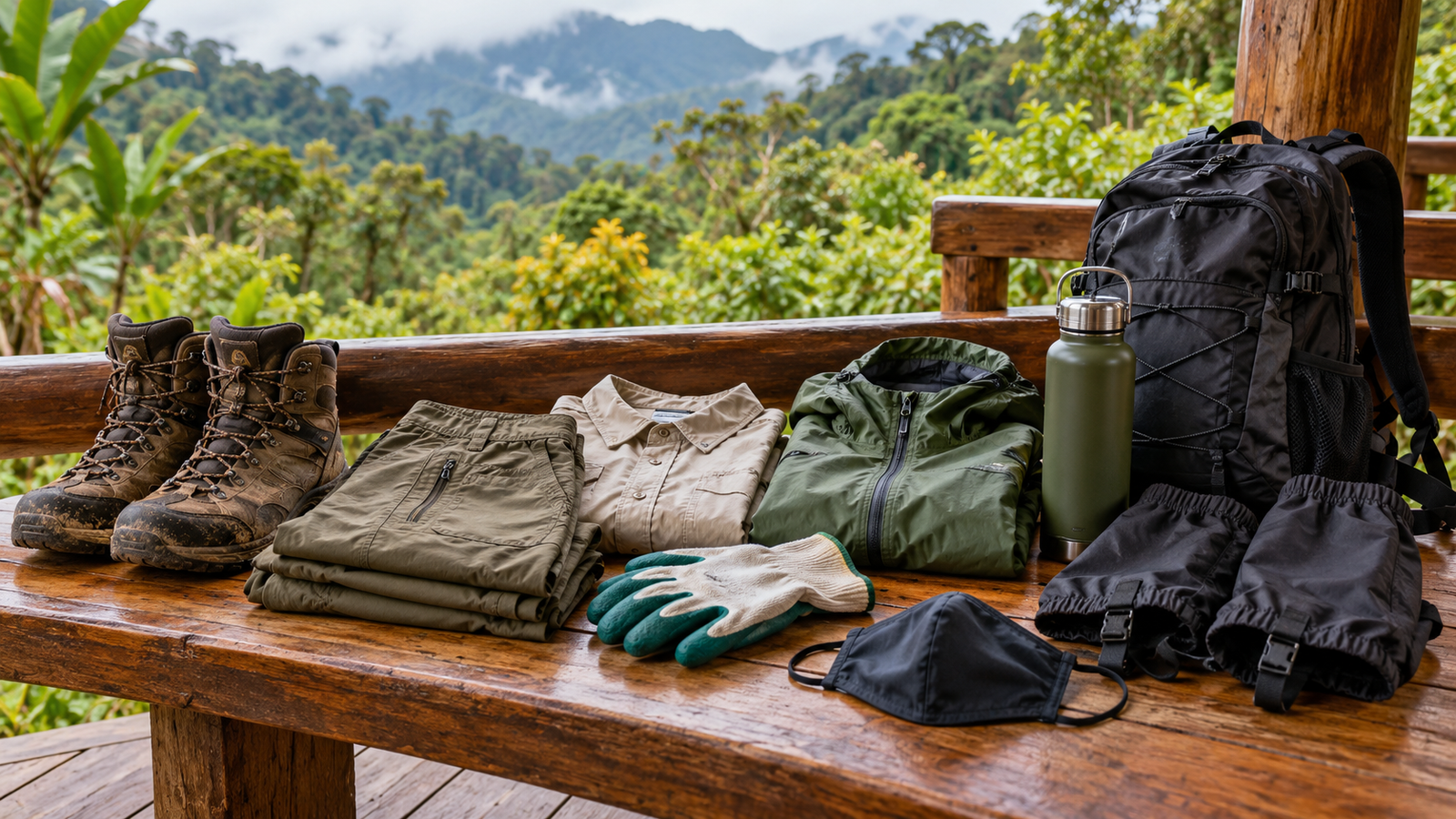
Prepare for your trek with sturdy boots, waterproof clothing and a light daypack.
Choose accommodation around Kinigi or Musanze for convenient trekking access. However, ask for the actual driving time to headquarters. A lodge’s marketing description may not explain its location clearly.
Check early breakfast arrangements, packed lunches and facilities for drying wet clothes. Additionally, confirm whether meals and drinks appear in your quoted rate.
For a short trip, practical services can matter more than elaborate facilities. A comfortable bed and reliable morning departure support the experience.
Rwanda gorilla trekking packing list
Bring the following essentials:
- Worn-in hiking boots with good grip.
- Long trousers and a long-sleeved shirt.
- A lightweight waterproof jacket.
- Gardening gloves and optional gaiters.
- Spare socks and a warm evening layer.
- A small daypack with a rain cover.
- Water, snacks and personal medication.
- Face masks and waterproof camera protection.
Official guidance recommends sturdy footwear, protective clothing, gloves and rain protection. Therefore, avoid treating this as a casual walk in trainers.
Also, pack a complete dry outfit for afterwards. Use reusable waterproof bags to protect electronics and documents.
Before bringing a drone, check Rwanda’s declaration and permission requirements. Drones must be declared on arrival and may be held or confiscated.
Health, Insurance and a Practical Rwanda Itinerary
Arrange travel health advice at least eight weeks before departure. Discuss vaccinations, malaria prevention and your complete route. Rwanda has a high malaria risk, according to UK travel health guidance.
Furthermore, disclose existing conditions when buying insurance. Ask whether gorilla trekking, your expected altitude and emergency evacuation receive cover.
Check the latest FCDO advice before booking and departure. Current warnings include parts of Rusizi District near the DRC border. Therefore, review any Lake Kivu extension against the exact advisory map.
Suggested five-day itinerary
Day 1: Arrive in Kigali and rest overnight. If time permits, explore the city gently.
Day 2: Transfer towards Volcanoes National Park. Afterwards, settle into your lodge and prepare your equipment.
Day 3: Trek to the mountain gorillas. Then enjoy an unhurried afternoon without a fixed onward journey.
Day 4: Add golden monkey tracking or a cultural visit. Afterwards, return to Kigali.
Day 5: Depart, allowing suitable airport time. Alternatively, extend your safari before flying home.
Golden monkey tracking combines naturally with the Volcanoes stay. Meanwhile, longer itineraries can add Akagera or Nyungwe.
However, allow proper transfer days rather than squeezing every destination into one week. Ask Zamunda Travels for a route matching your pace and interests.
Contact info@zamundatravels.com or WhatsApp +256704705606 with your dates, group size and preferred accommodation level.
Frequently Asked Questions
How much does gorilla trekking in Rwanda from UK cost?
The standard foreign-visitor permit costs US$1,500 per person. However, your complete holiday also includes flights, hotels, transfers and personal expenses. Request an itemised quote to compare total costs accurately.
Can I fly directly from London to Rwanda?
Yes, RwandAir offers the London Heathrow–Kigali route. However, confirm direct service availability and flight times for your chosen dates. Also, arrive before your trekking day.
Do British citizens need a visa for Rwanda?
Yes, British citizens currently receive a free 30-day visa on arrival. Additionally, passports need six months’ validity after arrival and one blank page. Check the latest requirements before travelling.
How difficult is gorilla trekking in Rwanda?
Difficulty varies with the family’s location, weather and your fitness. Some walks are relatively short, while others involve several hours of climbing. Therefore, prepare for uneven ground and discuss mobility needs beforehand.
Can children join a Rwanda gorilla trek?
Children must be at least 15 years old to participate. Therefore, families with younger children need separate activities and appropriate supervision. Confirm arrangements before purchasing permits for the eligible family members.