10 Primates You Can See in Kibale National Park
September 11, 2026
Birdwatching in Kibale National Park
September 12, 2026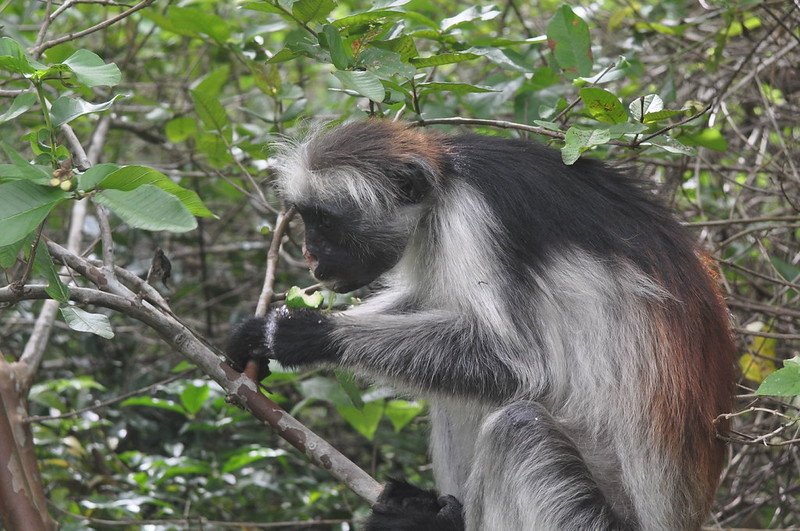
Uganda is one of the best destinations in East Africa for seeing primates in their natural habitats. The country has several forests and protected areas where visitors can encounter monkeys that are difficult to find elsewhere. Among the most fascinating is the red colobus. These forest monkeys are known for their reddish-brown or reddish-grey coats, expressive faces, and strong social behaviour. For travellers interested in primate safaris, knowing where to see red colobus monkeys can make a major difference when planning a Uganda safari with Zamunda Travels.
Uganda is particularly important for red colobus conservation because it supports more than one population within its western forests. Kibale National Park is one of the most reliable places to look for the Ugandan red colobus, also called the Ashy red colobus, Piliocolobus tephrosceles. Semuliki National Park is also important because it supports the Semuliki red colobus, Piliocolobus semlikiensis. These populations live in different forest environments, which makes a primate safari in western Uganda especially rewarding.
Where to See Red Colobus Monkeys in Uganda
When planning a red colobus safari in Uganda, two destinations stand out: Kibale National Park and Semuliki National Park. Both lie in western Uganda, but they offer different wildlife experiences. Kibale is famous for its exceptional concentration of primates and is widely marketed by the Uganda Wildlife Authority as a premier destination for the Kanyanchu Primate Walk. Visitors can encounter 13 primate species there, including red colobus, black-and-white colobus, L’Hoest’s monkeys and grey-cheeked mangabeys.
Semuliki offers a different experience. The park forms part of the Albertine Rift and has strong ecological connections with the forests of the Congo Basin. Its lowland rainforest supports several Central African species that are unusual in East Africa. The Semuliki red colobus is one of the most interesting examples. For travellers who want to go beyond the more famous chimpanzee and gorilla experiences, Semuliki provides an excellent addition to a western Uganda itinerary.
Red Colobus in Kibale National Park
Kibale National Park is arguably the best-known destination for seeing red colobus monkeys in Uganda. The forest covers a large area of western Uganda and supports one of the highest concentrations of primates in East Africa. Uganda Wildlife Authority identifies the red colobus among the diurnal monkeys encountered during the Kanyanchu Primate Walk.
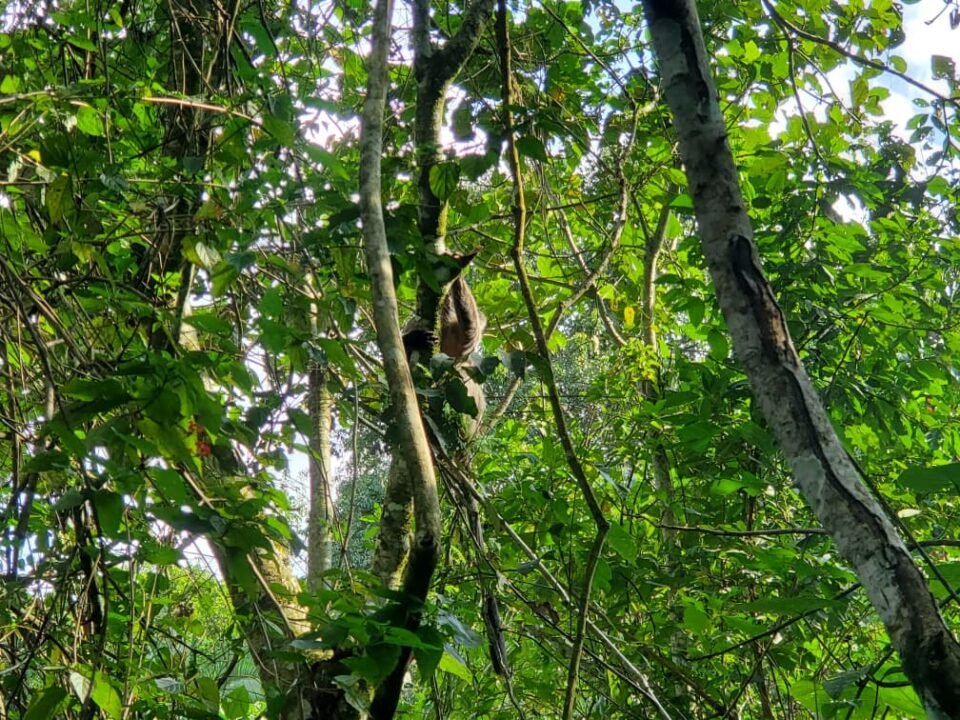
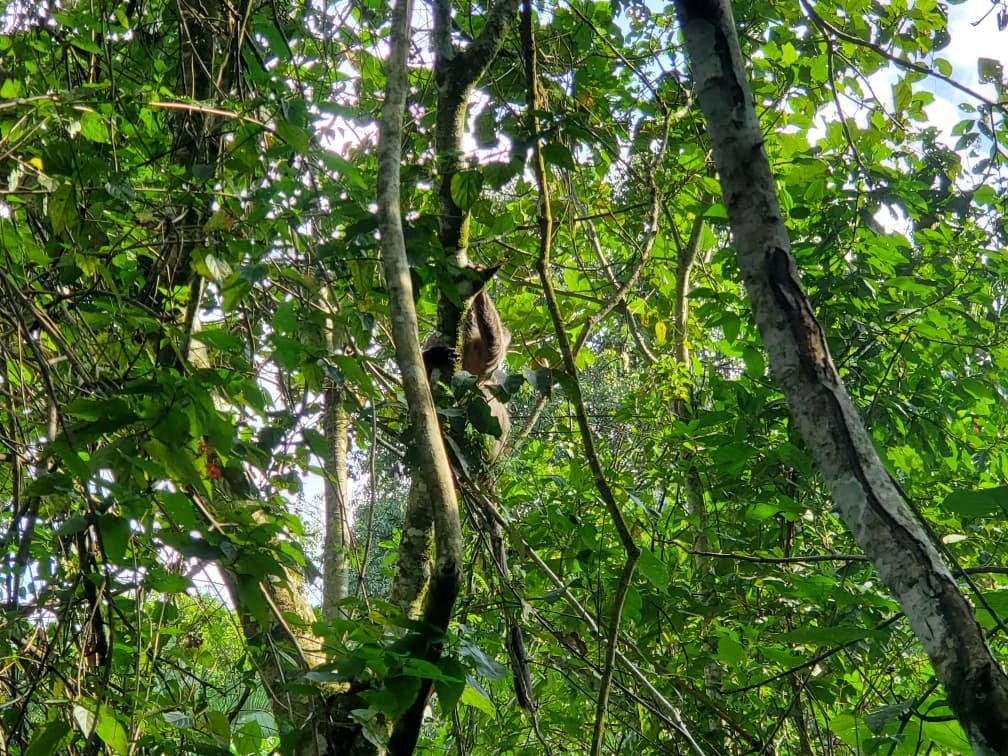
The forest environment provides ideal conditions for observing arboreal primates. Red colobus monkeys spend much of their time in the canopy, where they feed on leaves, young shoots, fruits, flowers and other plant material. Their movements can sometimes be easy to miss because dense foliage hides them from ground level. A knowledgeable guide can make a significant difference by listening for movement and calls, scanning the treetops and identifying feeding groups.
Kibale also offers an advantage because visitors can combine several primate experiences during one safari. A day in the forest may include chimpanzee tracking, a primate walk, bird watching or a visit to the nearby Bigodi Wetland Sanctuary. This makes Kibale especially suitable for travellers who want a broader primate experience rather than a single wildlife encounter.
Where to See Red Colobus in Kibale
The Kanyanchu area is one of the main places to begin a primate experience in Kibale. The Uganda Wildlife Authority describes the Kanyanchu Primate Walk as the park’s flagship wildlife adventure, with opportunities to encounter several diurnal primate species. Red colobus are among the species recorded along the forest trails.
The wider Kibale landscape also contains forests and wetlands that support primate populations. The neighbouring Bigodi area is particularly valuable for wildlife enthusiasts because its community-managed wetland and forest habitats provide opportunities to observe monkeys and numerous bird species. A Zamunda Travels itinerary can therefore combine the main Kibale forest experience with Bigodi for a more complete wildlife day.
Visitors should remember that red colobus are wild animals. Even in areas where sightings are regular, there is no guarantee that a particular group will appear at a specific time. Weather, feeding behaviour, forest conditions and animal movements can all influence sightings.
Where to See Red Colobus in Semuliki National Park
Semuliki National Park is another important answer to the question of where to see red colobus monkeys in Uganda. The park lies in Bundibugyo District and protects a lowland tropical forest with strong Central African characteristics. Uganda Wildlife Authority describes Semuliki as East Africa’s only true lowland tropical rainforest and highlights its unusual biodiversity.
The red colobus population here is particularly interesting because the taxonomy differs from the Ugandan red colobus found around Kibale. The IUCN Red List assessment for the red colobus group recognises the Semliki red colobus, Piliocolobus semlikiensis, and notes that its range extends into Semuliki National Park in western Uganda.
This makes Semuliki an important destination for serious primate enthusiasts. The experience is also different from Kibale. Semuliki has a more remote feel, and the forest contains several species associated with the Congo Basin. Visitors can combine primate watching with forest walks, birding and a visit to the famous Sempaya Hot Springs.
Red Colobus Along the Semuliki Forest Trails
Seeing red colobus in Semuliki requires patience. The forest is dense, and the monkeys can remain high in the canopy. Guided walks are therefore important because experienced guides understand the forest and know how to search for movement and calls.
The Kirumia Trail is particularly interesting for visitors who want a deeper forest experience. The trail crosses the forest towards the Semuliki River and provides opportunities to encounter different forest species. However, red colobus sightings are not guaranteed. The species is less commonly encountered than some of the more visible monkeys.
Semuliki’s wildlife value goes beyond red colobus. The forest supports chimpanzees, grey-cheeked mangabeys, red-tailed monkeys, black-and-white colobus monkeys and other primates. It also supports numerous forest birds, including species with strong Central African affinities.
Red Colobus in Queen Elizabeth National Park
Queen Elizabeth National Park also has records of red colobus monkeys. The park’s management plan lists red colobus among its primates, alongside black-and-white colobus and red-tailed monkeys.
However, travellers should understand an important difference. Queen Elizabeth National Park is not usually promoted as the primary destination for red colobus viewing in the same way as Kibale. Its major attractions include savannah wildlife, the Kazinga Channel, tree-climbing lions in the Ishasha sector and a wide range of mammals and birds.
Therefore, if red colobus is one of your main safari goals, Zamunda Travels would generally recommend placing Kibale or Semuliki higher on the itinerary. Queen Elizabeth can then complement the primate experience with classic wildlife viewing.
This combination works particularly well for travellers who want both forest primates and savannah wildlife. You can start with chimpanzees and monkeys in Kibale, continue to Queen Elizabeth for game drives and a Kazinga Channel boat safari, and then extend the journey towards Bwindi for mountain gorilla trekking.
What Makes Red Colobus Monkeys Special?
Red colobus monkeys are fascinating because their lifestyle differs from that of many familiar monkeys. They are highly adapted to forest environments and spend much of their time moving through the canopy. Their diet contains a high proportion of leaves and other plant material. This specialised diet influences their behaviour, movement and social organisation.
The Ugandan red colobus, Piliocolobus tephrosceles, is considered an endangered species. Its conservation status makes responsible wildlife tourism particularly valuable. Kibale’s importance for this species extends beyond tourism because the park protects forest habitat that supports threatened wildlife.
Red colobus also form social groups. Their reddish colouring can make them stand out when sunlight reaches the canopy, although dense foliage often makes observation challenging. Their quiet feeding behaviour can also make them harder to locate than louder primates such as chimpanzees.
For photographers, this creates both a challenge and a reward. A clear view of a red colobus sitting on an exposed branch can produce an exceptional wildlife photograph. Patience is essential, however, because the monkeys may disappear behind leaves within seconds.
Best Time to See Red Colobus Monkeys in Uganda
Red colobus can be encountered throughout the year because Uganda’s forests provide suitable habitat in every season. However, wildlife viewing conditions can vary. During drier periods, forest trails may be easier to walk, which can make longer primate walks more comfortable.
The wet seasons also have advantages. Forest vegetation becomes lush, and many plants produce fresh growth. This can create excellent feeding opportunities for primates. The trade-off is that rain can make forest trails muddy and reduce visibility.
For a traveller focused specifically on primates, the best approach is to plan around the overall safari rather than depend on a single month. Zamunda Travels can combine Kibale with other western Uganda destinations so that the trip remains rewarding even when red colobus sightings prove difficult.
How to See Red Colobus Monkeys Responsibly
Responsible wildlife viewing is important whenever you enter a forest containing endangered primates. Visitors should follow instructions from Uganda Wildlife Authority guides and maintain an appropriate distance from wildlife. Loud noises can disturb animals and may cause them to move away.
Photography should also remain secondary to the welfare of the animals. Avoid chasing monkeys for a photograph. Do not attempt to feed them. Visitors should also avoid touching vegetation unnecessarily or leaving waste in the forest.
These simple practices help protect the habitats that make primate tourism possible. They also support Uganda’s wider conservation efforts. UWA manages Uganda’s national parks and oversees wildlife conservation in protected areas across the country.
Combining Red Colobus With a Uganda Primate Safari
A red colobus experience becomes even more rewarding when combined with other primate destinations. Kibale is an obvious starting point because visitors can search for chimpanzees and several monkey species in the same forest. From there, a safari can continue to Queen Elizabeth National Park for game drives and a boat trip along the Kazinga Channel.
Travellers with more time can continue towards Bwindi Impenetrable National Park for mountain gorilla trekking. This creates a diverse western Uganda safari that combines monkeys, chimpanzees, gorillas, birds and large mammals.
Another option is to combine Kibale and Semuliki. This route is especially attractive to specialist primate and bird enthusiasts because the two forests have different ecological characteristics. Kibale provides excellent opportunities for observing several East African forest primates, while Semuliki introduces visitors to species and habitats with stronger Central African connections.
Zamunda Travels can design this type of itinerary as a private Uganda safari, allowing the route and number of nights to match the traveller’s interests, budget and available time.
Where to See Red Colobus: Kibale or Semuliki?
Both destinations are valuable, but they offer different experiences. Kibale National Park is the stronger choice for travellers who want a classic primate safari with chimpanzees and several monkey species. Its Kanyanchu area is well established for primate viewing, and the park has an exceptional concentration of primates.
Semuliki National Park, on the other hand, is especially appealing to specialist wildlife travellers who want unusual Central African species and a less conventional forest experience. Its red colobus population is taxonomically distinct from the Ugandan red colobus associated with Kibale.
If your main goal is simply to maximise your chances of seeing red colobus, Kibale is an excellent place to start. If you want to explore different red colobus populations and experience two contrasting forests, combining Kibale and Semuliki creates a stronger itinerary.
Why Visit Uganda for Red Colobus Monkeys?
Uganda offers a rare opportunity to explore several forest ecosystems within one country. The western region is especially rich in primates, and red colobus add an exciting dimension to the experience. Kibale provides the famous primate-rich rainforest setting, while Semuliki offers a taste of the Congo Basin within Uganda.
For travellers who enjoy wildlife beyond the Big Five, these monkeys provide a compelling reason to explore Uganda’s forests. A safari with Zamunda Travels can connect these forest experiences with chimpanzee trekking, Bigodi Wetland walks, Queen Elizabeth game drives, Kazinga Channel boat trips and gorilla trekking.
In conclusion, where to see red colobus monkeys in Uganda depends on the type of experience you want. Kibale National Park is one of the best-known places to look for the Ugandan or Ashy red colobus, while Semuliki National Park provides an opportunity to search for the distinctive Semuliki red colobus. Both destinations demonstrate why Uganda deserves its reputation as one of Africa’s outstanding primate destinations.