Meet the Primates of Kibale National Park
September 11, 2026
Where to See Red Colobus Monkeys in Uganda
September 11, 2026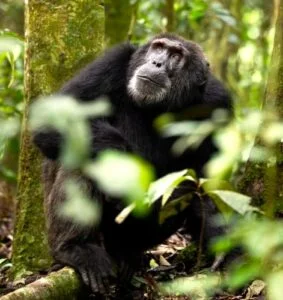
Kibale National Park is one of Uganda’s most remarkable wildlife destinations for primate lovers. Located in western Uganda, the forest protects an impressive diversity of monkeys and apes. Uganda Wildlife Authority records 13 primate species in Kibale, making the park an important destination for primate research, conservation, and wildlife tourism. The most famous resident is the chimpanzee, but the forest offers much more than chimpanzee trekking. Visitors can also encounter red colobus monkeys, black-and-white colobus monkeys, red-tailed monkeys, blue monkeys, L’Hoest’s monkeys, grey-cheeked mangabeys, olive baboons, vervet monkeys, and nocturnal species such as the potto.
For travelers planning a Uganda safari, this diversity makes Kibale especially rewarding. A guided forest walk can reveal several species within the same ecosystem. Some monkeys move through the upper canopy, while others remain closer to the forest floor. Nocturnal species become active after sunset, which creates a completely different wildlife experience. With Zamunda Travels, travelers can combine chimpanzee trekking with other forest experiences to explore the wider primate world of Kibale National Park.
Why Kibale Is Famous for Primates
Kibale National Park has earned a reputation as one of Africa’s leading primate destinations because of its exceptional diversity and the concentration of primates within its forest habitat. Uganda Wildlife Authority describes the park as home to 13 primate species. The Kanyanchu area is particularly important for tourism because it provides access to chimpanzee trekking and the Kanyanchu Primate Walk. During these activities, visitors may encounter several monkey species while exploring the forest under the guidance of trained personnel.
The forest structure also explains why so many primates can live in the same area. Kibale contains tall trees, dense vegetation, open forest sections, and areas with abundant fruits and other foods. Different species use different parts of this habitat. Some spend much of their time in the canopy, while others move through lower vegetation or on the ground. This separation helps reduce competition and allows several primate species to share the same forest.
For visitors, the result is an exciting wildlife experience. You may begin the morning looking for chimpanzees and then notice a troop of red-tailed monkeys moving through the trees. A black-and-white colobus may appear above the trail, while a blue monkey watches from another branch. Therefore, chimpanzee trekking is only one part of the primate experience that Kibale offers.
1. Chimpanzees – The Most Famous Primates in Kibale
Chimpanzees are the most famous of the primates in Kibale and remain the main reason many travelers visit the park. Kibale protects Uganda’s largest population of chimpanzees, with estimates in official and research sources placing the population at well over 1,000 individuals. The chimpanzees around Kanyanchu have also been studied and habituated for many years, which supports both research and responsible tourism.
Chimpanzee trekking offers visitors the chance to observe these intelligent great apes in their natural forest environment. The animals may feed, climb, rest, groom one another, communicate, or move between different parts of the forest. Their behavior can change quickly, so every trek feels different. Some encounters may involve chimpanzees high in the trees, while others provide closer views when the animals descend to lower branches or the forest floor.
The experience also gives travelers an opportunity to understand chimpanzee conservation. Human activities have placed pressure on many forest ecosystems, so protecting Kibale benefits chimpanzees and numerous other species at the same time. Zamunda Travels can help travelers arrange chimpanzee trekking and combine it with other Ugandan safari destinations.
2. Red Colobus Monkeys
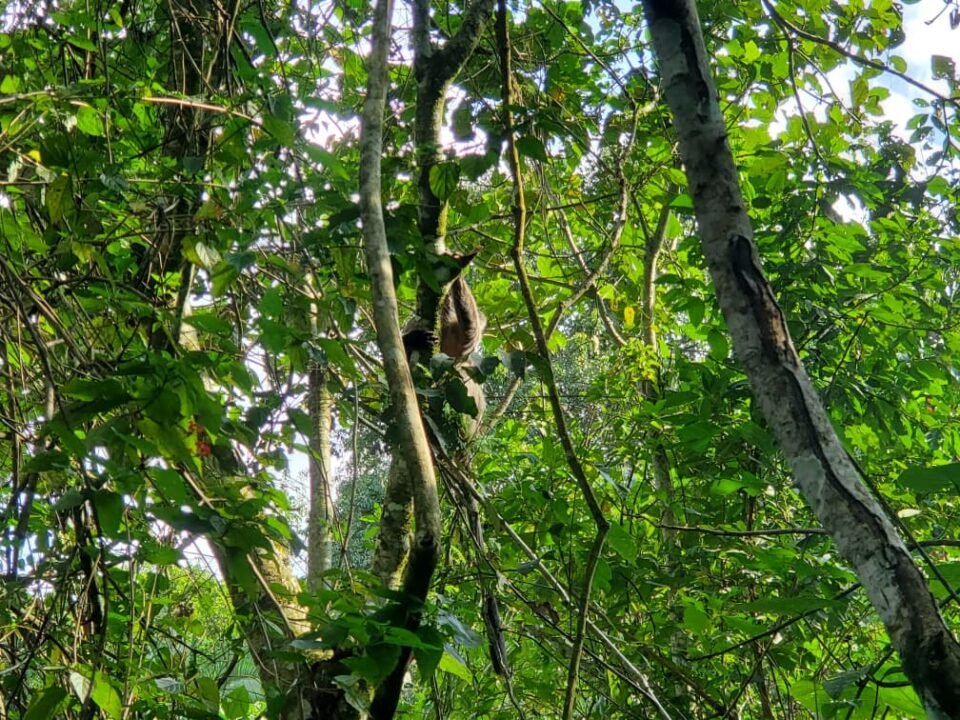
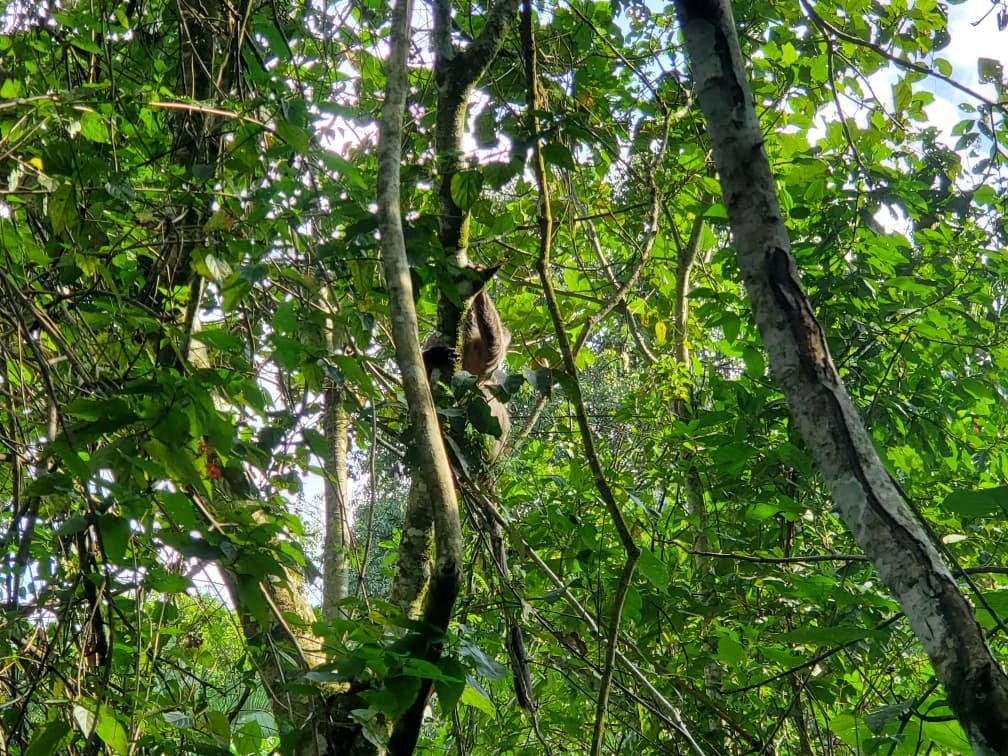
The red colobus monkey is another outstanding member of the primates in Kibale. Kibale is particularly important for this species because it protects one of the largest and most significant populations of red colobus monkeys in East Africa. Uganda Wildlife Authority identifies the red colobus as one of the park’s notable and threatened primates.
Red colobus monkeys often live high in the forest canopy, where they feed on leaves, fruits, flowers, and other plant material. Their reddish-brown colouring makes them distinctive when sunlight reaches the canopy. They can also form groups that move together through the trees. Watching a group cross from one branch to another can be one of the memorable moments during a forest walk.
Their presence adds another layer to Kibale’s wildlife story. Visitors who arrive mainly for chimpanzees may discover that the forest supports several fascinating primate communities. With a good guide and careful observation, travelers can learn to distinguish red colobus from the other monkeys sharing the same habitat.
3. Black-and-White Colobus Monkeys
Black-and-white colobus monkeys are among the most striking primates in Kibale. Their long white hair, dark body, and flowing tail create a distinctive appearance. They often spend much of their time in trees, where their movements can look surprisingly graceful despite the dense vegetation.
These monkeys belong to the colobine group. Their digestive system allows them to make good use of leaves and other plant material. This adaptation helps them survive in a forest where vegetation provides an important source of food. Visitors may see them resting on branches, feeding, grooming, or moving between trees.
A forest walk with Zamunda Travels can therefore provide more than a search for chimpanzees. Your guide can point out the differences between black-and-white colobus monkeys and red colobus monkeys. This makes the experience more educational and helps travelers appreciate the variety of primate life within Kibale.
4. Red-Tailed Monkeys
The red-tailed monkey is one of the lively primates in Kibale that visitors may encounter during forest activities. It is a guenon with a characteristic reddish or copper-coloured tail. It also has a distinctive facial pattern, which helps experienced guides identify it among the many monkeys moving through the forest.
Red-tailed monkeys are active animals. They can move rapidly through branches and often communicate with calls that carry through the forest. They may also occur in mixed-species associations with other monkeys. Such encounters make the forest feel constantly alive because several species can feed or travel in the same area.
For photographers, red-tailed monkeys can provide excellent opportunities when they pause on exposed branches. However, the dense forest can make photography challenging. A patient traveler with a good guide often has the best chance of capturing useful photographs without disturbing the animals.
5. Blue Monkeys
Blue monkeys are another fascinating species among the primates in Kibale. Despite their name, they do not have bright blue fur. Their coats usually appear greyish or blue-grey, with darker facial features that create the impression behind their common name.
Blue monkeys are forest-dwelling guenons. They can move through different levels of the forest and feed on fruits, leaves, flowers, and other available foods. Their movements can be easy to miss because the forest canopy provides plenty of cover. A guide who knows the calls and movement patterns of the monkeys can greatly improve the chances of spotting them.
Seeing a blue monkey also demonstrates why travelers should not focus only on the largest or most famous animals. Kibale’s smaller monkeys contribute greatly to the character of the forest. Zamunda Travels encourages travelers to slow down during forest walks and observe the canopy carefully.
6. L’Hoest’s Monkeys
L’Hoest’s monkey is one of the more distinctive primates in Kibale. It is associated with forest habitats and has a darker body with a noticeable pale or white beard around the face. The species is especially interesting to wildlife enthusiasts because it has a more restricted distribution than many common African monkeys. Uganda Wildlife Authority lists L’Hoest’s monkey among Kibale’s notable primates.
These monkeys can be shy and less predictable than some of the more conspicuous species. They often use dense vegetation, which means visitors may hear movement before seeing the animals clearly. This makes a forest walk an exercise in patience. The best encounters usually come when travelers remain quiet and allow the guide to follow signs of animal activity.
For serious wildlife enthusiasts, spotting a L’Hoest’s monkey can be particularly rewarding. It adds a less common species to the safari experience and demonstrates the ecological importance of Kibale’s forest.
7. Grey-Cheeked Mangabeys
Grey-cheeked mangabeys are another important species among the primates in Kibale. They are large forest monkeys with expressive faces and powerful movements. Their groups can travel through the forest while searching for fruits, seeds, leaves, and other foods.
Mangabeys are also interesting because they can use both the forest canopy and lower vegetation. Their loud calls can sometimes reveal their presence before visitors see them. Once a group becomes visible, travelers may watch individuals feeding, moving, grooming, or interacting with one another.
Kibale provides an important habitat for these monkeys, which adds to the park’s exceptional primate diversity. A traveler who visits with Zamunda Travels can learn about their behavior while also searching for chimpanzees and other forest species.
8. Olive Baboons
Olive baboons are among the larger primates in Kibale. They are highly social animals and often live in groups. Unlike many forest monkeys, baboons can be encountered in more open areas, forest edges, and along roads passing through suitable habitat. This can make them easier to notice than some of the smaller and more secretive forest species.
Their social behavior is particularly interesting. A troop may contain adults, younger animals, and infants. Members communicate through facial expressions, vocalizations, body movements, and physical contact. Grooming also plays an important role within the group.
Travelers should always maintain a respectful distance from wild baboons. Although they may look familiar because of their human-like expressions and social behavior, they remain wild animals. Guides help visitors observe them safely and responsibly.
9. Vervet Monkeys
Vervet monkeys are another species that contributes to the variety of primates in Kibale. They are adaptable monkeys that can use forest margins, woodland, and more open habitats. Their greyish body, darker face, and contrasting features make them relatively easy to identify when visibility is good.
Vervet monkeys are social and communicate using a range of calls and body signals. Their behavior can change depending on the presence of predators, food, or other groups. Visitors may see them feeding, grooming, playing, or moving between trees.
Although vervets may not receive the same attention as chimpanzees, they are an important part of Kibale’s wider ecosystem. A safari becomes more rewarding when travelers appreciate these less celebrated species rather than focusing on one animal alone.
10. Potto
The potto is one of the most unusual primates in Kibale. Unlike the monkeys that visitors commonly encounter during daytime forest walks, pottos are nocturnal. They become active after dark and spend much of their time moving slowly through trees while searching for food.
Pottos have a compact body, thick fur, and large eyes that help them function in low-light conditions. Their slow and deliberate movements are very different from the energetic behavior of red-tailed or blue monkeys. Because they are nocturnal and often remain hidden among branches and foliage, seeing one requires patience and expert guidance.
This is where a night forest experience can add something special to a Kibale safari. A traveler who has already enjoyed chimpanzee trekking during the day can explore a very different side of the ecosystem after sunset. Zamunda Travels can help incorporate suitable forest experiences into a wider Uganda safari itinerary.
Other Primates Found in Kibale National Park
The 10 species above do not represent every primate found in Kibale. Uganda Wildlife Authority and research sources document a total of 13 primate species in the park. The remaining species include additional nocturnal galagos, commonly known as bushbabies, which are difficult to find because they become active after dark.
This diversity is one reason Kibale remains so important for wildlife research and tourism. The forest supports great apes, guenons, colobines, mangabeys, baboons, and nocturnal primates within the same broader ecosystem. Each species has its own behavior, diet, preferred habitat, and role in the forest.
For this reason, visitors should avoid judging a Kibale safari only by the number of chimpanzees they see. A successful forest experience can involve learning about many different species, even when some remain hidden. The excitement often comes from discovering what appears around the next bend.
Best Ways to See Primates in Kibale
The best way to explore primates in Kibale is through guided wildlife experiences. Chimpanzee trekking is the most famous option. It focuses on finding habituated chimpanzee communities and observing their natural behavior. The Kanyanchu area is the principal tourism hub for this experience. Uganda Wildlife Authority also offers the Kanyanchu Primate Walk, which provides a broader opportunity to look for several primate species.
A guided walk also improves wildlife identification. Experienced guides can recognize calls, movement patterns, feeding signs, and other clues that visitors might overlook. This knowledge can turn a quiet section of forest into an exciting wildlife encounter.
Night experiences offer another perspective. Species such as pottos and bushbabies become more active after sunset. Therefore, travelers who want a more complete primate experience should consider combining daytime forest activities with a suitable nocturnal experience where available.
When Is the Best Time to See Primates in Kibale?
Kibale can be visited throughout the year, and primates remain an important attraction in every season. However, forest conditions can influence the experience. During wetter periods, trails may become muddy and walking can take longer. At the same time, rain supports lush vegetation and can create excellent forest scenery.
Drier periods may provide more comfortable walking conditions, although Kibale remains a rainforest and rainfall can occur at any time. Chimpanzees and other primates do not follow a simple seasonal schedule that guarantees sightings. Their movements depend on food availability, weather, social behavior, and other factors.
For this reason, Zamunda Travels recommends choosing your travel dates based on your wider Uganda safari plans rather than expecting one particular month to guarantee every primate. Your guide will also help you make the most of the conditions on the day.
Why Choose Zamunda Travels for a Kibale Primate Safari?
A Kibale primate safari becomes more rewarding when it forms part of a carefully planned Uganda itinerary. Zamunda Travels can organize Kibale experiences alongside other destinations such as Queen Elizabeth National Park, Bwindi Impenetrable National Park, Murchison Falls National Park, Lake Mburo National Park, and other highlights of Uganda.
For travelers interested in chimpanzees, Zamunda Travels can help arrange chimpanzee trekking and other suitable forest activities. The itinerary can also include accommodation, transportation, park activities, and connections to the next destination. This approach allows travelers to enjoy Kibale without worrying about how each part of the journey fits together.
More importantly, a well-planned safari allows you to experience Kibale as more than a chimpanzee destination. The forest is home to a remarkable collection of primates. With enough time and careful observation, every walk can reveal something new.
Final Thoughts on Primates in Kibale National Park
Kibale National Park offers one of Uganda’s richest primate experiences. The forest protects 13 recorded primate species, including chimpanzees, red colobus monkeys, black-and-white colobus monkeys, red-tailed monkeys, blue monkeys, L’Hoest’s monkeys, grey-cheeked mangabeys, olive baboons, vervet monkeys, and several nocturnal species.
The diversity makes every forest visit different. One moment, you may be watching chimpanzees high in the canopy. The next, a troop of red-tailed monkeys may move across the trees. Later, you could spot a colobus monkey resting above the trail. At night, the forest changes again as pottos and bushbabies become active.
For anyone planning a Uganda wildlife safari, Kibale deserves a place on the itinerary. It combines remarkable biodiversity, fascinating animal behavior, and memorable guided experiences. With Zamunda Travels, visitors can explore this extraordinary forest while also connecting Kibale with some of Uganda’s other iconic wildlife destinations.
In conclusion, Kibale National Park is far more than a destination for chimpanzee trekking. It is a living forest filled with diverse primates, each with a unique role in the ecosystem. Whether you are a first-time safari traveler, a wildlife photographer, or a dedicated primate enthusiast, exploring the primates in Kibale can become one of the highlights of your Uganda safari.