Where to See Red Colobus Monkeys in Uganda
September 11, 2026
Forest Walks in Kibale National Park
September 12, 2026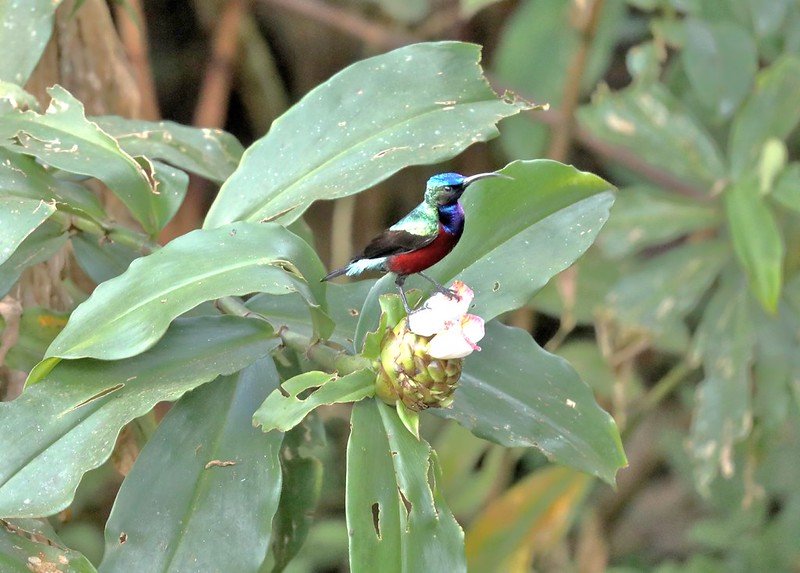
Kibale National Park sits quietly in western Uganda, yet it holds one of the loudest, most colorful bird choruses on the African continent. Ornithologists and casual travelers alike consistently rank it among the finest birding destinations in East Africa, and the numbers explain why. The park shelters more than 370 recorded bird species, and roughly 60 percent of them are true forest specialists that rarely appear outside dense tropical canopy. For anyone planning birdwatching in Kibale National Park, this single fact changes the entire trip. You are not visiting a park with birds on the side; you are entering a rainforest built around them. Zamunda Travels has guided birders through this forest for years, and the team consistently notices the same reaction from first-time visitors: pure astonishment at how much sound and color a single canopy can hold.
The park itself covers roughly 766 square kilometers and rises between 1,100 and 1,600 meters above sea level, so the terrain shifts gradually from moist lowland forest to cooler montane patches. This elevation range matters enormously for birdlife because it creates several distinct habitats within one protected area. Consequently, a single day of birdwatching in Kibale National Park can move a visitor through swamp forest, grassland edges, and dense old-growth canopy, each hosting a different community of species. Zamunda Travels designs its itineraries around this variation, because a guide who understands the habitat shifts can predict, with real accuracy, where a target species is most likely to appear that morning.
What Makes Birdwatching in Kibale National Park So Special
Few forests in Uganda combine species density with accessibility the way Kibale does. The park protects one of the last significant expanses of pre-montane forest in eastern Africa, and this rare habitat type supports birds that simply cannot survive in more disturbed or fragmented woodland. Because the canopy remains largely intact, sensitive species such as the green-breasted pitta and the African pitta continue to breed here, even though both have vanished from many other Ugandan forests. Birders travel from across the globe specifically to tick these two pittas off their list, and Zamunda Travels arranges early-morning walks timed precisely around their known display periods.
Beyond rarity, the sheer diversity keeps every outing interesting. A single morning walk can reveal hornbills crashing through the upper canopy, sunbirds flashing metallic color at eye level, and secretive robin-chats calling from the undergrowth. This layered activity happens because Kibale hosts birds that occupy every vertical zone of the forest, from the leaf litter to the emergent trees. As a result, birdwatching in Kibale National Park rewards patience as much as it rewards early starts, since many species reveal themselves only after the forest settles into its normal rhythm following sunrise.
Six Albertine Rift Endemics Worth the Trip Alone
Kibale sits within the Albertine Rift, a geological zone famous among ornithologists for producing birds found nowhere else on earth. The park protects six species endemic to this region, including the red-faced woodland warbler, the black-capped apalis, the collared apalis, the dusky crimsonwing, and both the blue-headed and purple-breasted sunbirds. Serious birders often build entire itineraries around this endemic list, and Zamunda Travels routinely fields requests from clients who want nothing more than a confirmed sighting of each one. Additionally, four more species are considered park endemics within Uganda: Nahan’s francolin, Cassin’s spinetail, the blue-headed bee-eater, and the masked apalis. None of these four appear in any other national park in the country, so a missed sighting here effectively means a missed sighting for the entire Ugandan trip.
Best Bird Species to Spot During Birdwatching in Kibale National Park
Visitors frequently ask which species deserve top priority, and the honest answer depends on personal interest, yet certain names appear on almost every serious birder’s wish list. The green-breasted pitta remains the undisputed headline species, prized for its jewel-toned plumage and its notoriously difficult display behavior. Guides track its calling perches carefully, because the bird performs a brief wing-snap display that photographers travel thousands of miles to capture. The great blue turaco follows close behind in popularity, and its enormous size, loud calls, and vivid blue-and-green feathers make it hard to miss once it appears in the canopy.
Several other species round out a strong Kibale checklist. The black bee-eater draws attention for its jet-black body offset by a crimson throat, a color combination rarely seen elsewhere in African birdlife. The African grey parrot, now increasingly rare across much of its former range due to the pet trade, still maintains a wild population here, and hearing its calls echo through undisturbed forest carries real conservation significance. Yellow-billed barbets, superb sunbirds, and the striking papyrus gonolek near the wetland edges further diversify what a single trip can deliver. Zamunda Travels keeps an updated species log from every guided outing, which helps returning clients track progress on their personal life lists and helps new visitors set realistic expectations before they arrive.
Forest Specialists That Reward Patient Observation
Certain birds in Kibale rarely reveal themselves to hurried visitors, and this is precisely where an experienced guide changes the outcome of a trip. The grey-winged robin-chat, the brown-chested alethe, and the scaly-breasted illadopsis all forage low in the understory, moving through leaf litter with quiet, deliberate steps rather than dramatic flight. A guide trained to recognize their calls can locate these birds within minutes, while an unguided visitor might walk past the same spot without noticing anything at all. This difference explains why almost every serious birding operator, including Zamunda Travels, insists on pairing clients with guides who have spent years learning the forest’s specific calls and territories rather than general regional knowledge alone.
Kanyanchu: The Prime Ground for Birdwatching in Kibale National Park
Most guided birding activity in the park centers on the Kanyanchu area, and this concentration exists for good reason. Kanyanchu offers a well-maintained trail network through prime forest habitat, and its proximity to the main visitor center makes early starts far easier to arrange. Within this zone, birders regularly encounter the red-chested owlet, the broad-billed roller, and the striking black-throated apalis, often within the same two-hour walk. The trails here also pass through sections of forest where fruiting fig trees attract large mixed flocks, and these flocks frequently include several hornbill species feeding alongside turacos and barbets.
Because Kanyanchu also serves as the launch point for chimpanzee tracking, Zamunda Travels frequently combines both activities into a single memorable day. Guests typically start with a dedicated birding walk before the forest grows too warm and active for primates, then shift focus toward chimpanzee tracking once temperatures rise and bird activity naturally slows. This sequencing maximizes the value of a single park entry fee while respecting the natural activity patterns of both birds and primates, rather than forcing an artificial schedule onto the forest’s own rhythm.
Bigodi Wetland Sanctuary: Extending Your Birdwatching in Kibale National Park
Just beyond the park’s official boundary, the Bigodi Wetland Sanctuary offers a completely different birding environment that perfectly complements a Kibale visit. Managed by the Kibale Association for Rural and Environmental Development, this community-run wetland protects the Magombe Swamp and its raised wooden walkways guide visitors safely through habitat that would otherwise remain difficult to access on foot. The sanctuary hosts well over 200 bird species, and its open wetland character reveals birds rarely seen inside the denser main forest.
Visitors to Bigodi often encounter the great blue turaco so consistently that locals refer to the sanctuary as its unofficial home. The papyrus gonolek, the shining-blue kingfisher, and the grey-crowned crane also appear regularly among the reeds and open water channels. Because entrance fees flow directly back into local water management and community projects, a visit here supports conservation in a very tangible way, rather than existing as an abstract idea. Zamunda Travels partners closely with the local KAFRED guides at Bigodi, ensuring that every walk benefits the community while still delivering the sightings that serious birders travel here to find.
A Wetland Corridor for Primates and Birds Alike
Bigodi does more than host birds; it functions as a genuine wildlife corridor connecting Kibale’s forest to the surrounding landscape. Nine primate species move through this corridor regularly, including the red colobus and the grey-cheeked mangabey, and their presence often stirs up insect activity that, in turn, attracts insectivorous birds. This overlap between primates and birdlife creates unexpectedly rich walks, since a group watching monkeys overhead frequently finds kingfishers or flycatchers working the same trees just below. Guides from Zamunda Travels use this interconnected behavior to their advantage, reading primate movement as a genuine clue toward nearby bird activity rather than treating the two experiences as separate.
Best Time for Birdwatching in Kibale National Park
Timing shapes the quality of any birding trip, and Kibale follows a fairly predictable seasonal pattern. The dry months, running from December through February and again from June through July, generally offer the most comfortable walking conditions, since trails stay firmer and rain interruptions become less frequent. However, birders should not automatically dismiss the wetter months, because Uganda’s rainy seasons often trigger breeding activity and increased vocalization among forest species. Many experienced guides therefore consider the shoulder periods, when rain is present but not constant, to be genuinely excellent for observing display behavior and hearing a wider range of calls.
Early morning remains the single most important timing factor regardless of season. Bird activity peaks in the first few hours after sunrise, when temperatures stay cool and insects become active enough to draw feeding birds into visible positions. Zamunda Travels schedules nearly all serious birding walks to begin before 7 a.m. for exactly this reason, since arriving even ninety minutes later can mean the difference between an active, vocal forest and a quiet, heat-drowsy one. Afternoon walks still hold value, particularly around the wetland edges of Bigodi, but morning sessions consistently produce the longest and most varied species lists.
How Zamunda Travels Makes Birdwatching in Kibale National Park Easy
Planning a birding trip to Kibale involves more logistics than most travelers expect, from arranging permits and transport to matching clients with guides who specialize in specific target species. Zamunda Travels handles every one of these details, building custom itineraries around each client’s personal wish list rather than offering a single generic package. A birder chasing the green-breasted pitta needs a very different schedule from one focused on wetland species at Bigodi, and Zamunda Travels structures each trip accordingly, right down to the specific trail and start time.
The company also maintains relationships with community-based guides at Bigodi and experienced park rangers at Kanyanchu, which means clients benefit from local knowledge that simply cannot be replicated by outside operators working without those connections. Accommodation choices near the park, transport from Fort Portal or Kampala, and even equipment recommendations such as binoculars and rain gear all fall under the trip planning that Zamunda Travels provides before a client ever sets foot in the forest. This full-service approach removes the guesswork that often frustrates independent travelers attempting to organize a specialized birding trip on their own.
Practical Tips for Birdwatching in Kibale National Park
A few practical choices can significantly improve the quality of any birding outing here. Good binoculars matter enormously, since much of the action happens high in a dense canopy where naked-eye observation reveals very little detail. A lightweight rain jacket also earns its place in every pack, because Uganda’s proximity to the Rwenzori Mountains means sudden showers can appear even during the officially dry months. Sturdy, closed footwear protects against muddy sections of trail, particularly around the Bigodi boardwalks, where water levels rise noticeably during wetter periods.
Patience deserves mention as well, since rushing through the forest almost guarantees missed sightings. Many of Kibale’s most sought-after species move quietly and low, and a guide who pauses frequently to listen will consistently outperform a group that keeps walking. Zamunda Travels trains its guiding partners to build unhurried pacing into every itinerary, treating the walk itself as part of the experience rather than a simple means of reaching a checklist target. Travelers who arrive with realistic expectations about pacing tend to leave the most satisfied, having genuinely absorbed the forest rather than rushed through it.
Book Your Birdwatching in Kibale National Park Adventure
Kibale National Park offers a rare combination of species density, habitat variety, and genuine accessibility that few African forests can match. From the elusive green-breasted pitta deep in Kanyanchu’s canopy to the wetland specialists gathered along the Bigodi boardwalks, the park rewards every level of birding interest, whether a visitor arrives with a serious life list or simply a curiosity about tropical wildlife. Zamunda Travels has spent years refining the logistics, guide relationships, and timing strategies that turn a good birding trip into an exceptional one, and the team remains ready to build an itinerary around whatever species matter most to you. Reach out to Zamunda Travels today, and let the forest’s chorus of hornbills, turacos, and sunbirds become the highlight of your next Ugandan adventure.