Kenya Safari Quotes Compared
October 30, 2026
Nairobi Airport Arrival Before a Safari
October 30, 2026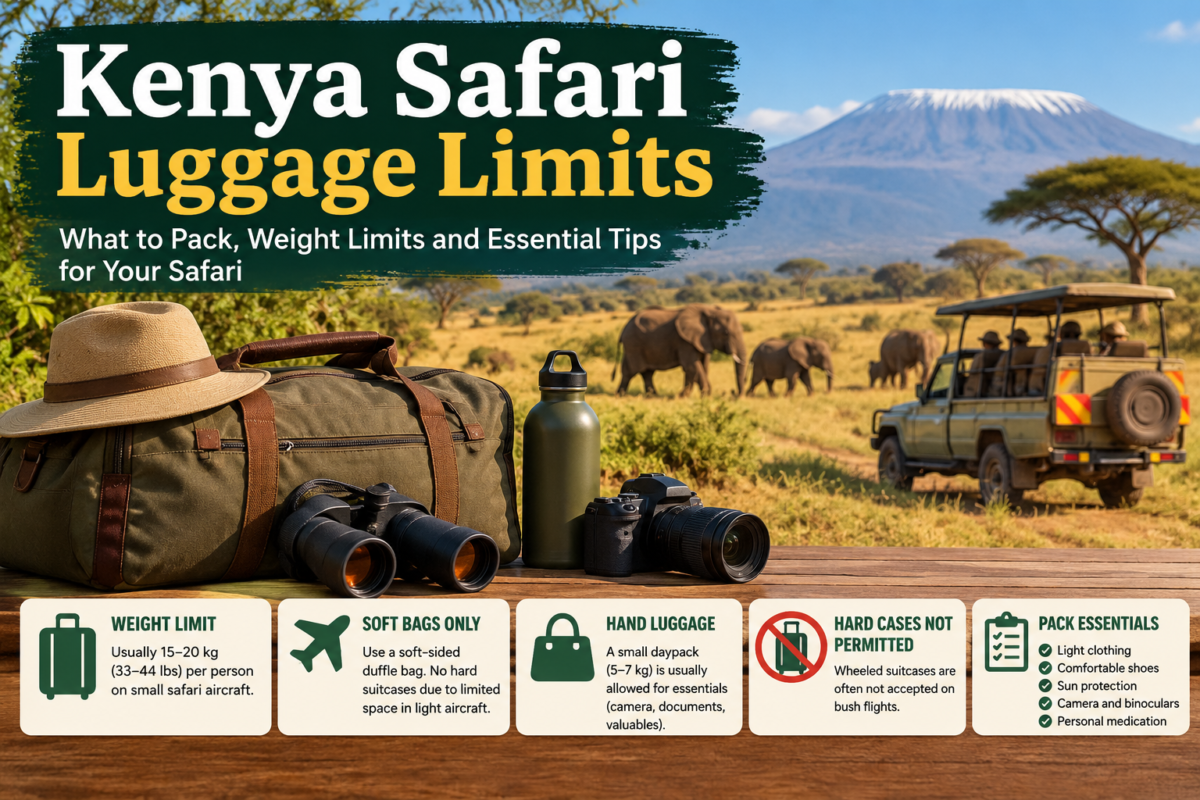
Kenya safari luggage limits catch many first-time visitors off guard. Your international airline may let you check a large suitcase. However, the small planes that serve the Maasai Mara and other parks allow far less.
Most scheduled bush flights cap you at 15 kg, including hand luggage. Our guides at Zamunda Travels therefore recommend packing to that limit before you leave home. This guide explains the rules, the airlines and the costs. It also shows how to pack for small aircraft flights without leaving anything behind.
Quick answer: Kenya safari luggage limits on scheduled bush flights are usually 15 kg per person. That total includes hand luggage and camera gear. Bags must be soft, such as a duffel bag. Extra weight is possible only if space allows, so pack light or book ahead.
Kenya Safari Luggage Limits by Airline
Each carrier publishes its own rules, but the numbers are very close. The table below summarises the main Kenyan safari airlines. We took the figures from each airline’s published policy where we could find it.
| Airline | Weight limit | Bag type | Notes |
|---|---|---|---|
| Safarilink | 15 kg, hand luggage included (20 kg to Zanzibar, Kisumu, Diani, Lamu, Malindi, Mombasa) | Soft bags | Freight seat adds 75 kg |
| Airkenya | 15 kg, hand luggage included | Soft-sided | Checked bag guide 60 x 45 x 33 cm |
| Mombasa Air Safari | 15 kg, hand luggage included | Soft bags | Listed by third-party operators |
| Governors’ Aviation | 15 kg, hand luggage included | Soft bags | Small hard-shell allowed within set size |
Safarilink calls its limit strict. The 15 kg includes hand baggage, and bags must be soft. However, flights to Zanzibar, Kisumu, Diani, Lamu, Malindi and Mombasa allow 20 kg.
Airkenya applies the same 15 kg rule to all services. Small items you carry on board must stay under 5 kg. Those items still count towards the 15 kg total.
Uganda travellers should note one more point. AeroLink, the Entebbe-based airline in the Airkenya group, also appears in third-party listings at 15 kg. Therefore, the same packing plan works when you combine Kenya and Uganda.
Always check your own booking. Your voucher or ticket names the airline and the exact limit.
Why Small Aircraft Enforce Weight Limits
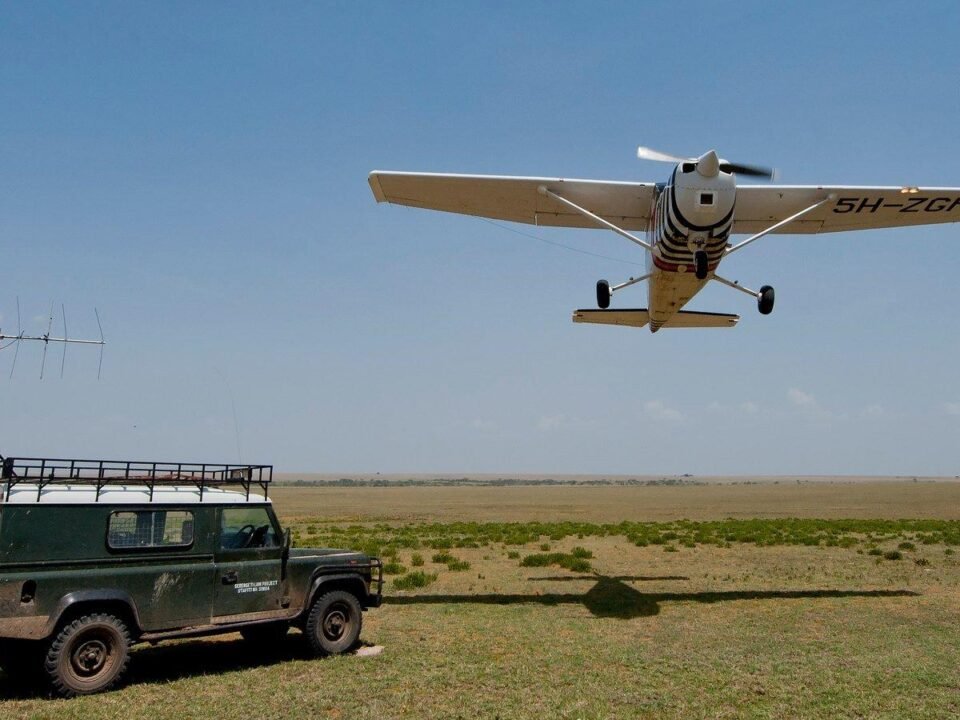
Safari planes are small, and every kilogram affects safety. Operators must keep the combined weight of passengers, bags, fuel and cargo within strict limits. Short airstrips, altitude and heat make those limits tighter. As a result, staff weigh your bags, and they often include your daypack.
Space matters as much as weight. The luggage holds are small and irregular in shape. Staff squeeze soft bags into the gaps. A rigid case, by contrast, may travel on a later flight.
Safarilink’s terms add another reason to pack carefully. The airline carries excess baggage only at the captain’s discretion. It does so only when payload and space allow.
Choose the Right Bag for Bush Flights
A soft duffel bag is the safest choice. Look for a bag that squashes flat and has no rigid frame. Hard sides cause the most trouble at the aircraft door.
Our guides at Zamunda Travels suggest a duffel of about 40 to 45 litres. Size matters too. Airkenya’s guide for a checked bag is 60 cm by 45 cm by 33 cm. Therefore, measure your bag when it is full, not when it is empty.
Next, solve the suitcase problem. Pack a foldable duffel inside your large suitcase, then leave the suitcase in Nairobi. Safarilink offers a free secure store at its Wilson Airport office. Ask us about other storage options when we plan your trip.
Finally, carry a small daypack for cameras, water and sunscreen. However, remember that it counts towards your 15 kg.
How to Pack Within Kenya Safari Luggage Limits
Start with the weight, then build the bag. Our guides use a simple weight budget. The figures below are a planning example, so weigh your own items.
| Item | Approximate weight |
|---|---|
| Empty soft duffel | 1.2 kg |
| Empty daypack | 0.5 kg |
| Clothing for three days, fleece and rain jacket | 5.0 kg |
| One spare pair of light shoes | 0.6 kg |
| Toiletries, sunscreen and repellent | 1.5 kg |
| Camera body and one lens | 2.5 kg |
| Binoculars | 0.7 kg |
| Chargers, power bank and Type G adaptor | 1.0 kg |
| Documents, medicines and wallet | 0.6 kg |
| Total | 13.6 kg |
This plan leaves over 1 kg spare for souvenirs. These habits keep the total down:
- Wear your heaviest shoes on travel days. This moves about a kilogram out of the bag.
- Pack for three days and use camp laundry. Most camps offer it, but ask before you book.
- Choose neutral colours such as khaki, olive and beige. They also hide dust well.
- Keep camera bodies and lenses separate in transit. Then join them at camp.
Weigh the packed bag on a luggage scale at home. Then weigh it again before you head to Wilson Airport.
Not sure which airline your itinerary uses? Request a quote from Zamunda Travels. We will confirm the exact limit for every flight before you pack.
Camera Gear and Your 15 kg Allowance
Camera gear is the biggest threat to a 15 kg budget. A single long lens can weigh several kilograms. Therefore, decide early which lens earns its place. Our guides at Zamunda Travels suggest one zoom lens and one small prime for most guests.
Safarilink and Airkenya count camera equipment inside the allowance, so gear is part of Kenya safari luggage limits. Serious photographers have another option. A freight seat carries up to 75 kg extra, but seats depend on availability, so book early. Also, keep batteries, memory cards and your passport with you, never in the main bag.
Seasonal Packing Tips for Kenya
Kenya has two rainy seasons. The long rains run from March to May, and April is the wettest month. The short rains arrive in November and December, usually as afternoon showers. June to October is the driest period.
The Maasai Mara lies roughly 1,500 to 2,000 metres above sea level. Therefore, early drives feel cool in every season. Morning temperatures can fall to about 13°C during the long rains.
Pack one fleece and one light rain jacket year-round. In addition, travellers flying out in November should add a rain shell for the short rains. Both items are light, so they barely dent your 15 kg. The season changes what you pack, but it never changes Kenya safari luggage limits.
What Happens If You Break Kenya Safari Luggage Limits?
Excess baggage is never guaranteed. Airkenya’s policy says carriage of excess baggage is at the company’s sole discretion. Safarilink likewise carries extra bags only if payload and space permit.
You have three options. First, pay per kilogram at check-in. Airkenya’s 2025 product presentation lists $5 per kg.
Second, buy an advance bundle. The same presentation lists a flat USD 50 for 1 to 10 kg, bought 48 hours before departure. Third, book a freight seat. Both Airkenya and Safarilink list a freight seat that carries an extra 75 kg.
Governors’ Aviation lists $3 per kg in its baggage policy. These figures come from airline documents published in 2025 and 2026. Rates change, so confirm current prices with Zamunda Travels.
For example, a traveller 4 kg over pays about $20 at check-in under the $5 rate, if space allows. A traveller 10 kg over pays $50 at check-in or $50 for the bundle. In that case, booking ahead costs no more.
Insurance matters too. Safarilink limits its liability for lost baggage to the Kenya shilling equivalent of US$10 per kg. Therefore, insure your camera gear separately.
Sample Fly-In Itinerary and Luggage Plan
This five-day plan shows how the luggage rules shape a real trip. It uses a Nairobi to Maasai Mara fly-in.
- Day 1: Land at Jomo Kenyatta International Airport. Repack into your soft duffel at the hotel. Leave the suitcase in storage.
- Day 2: Fly from Wilson Airport to the Mara. The flight takes about 45 to 48 minutes, so it saves five to six hours of road travel.
- Days 3 and 4: Enjoy full-day game drives. Use camp laundry on the second night. Then reconfirm your departure time with your camp or guide.
- Day 5: Fly back to Wilson Airport. Collect your suitcase from storage.
Common Packing Mistakes
These mistakes break Kenya safari luggage limits most often:
- Packing a hard suitcase. It may not fit the hold, so it can follow on a later flight.
- Ignoring hand luggage. Cameras, laptops and daypacks all count towards the limit.
- Skipping the scale. Staff do weigh bags, so guessing is risky.
- Packing “just in case” outfits. Most camps offer laundry, so extra clothes only add weight.
- Forgetting the return leg. Souvenirs add weight, so keep 1 kg spare.
Safety and Health Notes
Leave your drone at home. Foreign visitors need KCAA approval before bringing one into Kenya. Parks such as the Maasai Mara and Amboseli also restrict unauthorised drone use.
Kenya has banned plastic bags since August 2017. Therefore, pack toiletries in a fabric pouch instead of a shop bag. Keep medicines, passports and valuables in your daypack. Also carry printed copies of your itinerary.
Plan Your Flight-Ready Packing With Zamunda Travels
Kenya safari luggage limits are strict, but a simple plan makes them easy to manage. Choose a soft duffel, weigh everything and keep your total under 15 kg. Then leave the big suitcase in Nairobi.
Zamunda Travels can match your itinerary to the right airline and confirm the allowance for each flight. Request a quote today to plan your Kenya safari with our team. We will answer your packing questions before you book.
Frequently Asked Questions
What is the luggage limit on Kenya safari flights?
Kenya safari luggage limits are usually 15 kg per person on scheduled safari flights. This total includes hand luggage and camera equipment, and Safarilink and Airkenya both apply it. Some coastal routes with Safarilink, such as Mombasa and Diani, allow 20 kg. Always check your ticket, because limits can vary by airline and route.
Can I take a hard suitcase on a Kenya safari flight?
No, use a soft bag. Most safari airlines require soft or soft-sided bags because their holds are small and irregular. A rigid suitcase may follow on a later flight. Governors’ Aviation allows a small hard-shell case within set dimensions, so confirm first.
Does the 15 kg limit include hand luggage and cameras?
Yes, Safarilink and Airkenya both include hand baggage in the 15 kg allowance. Camera gear, laptops and daypacks count too. Therefore, weigh your daypack together with your main bag. Airkenya also limits small items carried on board to 5 kg, and they still count towards the total.
What happens if my bag is over the limit?
The airline may refuse the extra weight. Excess baggage travels only if space and payload allow. If it is accepted, you pay a per-kilogram rate or buy a bundle. You can also book a freight seat that carries up to 75 kg extra.
Can I store extra luggage in Nairobi?
Yes, Safarilink offers a complimentary secure store at its Wilson Airport office. Hotels can usually store bags too. Therefore, pack a foldable duffel for the safari and leave the rest behind. Ask Zamunda Travels about storage options when you book.