Samburu National Reserve Safari
October 8, 2026
Ol Pejeta Conservancy Safari
October 8, 2026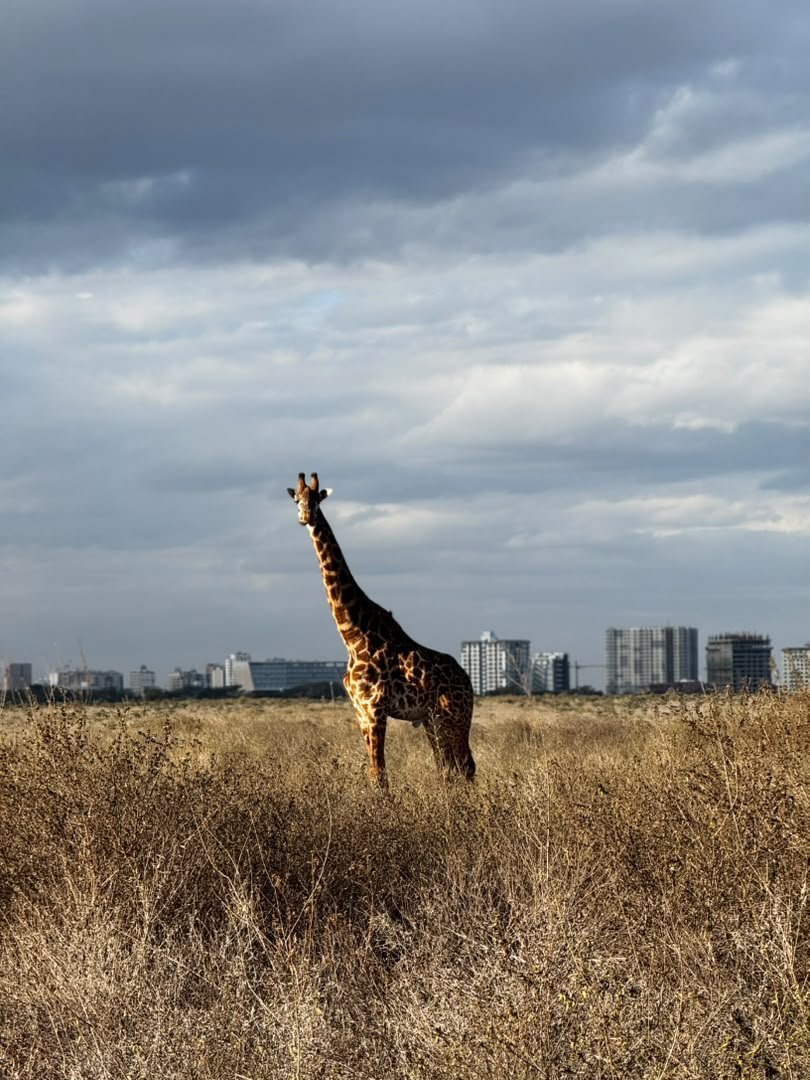
Nairobi is one of Africa’s busiest capital cities, yet wild animals live only a short drive from its modern skyline. Nairobi National Park offers one of the most unusual safari experiences in Kenya because visitors can watch lions, rhinos, giraffes, buffaloes, zebras, and other wildlife with Nairobi’s buildings visible in the distance. The park lies about 8–10 kilometres from Nairobi’s central business district and covers approximately 117 square kilometres. This makes it one of the easiest national parks to visit when you have limited time in Kenya.
For travellers who want to experience Kenya’s wildlife without spending several days travelling to a remote reserve, a Nairobi National Park safari can be an excellent choice. The park provides genuine wildlife viewing in a protected natural environment. It is not a zoo or a small wildlife enclosure. Animals move freely across grasslands, riverine areas, wetlands, and other habitats within the park. At the same time, the Nairobi skyline creates a striking backdrop that makes this safari different from experiences in the Maasai Mara, Amboseli, or Tsavo.
Zamunda Travels can help travellers combine Nairobi National Park with wider Kenya safari experiences. You can visit the park before a longer journey to the Maasai Mara, Amboseli, Lake Nakuru, or other destinations. Alternatively, a short game drive can fit into a Nairobi stay before an international flight or after arriving in Kenya.
What Makes a Nairobi National Park Safari Special?
The biggest attraction is simple: wildlife and a major African city exist side by side. Kenya Wildlife Service describes Nairobi National Park as the “World’s Only Wildlife Capital.” The park sits close enough to the city that visitors can sometimes photograph wild animals with skyscrapers on the horizon. This unusual setting gives the experience a strong sense of place.
The park was gazetted in 1946 as Kenya’s first national park. It was also the first national park established in East Africa. Since then, it has played an important role in Kenya’s wildlife conservation story. Today, the park protects a diverse range of mammals and more than 400 recorded bird species.
Another major attraction is the park’s role as a sanctuary for endangered black rhinos. Rhino conservation remains one of its most important functions. The park also supports lions, leopards, buffaloes, giraffes, zebras, wildebeest, antelopes, and many smaller animals. KWS identifies four of the traditional Big Five in the park: lion, leopard, buffalo, and rhino. Elephants are not a resident feature of Nairobi National Park, so travellers should not expect an elephant safari here.
Can You See Wildlife Near Nairobi?
Yes. You can see substantial wildlife remarkably close to Nairobi. That proximity is the main reason the park works so well for short safaris. From the city centre, visitors can reach the park within a relatively short drive, although actual travel time depends on traffic and the entrance being used. KWS places the park roughly 8 kilometres from the central business district and notes that it is accessible along Lang’ata Road.
Once inside the park, the environment changes quickly. Tall buildings give way to open grasslands, scattered vegetation, wetlands, and riverine habitats. The contrast can feel surprising, especially for first-time visitors. A few minutes earlier, you may have been travelling through busy Nairobi streets. Soon after entering the protected area, you may be watching a giraffe feeding or a herd of zebra crossing the plains.
Wildlife sightings are never guaranteed because animals move naturally. However, the park has a strong reputation for wildlife viewing. Early morning drives can be particularly rewarding because many animals are active during the cooler hours. Late afternoon can also produce good sightings as temperatures become more comfortable and wildlife becomes active again.
Wildlife to See on a Nairobi National Park Safari
Lions and Other Big Cats
Lions are among the most exciting animals to look for during a Nairobi National Park safari. The park supports several lion prides, and KWS currently identifies three named prides: Kingfisher, Athi, and Mokoyet. Their movements vary, so guides normally search different areas based on recent sightings and conditions.
Leopards also occur in the park. However, they are more difficult to find because they are secretive and often remain hidden in thick vegetation. Seeing one requires patience and a little luck. Cheetahs can also occur, although sightings are less predictable than those of common plains animals.
Therefore, travellers should avoid judging the experience only by how many predators they see. A successful game drive can include excellent sightings of herbivores, birds, rhinos, giraffes, and smaller wildlife even when the big cats remain hidden.
Black Rhinos
Black rhinos are one of the major reasons to visit Nairobi National Park. The park has played an important role in black rhino conservation, particularly after severe poaching pressure affected rhino populations across Kenya during the twentieth century. Today, the park remains an important rhino sanctuary.
Seeing a black rhino in the wild is a memorable experience. These powerful animals are usually best observed from a respectful distance. Your guide will help position the vehicle without disturbing the animal. Visitors should never attempt to approach a rhino on foot or encourage the driver to move too close.
Giraffes, Zebras and Buffaloes
Large herbivores provide some of the most consistent wildlife experiences in the park. Giraffes are easy to recognise because of their height and distinctive patterns. Zebras often move through open grassland, while buffaloes can gather in groups around areas with suitable food and water.
Wildebeest, gazelles, eland, hartebeest, warthogs, and other antelope species add further variety. These animals form an important part of the park’s ecosystem. They also provide opportunities for photographers who want more than the traditional predator sightings.
Hippos, Warthogs and Smaller Wildlife
Nairobi National Park is not only about lions and rhinos. The park contains wetlands and water sources that support hippos and a variety of water-associated species. Warthogs can also be seen moving across open areas, often appearing suddenly before disappearing into the vegetation.
You may also encounter baboons, monkeys, smaller antelopes, reptiles, and numerous bird species. Consequently, keeping binoculars available can make your game drive more rewarding.
Nairobi National Park Safari for Birdwatchers
Birdwatching is another major reason to visit the park. KWS records more than 400 bird species, including resident and migratory birds. This makes the park valuable for both dedicated birders and travellers who simply enjoy photographing wildlife.
The mixture of grasslands, wetlands, riverine habitats, and open areas creates different feeding and nesting opportunities. Depending on the season, visitors may encounter birds such as ostriches, crowned cranes, ground hornbills, storks, herons, guinea fowl, and various raptors.
Birding also changes the pace of a game drive. Instead of moving quickly between large mammals, a good guide can stop to identify smaller species and explain their behaviour. For photographers, this creates opportunities to capture wildlife beyond the usual safari favourites.
Best Time for a Nairobi National Park Safari
Nairobi National Park is an all-year safari destination. KWS lists accessibility throughout the year, although weather conditions influence the landscape and wildlife experience.
The dry periods can make wildlife easier to locate because animals often gather around reliable water sources and vegetation becomes less dense. They can also produce clearer conditions for photography. However, the wet seasons bring their own advantages. Fresh vegetation transforms the landscape, bird activity can increase, and the scenery can become especially attractive.
For travellers with limited time, the season should not prevent a visit. A well-planned morning or afternoon drive can still provide a rewarding experience. If wildlife photography is your priority, discuss your travel dates with Zamunda Travels so your itinerary can match the experience you want.
How Long Do You Need for a Nairobi National Park Safari?
You do not need several days to experience Nairobi National Park. A half-day game drive can work well for travellers with a tight schedule. It can also fit comfortably into a longer Kenya itinerary.
A morning safari is particularly useful for travellers staying in Nairobi. You can leave early, explore the park during the cooler hours, and return to the city with much of the day still available. An afternoon drive can work well for travellers who arrive in Nairobi earlier in the day.
A full-day visit allows more time for wildlife searches, photography, birdwatching, and relaxing at suitable picnic areas. However, the ideal duration depends on your interests and the rest of your Kenya travel plans.
For example, Zamunda Travels can combine a short Nairobi National Park visit with a longer Maasai Mara safari. You could also connect Nairobi with Amboseli for Mount Kilimanjaro views, Lake Nakuru for rhino and birdlife, or Tsavo for a broader Kenya wildlife experience.
Nairobi National Park Safari Gates and Access
Nairobi National Park is conveniently located on the southern side of Nairobi. KWS states that the park can be accessed by road from the Lang’ata Road area. Jomo Kenyatta International Airport and Wilson Airport also provide useful access points for visitors travelling into Nairobi.
Because Nairobi traffic can become heavy, travellers should plan their departure time carefully. An early start is especially useful for morning game drives. It reduces the risk of spending too much of your safari time in city traffic.
Your tour operator can also help coordinate vehicle arrangements, park entry, timing, and the rest of your itinerary. This is particularly useful for international visitors who may not know Nairobi’s roads or park access points.
Nairobi National Park Safari Costs and Entry Fees
Park entry fees can change, so travellers should always confirm the latest rates before travelling. At the time of research, Kenya Wildlife Service lists different rates for East African citizens, Kenya residents, African citizens, and non-residents. The current KWS listing shows USD 80 for a non-resident adult and USD 40 for a non-resident child, while other categories have separate rates.
These fees cover park entry. They should not be confused with the total cost of a safari package. A complete trip may also include transport, a safari vehicle, driver-guide services, accommodation, meals, airport transfers, and other arrangements.
For that reason, it is better to compare complete safari packages rather than looking only at the park entrance fee. Zamunda Travels can structure a Nairobi wildlife experience around your budget, travel dates, accommodation needs, and wider Kenya itinerary.
Park Rules for a Safe Wildlife Experience
Nairobi National Park is a genuine wildlife area, so visitors must follow conservation and safety rules. KWS requires visitors to remain in vehicles except in designated areas. Drivers must stay on established roads, and off-road driving is prohibited. The maximum speed limit is 40 km/h. KWS also advises visitors to maintain a minimum viewing distance of 20 metres from wildlife.
Visitors should also avoid loud noises, feeding animals, littering, and sudden movements. These rules protect both people and wildlife. In addition, single-use plastics are prohibited in Kenya’s national parks.
KWS currently states that standard park gates open at 6:00 AM and close at 6:00 PM, unless overnight arrangements apply. Always confirm current access conditions before your visit because operational rules can change.
Conservation and the Future of Nairobi National Park
Nairobi National Park faces a unique conservation challenge because it sits beside a rapidly growing city. The park is not an isolated wilderness surrounded by thousands of square kilometres of protected land. Instead, it forms the protected core of the wider Athi-Kapiti ecosystem.
KWS research notes that infrastructure development, expanding human populations, land subdivision, and blocked wildlife routes have affected the wider ecosystem. Historical wildebeest migration patterns have also changed significantly. The same research estimates that a large proportion of the park’s animals use areas outside the protected boundary, making wildlife corridors and surrounding dispersal areas important to conservation.
Recent KWS conservation work has also highlighted the importance of habitat connectivity. Restoration projects around areas such as the Southern Bypass corridor aim to strengthen ecological connections and support wildlife movement.
This makes visiting the park more than a simple sightseeing activity. Responsible tourism can contribute to the wider conservation economy while giving visitors a better understanding of the challenges facing wildlife in an urbanising landscape.
Who Should Visit Nairobi National Park?
A Nairobi National Park safari suits travellers who want a genuine wildlife experience but have limited time. It is especially useful for first-time visitors to Kenya who are spending a few nights in Nairobi before travelling elsewhere.
Families can enjoy the park because the journey is relatively short compared with travelling to distant safari destinations. Photographers also benefit from the unusual combination of wildlife and city scenery. Business travellers can fit a game drive around meetings, while international visitors can use the park as their first introduction to Kenya’s wildlife.
It is also an excellent option for travellers who want to combine several destinations. A short Nairobi safari can become the first stage of a longer Kenya circuit with the Maasai Mara, Lake Nakuru, Amboseli, or Tsavo.
Nairobi National Park vs. Maasai Mara
Nairobi National Park and the Maasai Mara provide very different safari experiences. Nairobi is smaller and much closer to a major city. Its greatest advantage is convenience. You can experience lions, rhinos, giraffes, buffaloes, zebras, and many birds without committing several days to a remote safari destination.
The Maasai Mara, by contrast, offers a much larger wilderness experience and is famous for its exceptional concentrations of wildlife and the annual wildebeest migration. Therefore, the two destinations should not necessarily compete with each other.
For travellers with enough time, combining them can create a stronger Kenya safari. Zamunda Travels can arrange a short Nairobi wildlife experience before continuing to the Maasai Mara for a longer safari.
Why Choose Zamunda Travels for Your Kenya Safari?
Choosing the right operator can make your safari easier because transport, timing, park entry, accommodation, and guiding all need to work together. Zamunda Travels can help travellers plan a Kenya safari that includes Nairobi National Park and other major destinations.
The company can build the itinerary around the number of days available, your preferred accommodation level, wildlife interests, and budget. A short Nairobi game drive can stand alone, or you can combine it with a longer Kenya circuit.
For travellers arriving at Nairobi’s airports, this flexibility is especially useful. You can begin with wildlife close to the city and then continue towards the Maasai Mara, Lake Nakuru, Amboseli, or Tsavo. This approach allows you to experience different ecosystems instead of spending your entire trip in one destination.
Final Thoughts on Nairobi National Park Safari
So, can you see wildlife near Nairobi? Absolutely. Nairobi National Park proves that a major African city and a functioning wildlife ecosystem can exist side by side. The park offers opportunities to see lions, leopards, black rhinos, buffaloes, giraffes, zebras, wildebeest, antelopes, hippos, and more than 400 bird species.
Its location makes it one of Kenya’s most convenient safari destinations. You can leave the city in the morning and enter a landscape where wild animals roam freely within a short distance. The skyline in the background makes the experience even more distinctive.
For a short Kenya trip, Nairobi National Park can provide an authentic introduction to the country’s wildlife. For a longer holiday, it works even better as part of a wider safari circuit. With Zamunda Travels, you can combine Nairobi wildlife with destinations such as the Maasai Mara, Amboseli, Lake Nakuru, or Tsavo and create a Kenya safari that matches your time and interests.