The Three Volcanoes of Mgahinga Gorilla National Park
September 28, 2026
Bird Watching in Mgahinga Gorilla National Park
September 29, 2026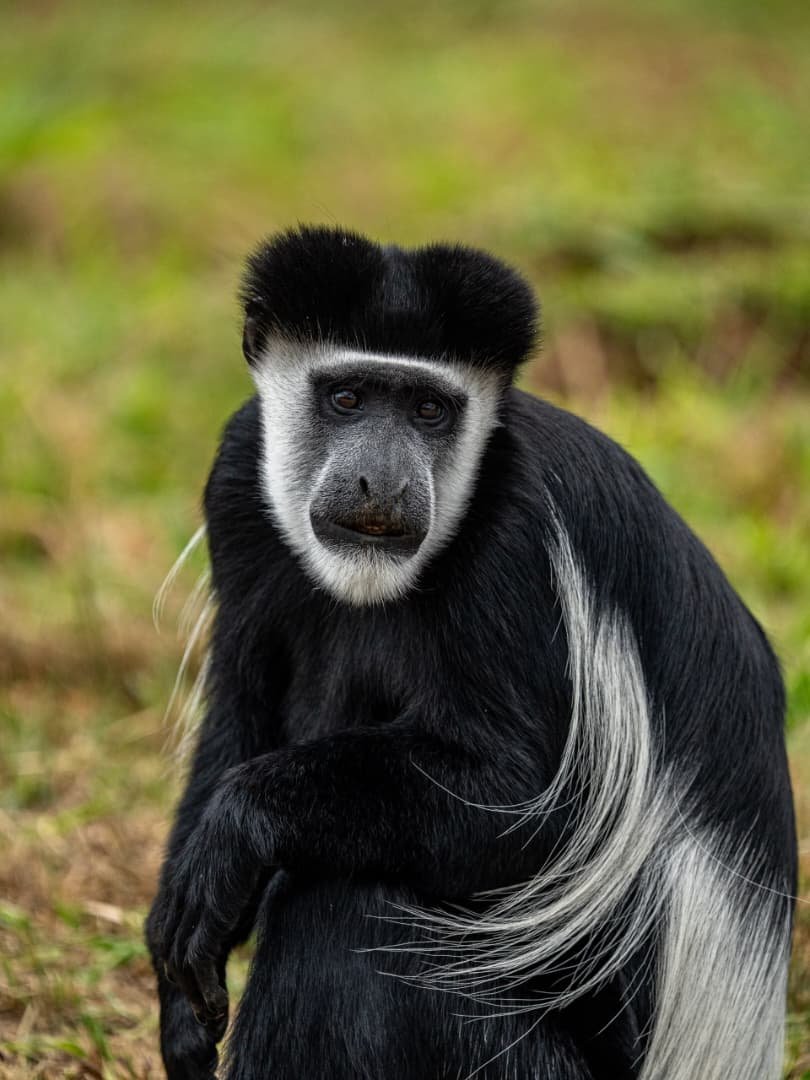
Why Wildlife in Mgahinga Deserves a Place on Your Itinerary
Wildlife in Mgahinga surprises many first-time visitors. The park covers only 33.7 square kilometres, according to UNESCO, yet it shelters mountain gorillas, golden monkeys, buffalo, and more than 180 bird species. It sits in the far southwest corner of Uganda, where the borders of Rwanda and the Democratic Republic of Congo meet. Three extinct volcanoes rise from the park, and together they form part of the wider Virunga Conservation Area. Because the park is small, you can see a lot in a short time. Moreover, each volcano slope holds a different habitat, so the animals change as you climb. Zamunda Travels builds itineraries around this variety, and our guides know which trail suits which animal. Consequently, guests leave with far more than a single gorilla photo. In this guide, Zamunda Travels introduces the main species, explains where they live, and shows you how to plan a visit.
Mountain Gorillas of the Virunga Volcanoes
The mountain gorilla is the headline attraction, and it earns that role. Mgahinga is one of only two places in Uganda where you can track these apes. Bwindi Impenetrable National Park is the other. Mgahinga has just one habituated gorilla group, and the park allows a maximum of eight visitors to trek with it each day. As a result, every visit feels quiet and personal. Wikipedia records roughly thirty gorillas in the park, split between one habituated and two unhabituated groups. Rangers and trackers follow the habituated family every day, so they can lead you straight to its latest nest sites. Note that the gorillas sometimes cross into neighbouring Rwanda or Congo, because the volcano range has no fences. Therefore, trekking times vary from a short walk to a full day. Once you find the family, you spend one hour beside the giant silverbacks, playful juveniles, and watchful mothers. Zamunda Travels handles your permit booking and briefs you on safe behaviour before you set off.
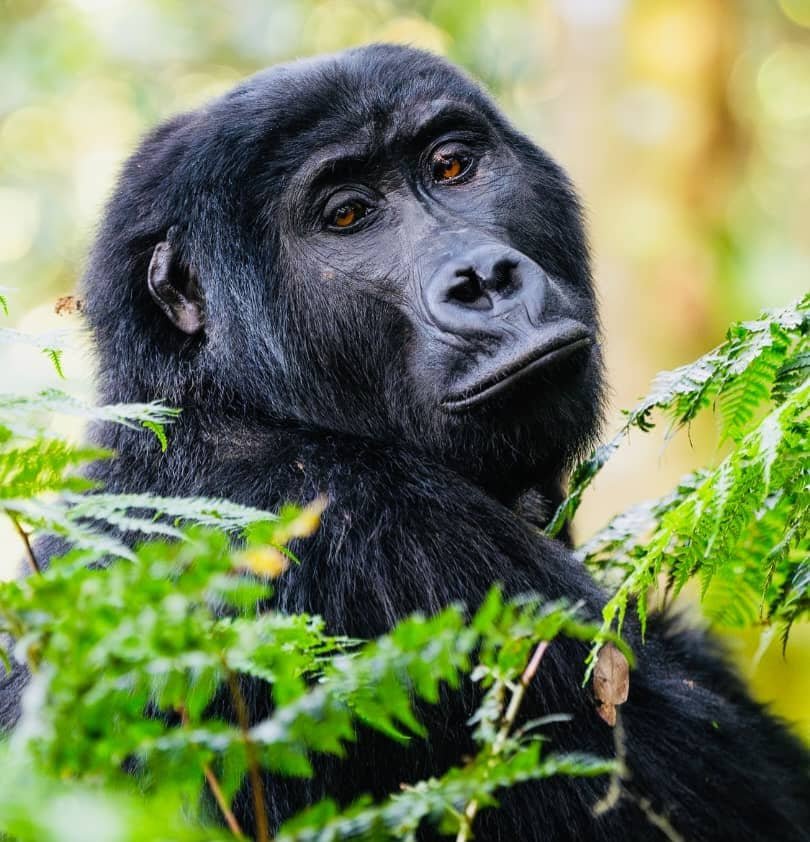
mountain gorilla
Golden Monkeys: The Rarest Primates in the Park
Golden monkeys give Mgahinga its second big claim to fame. The species is endemic to the Albertine Rift, and its range now shrinks to the Virunga volcanoes and one other forest in Rwanda. Uganda’s only golden monkeys live here, which makes this park a must for primate lovers. The monkeys have orange-gold backs, dark limbs, and cheeks framed in cream. They travel in large, noisy troops, and they spend much of the day feeding in the bamboo zone. Bamboo shoots, fruit, and leaves form the core of their diet. Rangers have habituated at least one troop, so visitors can walk among the monkeys and photograph them at close range. In addition, the tracking session is shorter and less strenuous than a gorilla trek. Many guests book both activities back to back. Zamunda Travels often pairs them in a single two-day plan, and this saves time and money
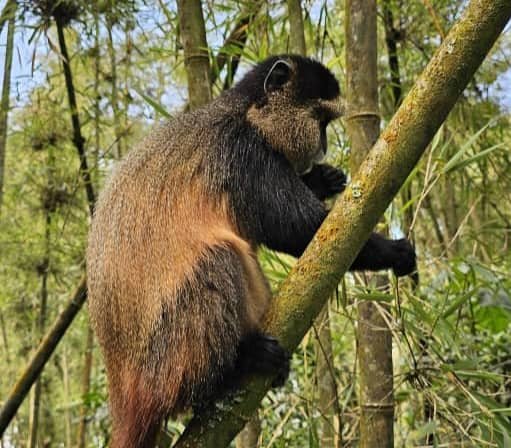
golden monkey
.
Other Primates and Forest Mammals
Beyond the two famous primates, the park lists 76 mammal species. Black-and-white colobus monkeys leap through the upper canopy, while blue monkeys forage in the lower branches. On the forest floor, you may meet bushbuck, which are shy antelope with white-striped flanks. Black-fronted duikers also hide in the thick undergrowth, and they bolt at the smallest sound. The giant forest hog is the largest wild pig in the world, and it roams the forest edges in small family groups. Bushpigs share the same habitat, but they feed mostly at night. Porcupines also come out after dark, and they dig for roots and tubers. Meanwhile, rodents and bats fill countless smaller niches. Sightings of these mammals depend on luck, patience, and the sharp eyes of your guide. For that reason, Zamunda Travels assigns experienced local guides to every group.
Elusive Predators and Large Mammals
Mgahinga also protects several secretive predators and large herbivores. Leopards patrol the volcanic slopes, and they hunt small antelope and primates. Golden cats live in the same forest, but they rarely leave cover. Servals prefer open grassy clearings, where they pounce on rodents with startling leaps. The spotted hyena and the side-striped jackal complete the list of carnivores. Elephants and buffalo also live here, although sightings are uncommon. However, fresh dung and broken bamboo often show that these giants have passed nearby. Visitors should treat any sighting as a bonus rather than a promise. Even so, these hidden animals add depth to the wilderness. They remind you that the forest holds far more than the trail reveals.
Birdlife: A Haven for Albertine Rift Endemics
Bird lovers will find plenty to enjoy. Surveys record more than 180 species, and many of them belong to the Albertine Rift endemic group. The Rwenzori turaco stands out with its bright green body and crimson wings. The Kivu ground thrush, handsome spurfowl, dusky crimson-wing, and red-throated alethe also appear on the park’s endemic list. Higher up, the Rwenzori nightjar and the alpine chat prefer the open, rocky ground. In the lower forest, you may spot the paradise flycatcher, the yellow-vented bulbul, and the double-collared sunbird. Furthermore, white-necked ravens soar above the peaks, while black kites circle the farmland below. Early morning gives the best chance for a good list. Zamunda Travels can add a dedicated birding walk to your itinerary, and our guides identify birds by both sight and song.
Habitats That Shape Wildlife in Mgahinga
The volcanoes explain why so many species share such a small space. Mount Muhabura, at 4,127 metres, is the tallest of the three peaks. Mount Sabyinyo reaches 3,669 metres, and Mount Gahinga rises to 3,474 metres. Each mountain rises through distinct vegetation belts. The lower slopes hold montane forest, and the middle zone is dominated by dense bamboo. Above that, the ericaceous belt gives way to the afro-alpine zone, where giant lobelia and giant senecio grow. Every belt supports its own animals. Gorillas and golden monkeys use the bamboo and forest zones, while alpine chats favour the high, open ground. In addition, streams and swampy patches shelter frogs, insects, and dragonflies. This layered landscape gives visitors a real reason to explore more than one trail. Consequently, Zamunda Travels recommends at least two full days in the park.
Best Time to Watch Wildlife in Mgahinga
The park stays open all year, but the seasons affect your experience. The drier months, from June to August and from December to January, give firm trails and clearer views. Rain falls heavily in March to May and in October to November. During those months, the paths turn slippery, and clouds often hide the volcano peaks. Nevertheless, the rains bring fresh bamboo shoots, and the forest looks lush and green. Birders often enjoy the wet season, because migrants arrive and breeding activity peaks. Prices for lodges can also drop in the low season. Whichever month you choose, pack waterproof layers, sturdy boots, and gloves for the nettles. Zamunda Travels checks the weather outlook before your trip, and we adjust your schedule to match it.
Protecting the Park and Its People
Conservation shapes every part of the Mgahinga story. The Uganda Wildlife Authority manages the park, and it works together with Bwindi under one conservation unit. Tourism income pays for ranger patrols, and it funds community projects around the boundary. The Batwa people, who once lived in the forest as hunters and gatherers, now share their heritage through guided cultural walks. Their knowledge of plants and animals is unmatched, and their stories bring the forest to life. Visitors who book with Zamunda Travels support these efforts directly. We use local guides, local lodges, and licensed permits at every stage.
Plan Your Mgahinga Safari with Zamunda Travels
Zamunda Travels offers tailor-made trips that put wildlife first. We arrange your gorilla permit, your golden monkey session, and your birding walks in a smooth sequence. We also organise transfers from Kigali, Kabale, or Entebbe, and we book comfortable lodges near the park gate. Our team answers your questions quickly, and it shares honest advice about fitness levels and packing. Contact Zamunda Travels today, and start planning your encounter with the wildlife of Mgahinga.