
Best Places to Visit in Kigali Rwanda
November 3, 2026
Where to See Elephants in Kenya
November 3, 2026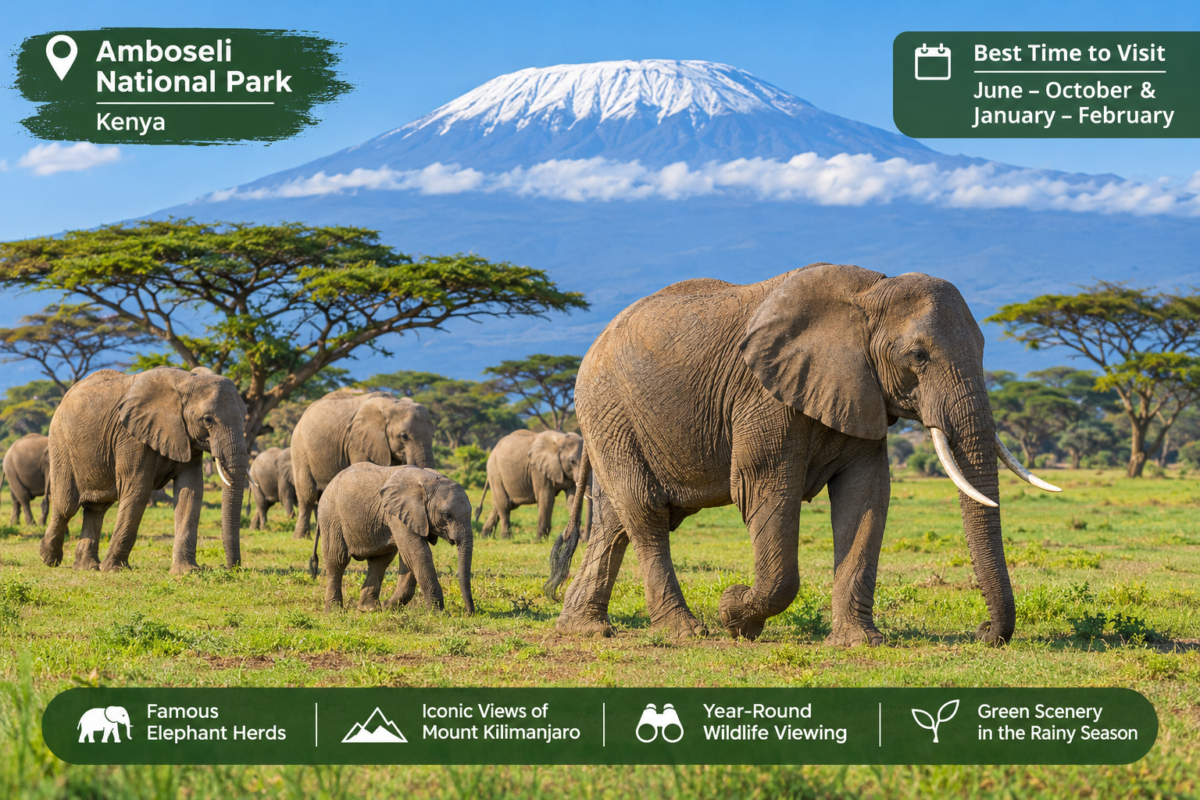
The best time to visit Amboseli National Park depends on your travel interests, preferred weather and safari budget. Some travellers come to see the famous elephant herds. Others want to photograph Mount Kilimanjaro or enjoy a quieter wildlife safari.
Located in southern Kenya, Amboseli National Park is one of East Africa’s most popular wildlife destinations. Its open plains, permanent swamps and elephant families offer rewarding safari experiences throughout the year.
However, seasonal changes affect wildlife movements, road conditions and accommodation prices. Therefore, choosing suitable travel dates can make a significant difference to your experience.
At Zamunda Travels, we organize private Kenya safaris and help international travellers choose suitable travel periods, accommodation and itineraries.
Key Takeaways
- Best overall safari season: June to October and January to February.
- Best time for elephant viewing: June to October, when many animals gather near permanent water sources.
- Best time for Mount Kilimanjaro photography: Early mornings when cloud cover and dust are limited.
- Best time for green landscapes: March to May and November to December.
- Best time for fewer visitors: April, May and parts of November, outside major holidays.
When Is the Best Time to Visit Amboseli National Park?
The best time to visit Amboseli National Park is generally June to October or January to February. These dry periods offer favourable wildlife viewing and easier driving conditions. However, the rainy months bring greener landscapes, migratory birds and quieter safari experiences. The ideal season depends on your interests and travel budget.Why Visit Amboseli National Park in Kenya?
Amboseli National Park lies in southern Kenya, near the Tanzanian border. It covers approximately 392 square kilometres and forms part of the larger Amboseli ecosystem. The park is particularly famous for its elephants. Visitors may observe family groups feeding, drinking and moving across the plains. Other wildlife includes buffaloes, zebras, giraffes, wildebeest, hippos, lions, spotted hyenas and numerous bird species. Another major attraction is Mount Kilimanjaro. Although Africa’s highest mountain stands in Tanzania, Amboseli offers famous views towards its summit. Permanent swamps also support wildlife during dry periods. As a result, Amboseli remains a worthwhile safari destination throughout the year.Best Time to Visit Amboseli National Park by Season
Amboseli experiences two main dry periods and two rainy periods. However, rainfall patterns can vary between years. Each season offers different advantages for wildlife viewing, photography and safari planning.June to October: Best for Wildlife Viewing
June to October is generally the most popular period for an Amboseli wildlife safari. During these months, rainfall is usually limited. Vegetation becomes shorter, and many animals gather around permanent wetlands. Consequently, visitors often find it easier to observe elephants, buffaloes, zebras and other large mammals. The dry season also provides generally favourable driving conditions. This makes it suitable for first-time safari travellers, families and wildlife photographers. However, July and August attract more visitors. Therefore, travellers should book accommodation early, particularly during international school holidays. September and October also offer excellent wildlife viewing. Nevertheless, dusty conditions may affect distant photography.January to February: Excellent for Wildlife and Photography
January and February provide another favourable period for visiting Amboseli. These months are generally warm and relatively dry. Wildlife remains active around permanent water sources. The landscape may also retain some greenery following the short rains. For international visitors escaping winter in Europe or North America, this period can be particularly attractive. However, daytime temperatures may become hot. Therefore, early morning and late afternoon game drives are usually more comfortable.March to May: Green Landscapes and Fewer Visitors
March to May generally marks the long rainy season in Amboseli National Park. During this period, rainfall transforms the plains into green landscapes. The wetlands expand, and birdlife becomes particularly active. April is often the wettest month. Therefore, some tracks may become muddy or difficult to use after heavy rainfall. Wildlife may also spread across wider areas because water becomes more available. Nevertheless, the rainy season offers several advantages. Visitor numbers are often lower, and some accommodation providers offer seasonal discounts. For photographers, green scenery and dramatic cloud formations can create interesting compositions. However, travellers should confirm accommodation operations and road conditions before departure.November to December: Birdwatching and Seasonal Scenery
November and December usually experience the short rainy season. Rainfall brings fresh vegetation and supports increased bird activity. Migratory species also contribute to the park’s birdwatching opportunities. These months can appeal to travellers who prefer greener landscapes and fewer safari vehicles. However, weather conditions remain unpredictable. Rain showers and cloud cover can affect game drives and Mount Kilimanjaro visibility. Early December may offer quieter travel conditions. In contrast, Christmas and New Year often attract higher accommodation demand.Amboseli National Park Weather by Month
Understanding the monthly weather patterns can help you plan a more comfortable safari.January and February
January and February are generally warm and dry. These months are excellent for wildlife viewing and early morning photography. Elephants frequently use the wetlands, while the open plains provide good visibility.March and April
Rainfall usually increases during March, while April often receives the heaviest rainfall. The landscape becomes greener, although some roads may become muddy. These months suit flexible travellers who enjoy photography and quieter destinations.May and June
Rainfall generally decreases during May, and drier conditions develop in June. Vegetation remains relatively green early in this period. Meanwhile, wildlife viewing often improves as the dry season progresses.July and August
July and August offer excellent conditions for traditional wildlife safaris. Animals often gather around permanent water sources. However, these months can be busy, especially around popular wildlife viewing areas.September and October
September and October are usually dry and favourable for wildlife viewing. Elephants and other animals continue using permanent wetlands. However, dust can become noticeable, particularly late in the dry season.November and December
November and December bring variable rainfall and greener scenery. Birdwatching can be particularly rewarding. However, visitors should allow flexibility because showers and clouds may affect planned activities.Best Time to See Elephants in Amboseli National Park
Amboseli is internationally recognized for its elephant population. Elephants live in the wider Amboseli ecosystem throughout the year. Therefore, visitors can encounter them during both dry and rainy seasons. However, June to October often provides particularly favourable viewing conditions. During dry periods, elephant families regularly visit permanent swamps to drink, feed and cool themselves. Visitors may observe adults protecting calves, family groups travelling together and elephants communicating through body movements. The park is also important for elephant conservation research. The Amboseli Elephant Research Project has contributed decades of knowledge about elephant behaviour and social relationships. At Zamunda Travels, we recommend allowing enough time for relaxed wildlife observation rather than rushing between sightings. Responsible viewing gives travellers more opportunities to appreciate natural elephant behaviour.Best Time to See Mount Kilimanjaro From Amboseli
Mount Kilimanjaro is one of the most recognizable features of the Amboseli landscape. Although the mountain is located in Tanzania, visitors can photograph it from several areas around Amboseli. However, visibility depends on cloud cover, atmospheric conditions and the time of day. Early mornings often provide better opportunities because clouds may develop around the mountain later. The dry season is popular for wildlife photography. Nevertheless, dust can sometimes reduce visibility. After rainfall, clearer atmospheric conditions may also produce excellent mountain views. For photographers, spending at least two nights near Amboseli increases the chances of suitable weather. A flexible game-drive schedule also allows your guide to respond to changing conditions.How Many Days Should You Spend in Amboseli National Park?
Two nights and three days are generally suitable for a rewarding Amboseli safari. This allows several game drives and opportunities to observe wildlife at different times of day. However, travellers interested in professional photography may prefer three nights. Additional time reduces pressure when weather conditions change or wildlife moves away from accessible tracks.Sample Three-Day Amboseli Safari From Nairobi
Day 1: Nairobi to Amboseli National Park Your safari begins with a morning departure from Nairobi. The journey commonly takes approximately four to six hours, depending on traffic, road conditions and your accommodation location. After arrival, check in at your lodge and enjoy lunch according to your schedule. Later, take an afternoon game drive if time and park-entry arrangements permit. Look for elephants, zebras, buffaloes and other wildlife before returning to your accommodation. Day 2: Full-Day Amboseli Wildlife Safari Begin your day with an early morning game drive. Morning hours often provide excellent wildlife activity and opportunities to photograph Mount Kilimanjaro. Continue exploring the open plains and permanent wetlands with your safari guide. Depending on your arrangements, enjoy a packed lunch or return to your lodge. Spend the afternoon observing wildlife before returning for dinner and an overnight stay. Day 3: Morning Game Drive and Return to Nairobi Enjoy an early game drive if your departure schedule and park-entry arrangements allow. After breakfast, begin your journey back to Nairobi. Alternatively, continue your safari to another Kenyan destination.How Much Does an Amboseli Safari Cost in 2027?
The cost of an Amboseli safari depends on accommodation standards, transport, park fees and travel season. The Kenya Wildlife Service park page listed non-resident adult entry at USD 90 and child entry at USD 45 when checked in November 2026. However, these figures should not be treated as guaranteed 2027 rates. Rates change, so confirm current prices with Zamunda Travels.Main Costs to Consider
Park entrance fees: These are conservation charges collected for entering the national park. Accommodation: Travellers can choose from different lodging standards, including mid-range and luxury safari properties. Safari transport: A private safari normally includes a vehicle, professional driver-guide and fuel. Meals: Some lodges provide full-board accommodation, while others offer different meal plans. Game drives: Confirm whether guided wildlife activities are included in the quotation. Additional expenses: Travel insurance, international flights, tips, drinks and personal purchases may cost extra. At Zamunda Travels, we prepare safari quotations based on the traveller’s preferred dates, group size and accommodation category. This helps guests understand the expected costs before confirming their trip.Where to Stay During an Amboseli Safari
Choosing suitable accommodation is an important part of safari planning. Some lodges are located inside Amboseli National Park, while others operate outside the park boundaries. Staying inside the park can reduce travel time to certain wildlife viewing areas. However, accommodation outside the park may offer different price options and facilities.Amboseli Serena Safari Lodge
Amboseli Serena Safari Lodge is an established accommodation option within the national park. Its location provides access to wildlife viewing areas and views of the surrounding landscape.Ol Tukai Lodge
Ol Tukai Lodge is another well-known property inside Amboseli National Park. It is popular with travellers seeking convenient access to game drives and elephant viewing areas.Elewana Tortilis Camp
Elewana Tortilis Camp offers an upscale safari experience near Amboseli. It is an option for travellers who prefer a more exclusive accommodation setting. Before booking, compare the location, room category, meal arrangements and included activities. Zamunda Travels can help travellers choose accommodation that suits their safari plans and budget.Common Mistakes to Avoid When Visiting Amboseli
Planning carefully can improve your Amboseli safari experience. Expecting Mount Kilimanjaro to remain visible throughout the day Clouds can cover the mountain even during dry weather. Therefore, schedule photography opportunities early in the morning. Booking too little time for wildlife viewing A rushed visit limits opportunities to observe animal behaviour. Consider staying at least two nights. Ignoring rainy-season road conditions Heavy rainfall can affect some tracks. Therefore, confirm road conditions before travelling during the wettest months. Choosing accommodation based only on price A cheaper lodge may require longer transfers. Always consider location, meals and included activities. Expecting guaranteed wildlife sightings Wild animals move freely across the ecosystem. Therefore, sightings depend on natural behaviour, weather and other conditions.Safety, Health and Responsible Travel in Amboseli
Amboseli is a protected wildlife area. Visitors should follow Kenya Wildlife Service regulations throughout their stay. The park’s official speed limit is 40 kilometres per hour. Drivers must remain on designated roads and avoid disturbing wildlife. Visitors should maintain a safe distance from animals. The Kenya Wildlife Service specifies a minimum distance of 20 metres. Never feed wildlife or leave your vehicle outside designated areas. Before travelling, consult your doctor or travel clinic about recommended vaccinations and malaria prevention. Also, check Kenya’s current entry requirements and travel-authorisation procedures. Carry drinking water, sun protection, comfortable clothing and a light jacket for cooler mornings. Finally, respect local communities and ask permission before photographing people. Responsible safari tourism supports wildlife conservation and encourages respectful interactions with local communities.Can You Combine Amboseli With Other Kenya Safari Destinations?
Yes. Amboseli combines well with several other Kenyan wildlife destinations. For example, travellers can combine Amboseli with the Masai Mara National Reserve for additional wildlife viewing. Lake Naivasha offers boat excursions, birdwatching and a different landscape. Meanwhile, Tsavo West and Tsavo East provide opportunities to explore larger protected wilderness areas. However, driving distances between destinations can be significant. Therefore, your itinerary should allow sufficient time for transfers, game drives and relaxation. Zamunda Travels also organizes longer East African safaris combining Kenya with Uganda, Rwanda and Tanzania.Choosing the Best Time for Your Amboseli Safari
The best time to visit Amboseli National Park depends on the experiences you value most. June to October and January to February generally provide excellent wildlife viewing conditions. However, the rainy months also offer green landscapes, birdwatching and quieter safari opportunities. Whether you are planning an elephant photography safari, a family holiday or a longer Kenya wildlife adventure, choosing suitable dates is essential. With careful planning, you can enjoy Amboseli’s wildlife, landscapes and conservation experiences during different seasons of the year.Frequently Asked Questions About Amboseli National Park
What is the best month to visit Amboseli National Park?
July, August and September are excellent months for visiting Amboseli National Park. These months fall within the long dry season, when wildlife often gathers near permanent water sources. However, January and February are also favourable. Your ideal month depends on your interests, preferred weather and accommodation budget.Can you see Mount Kilimanjaro from Amboseli National Park?
Yes, Mount Kilimanjaro is visible from Amboseli National Park when weather conditions allow. The mountain stands across the border in Tanzania. Early mornings often offer better visibility because clouds may develop later. However, clear mountain views cannot be guaranteed during any season.Is Amboseli worth visiting during the rainy season?
Yes, Amboseli can be worth visiting during the rainy season. The landscape becomes greener, birdwatching improves and visitor numbers may decrease. Some accommodation providers also offer seasonal discounts. However, heavy rainfall can affect driving conditions, particularly during April and May.How many days are enough for Amboseli National Park?
Two nights and three days are generally enough for an introductory Amboseli safari. This allows several game drives and opportunities to photograph Mount Kilimanjaro. However, wildlife photographers and travellers seeking a slower experience may prefer three nights or longer.What is the best time to see elephants in Amboseli?
June to October is generally excellent for elephant viewing in Amboseli. During these dry months, elephant families often gather around permanent wetlands. However, elephants remain in the wider Amboseli ecosystem throughout the year, so visitors can encounter them in different seasons.Plan Your Amboseli Safari With Zamunda Travels
Are you planning to visit Amboseli National Park in 2027 or beyond? Zamunda Travels Uganda Ltd can help you organize a private Kenya safari based on your travel dates, interests and budget. Whether you want to photograph elephants against Mount Kilimanjaro, explore Kenya’s national parks or combine Amboseli with other East African destinations, our team can help you create a suitable itinerary. Complete the contact form below with your preferred travel dates, number of travellers and safari requirements. Our team will review your inquiry and provide a personalized safari itinerary and quotation.
Related posts
November 7, 2026
November 7, 2026
November 7, 2026