The Ultimate Kenya Safari Photography Guide
November 3, 2026
A Complete Guide to Wildlife Safaris in Uganda
November 4, 2026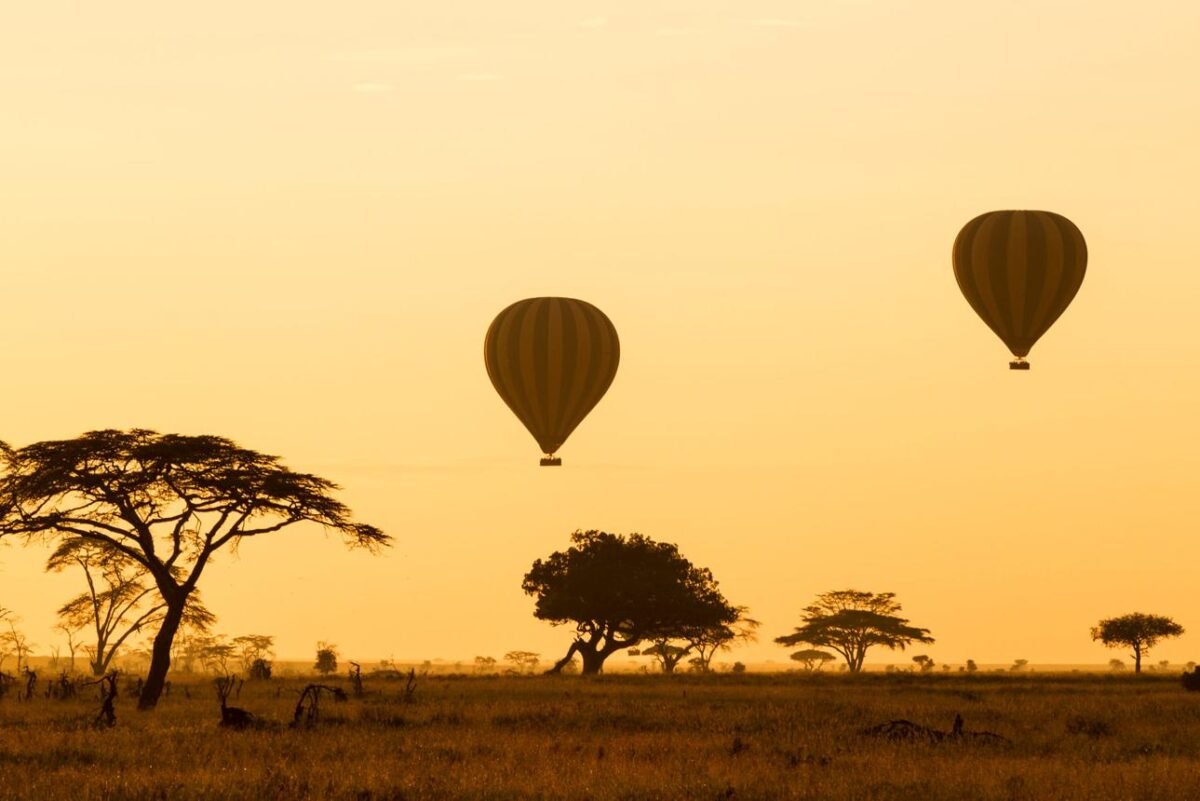
A Serengeti balloon safari offers a different way to explore Tanzania’s famous wildlife plains. Instead of watching animals from a safari vehicle, you float above the landscape at sunrise.
As the sun rises, the grasslands become visible beneath your balloon. You may see wildebeest, zebras, giraffes, elephants and other wildlife moving across the plains.
However, a successful balloon safari requires careful planning. Your travel dates, accommodation location, budget and weather conditions all matter.
At Zamunda Travels, we help travellers include balloon flights in their Tanzania wildlife safari itineraries.
Quick answer: A Serengeti balloon safari is a sunrise hot air balloon flight over Tanzania’s Serengeti ecosystem. Flights usually last about one hour. In 2026, Serengeti Balloon Safaris charges USD 599 per person for a shared flight. The experience normally includes transfers, a landing celebration and a bush breakfast. Park entry costs are separate.
What Is a Serengeti Balloon Safari?
A Serengeti balloon safari is a guided hot air balloon flight above the Serengeti’s wildlife habitats.
The activity takes place early in the morning, when flying conditions are often more suitable. Passengers travel in a basket attached to a large balloon.
A licensed pilot controls the balloon’s altitude using heated air. However, the wind determines the general direction of travel.
Therefore, every flight follows a slightly different route.
Unlike a traditional game drive, a balloon offers wide views across the landscape. You can observe rivers, grasslands, woodland and wildlife movement from above.
The Serengeti ecosystem also supports the annual Great Migration. This movement involves large herds of wildebeest, zebras and other grazing animals.
However, seeing the migration from a balloon is never guaranteed. Wildlife locations change with rainfall, grazing conditions and seasonal movements.
For this reason, Zamunda Travels recommends combining balloon flights with regular game drives.
Serengeti Balloon Safari Experience: What Happens?
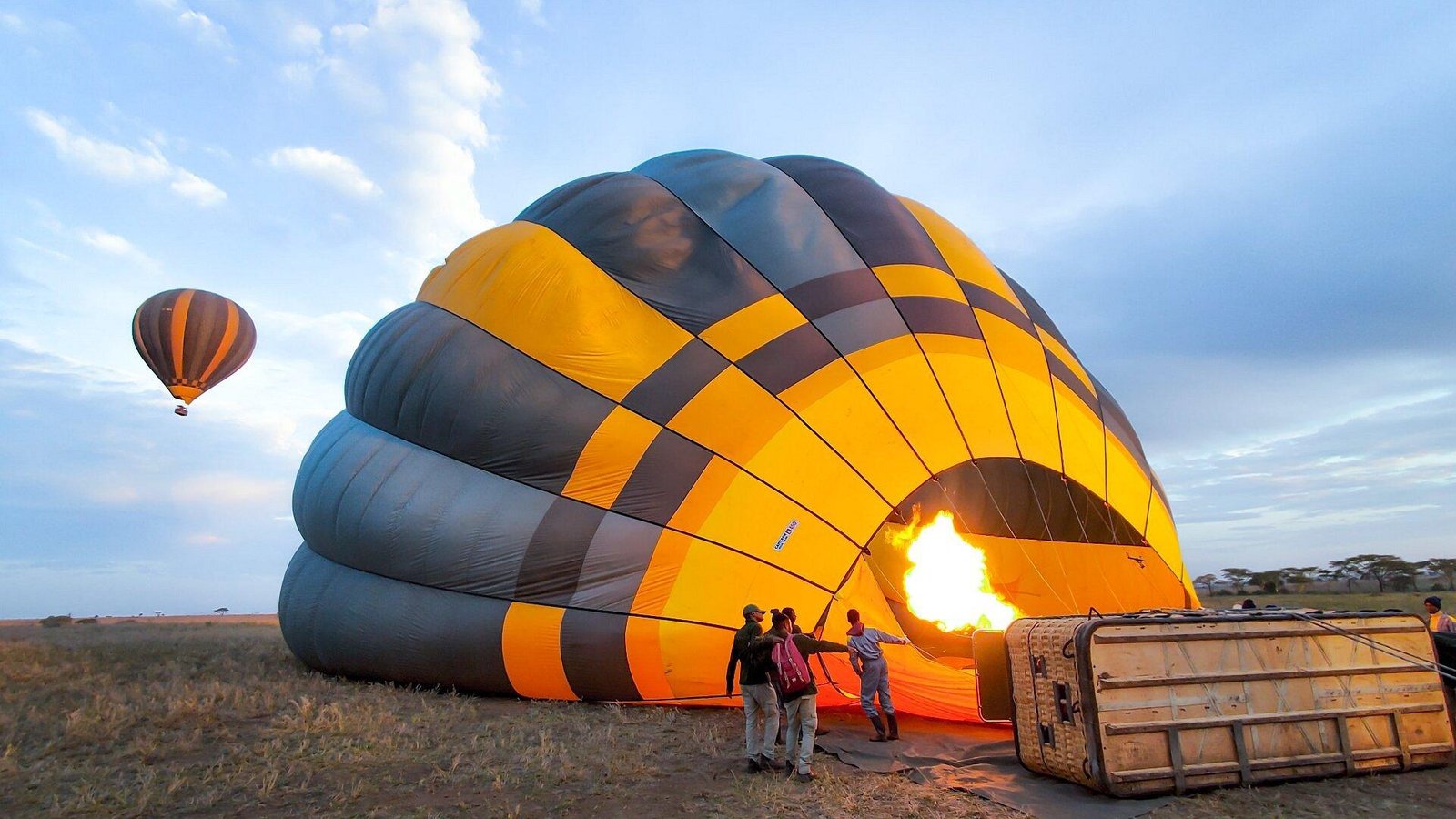
A Serengeti sunrise balloon ride normally begins before dawn. Although exact schedules vary, most flights follow a similar programme.
1. Early Morning Pickup
Your balloon operator collects you from an eligible lodge or camp.
Depending on your accommodation location, pickup may happen between 4:30 AM and 5:30 AM.
The vehicle then transfers you to the balloon launch site.
Therefore, staying near your departure area helps reduce unnecessary early morning travel.
2. Safety Briefing and Balloon Preparation
At the launch site, the crew prepares the balloon for departure.
Meanwhile, the pilot explains the boarding procedure, safety requirements and landing position.
You must follow these instructions carefully.
Some balloons require passengers to enter the basket while it rests sideways. The basket then rises upright during inflation.
3. Sunrise Flight Over the Plains
The balloon normally takes off around sunrise.
As it rises, you begin seeing the Serengeti from a wider perspective. The pilot may change altitude when conditions allow.
However, the balloon cannot follow wildlife like a safari vehicle.
The flight usually lasts approximately 60 minutes. Actual duration depends on wind, weather and landing conditions.
4. Landing Celebration and Bush Breakfast
After landing, the ground crew meets the balloon.
Many packages include a champagne toast and a cooked breakfast in the bush.
Guests can enjoy breakfast while discussing the flight and surrounding landscape.
Next, the operator transfers passengers to an agreed meeting point.
Your safari guide can then continue the day’s wildlife activities.
Serengeti Balloon Safari Cost in 2026 and 2027
The Serengeti balloon safari cost depends on the operator, departure area and package.
For 2026, Serengeti Balloon Safaris publishes a shared-flight price of USD 599 per person.
The same operator has announced USD 660 per person from 1 January 2027.
These are published operator rates, not a final Zamunda Travels package quotation.
Rates change, so confirm current prices with Zamunda Travels.
What Does the Balloon Safari Price Include?
The published Serengeti Balloon Safaris package generally includes:
- Early morning pickup from an eligible lodge or camp.
- Transfer to the balloon launch site.
- A pre-flight safety briefing.
- Approximately one hour of balloon flying.
- A landing celebration.
- A cooked bush breakfast.
- Return transfer to your safari guide at an agreed location.
However, Serengeti National Park entrance fees are not included in this operator’s published flight price.
Accommodation, regular game drives and wider safari transportation also require separate budgeting.
Example Balloon Safari Budget for Two People
Consider two adults planning a Serengeti balloon safari in 2026.
At the published shared-flight rate, each traveller pays USD 599.
Therefore, two passengers would pay USD 1,198 for the balloon experience.
For 2027, the same operator’s published rate would total USD 1,320 for two adults.
These calculations exclude any additional park fees, accommodation or other safari costs.
Before booking, ask whether your quotation already includes the balloon activity.
Also confirm the cancellation terms and any additional transfers.
At Zamunda Travels, we recommend reviewing the complete safari price rather than comparing flight tickets alone.
Best Time for Serengeti Balloon Safari
The best time for a Serengeti balloon safari depends on your wildlife interests.
Central Serengeti offers balloon flights throughout the year, subject to suitable weather.
However, some other launch locations operate seasonally.
June to October: Dry Season
June to October is generally a popular period for Serengeti safaris.
The landscape becomes drier, and wildlife often gathers around available water sources.
Furthermore, seasonal balloon departures operate in parts of northern and western Serengeti.
Travellers interested in migration movements may prefer these months.
However, river crossings depend on animal behaviour and cannot be scheduled.
December to March: Southern Plains and Calving Season
Between approximately December and March, many migrating wildebeest use the southern Serengeti ecosystem.
The Ndutu area is especially important during the calving period.
Consequently, travellers may find large grazing herds and predator activity in suitable areas.
Seasonal balloon flights around Ndutu typically operate from late December through March.
However, weather and migration conditions vary between years.
April to May: Green Season
Rainfall often increases during parts of April and May.
As a result, the landscape becomes greener, and visitor numbers may be lower.
Central Serengeti balloon flights can still operate when weather permits.
However, rain, wind and unsuitable flying conditions can cause cancellations.
Therefore, travellers should maintain some flexibility.
Our recommendation: Choose your travel season around your main wildlife interests. Then select a suitable balloon launch area.
Where Do Serengeti Balloon Safaris Take Off?
Choosing the right launch location is one of the most important planning decisions.
The Serengeti covers a large area, and travel between regions can take several hours.
Therefore, your balloon departure should match your accommodation and safari route.
Central Serengeti: Seronera
Seronera is a popular balloon departure area in central Serengeti.
Flights operate throughout the year, subject to weather conditions.
The region supports lions, leopards, elephants, giraffes, zebras and many antelope species.
Consequently, central Serengeti suits travellers seeking general wildlife viewing.
It also works well for itineraries that include several game drives.
Northern Serengeti: Kogatende Area
Northern Serengeti is popular during the migration season.
The region includes areas near the Mara River, where wildebeest sometimes cross between Tanzania and Kenya.
Seasonal balloon flights operate here during selected months.
However, seeing a river crossing from the balloon remains a matter of chance.
Western Serengeti: Western Corridor
The Western Corridor includes the Grumeti River and surrounding habitats.
Seasonal balloon departures allow visitors to explore this part of the ecosystem from above.
Depending on the season, you may see grazing herds, woodland and river landscapes.
Southern Serengeti: Ndutu
Ndutu lies within the wider southern Serengeti ecosystem, including the Ngorongoro Conservation Area.
The region attracts travellers during the wildebeest calving season.
Therefore, seasonal balloon departures can complement wildlife-focused trips between December and March.
At Zamunda Travels, we recommend confirming the launch site before selecting accommodation.
Wildlife You May See During a Balloon Safari
The Serengeti supports a remarkable variety of wildlife.
From above, travellers may observe large herds and animals moving through different habitats.
Possible sightings include:
- Wildebeest and plains zebras.
- African elephants.
- Giraffes and African buffaloes.
- Lions and spotted hyenas.
- Thomson’s gazelles and other antelopes.
- Hippos near suitable rivers and pools.
However, wildlife sightings depend on the route, altitude and season.
Animals may also appear smaller than expected from the basket.
Therefore, a balloon safari should not replace a traditional game drive.
A safari vehicle allows closer observation of animal behaviour from permitted tracks.
Meanwhile, the balloon helps travellers understand the wider landscape.
Together, these activities provide complementary wildlife experiences.
Is a Serengeti Balloon Safari Worth It?
A Serengeti balloon safari can be worth the additional cost for travellers seeking a different wildlife perspective.
The experience combines sunrise scenery, aerial viewing and a bush breakfast.
It is particularly attractive to photographers, couples and travellers celebrating special occasions.
However, the price is relatively high compared with many other safari activities.
If your main goal is close-up wildlife photography, extra game drives may provide better value.
Likewise, travellers on limited budgets should prioritise sufficient time inside the national park.
Zamunda Travels recommends a balloon safari as an optional addition, not a compulsory activity.
The best choice depends on your budget, interests and available safari days.
Sample 4-Day Serengeti Safari With Balloon Experience
A four-day itinerary can combine regular wildlife viewing with a balloon flight.
The following example assumes arrival in central Serengeti.
Day 1: Arrival and Afternoon Game Drive
Arrive in the Serengeti by road or domestic flight.
Meet your safari guide and transfer to your accommodation.
Depending on arrival time, enjoy an afternoon game drive.
Later, prepare for the following morning’s activities.
Day 2: Sunrise Balloon Safari and Game Drive
Wake up before dawn for your scheduled balloon transfer.
After the safety briefing, enjoy a sunrise flight over the Serengeti.
Next, have breakfast in the bush.
Rejoin your safari guide and continue wildlife viewing.
Return to your accommodation later in the day.
Day 3: Full-Day Serengeti Wildlife Safari
Spend the day exploring suitable wildlife areas.
Your guide will plan the route around current animal movements and park regulations.
Look for lions, elephants, giraffes, antelopes and other wildlife.
Enjoy a picnic lunch where permitted.
Day 4: Final Game Drive and Departure
Start with a morning game drive if your schedule allows.
Afterwards, transfer to the airstrip or continue your journey by road.
This itinerary can also connect with Ngorongoro Crater, Tarangire National Park or other Tanzania destinations.
Ask Zamunda Travels for a personalised safari quotation based on your travel dates.
What to Pack for a Serengeti Balloon Safari
Early mornings in the Serengeti can feel cool.
However, temperatures usually rise after sunrise.
Therefore, comfortable layers are more practical than heavy clothing.
We recommend packing:
- A light jacket or sweater.
- Long trousers and comfortable closed shoes.
- A camera with a secure strap.
- Binoculars for distant wildlife.
- A small day bag, subject to operator rules.
- Any essential personal medication.
Avoid carrying unnecessary loose items inside the basket.
Also, check whether the operator allows large camera equipment.
Photography Tips for Balloon Safaris
A balloon safari offers opportunities for landscape and wildlife photography.
However, the basket moves with the wind, so camera stability matters.
Use a fast shutter speed when photographing moving animals.
For wider views, include the horizon, rivers or surrounding grasslands.
Additionally, secure your camera before takeoff.
Avoid leaning outside the basket or disturbing other passengers.
Safety and Health Considerations
Safety should remain a priority when booking a balloon safari.
Choose an operator with properly licensed pilots and suitable safety procedures.
Before flying, passengers receive instructions about boarding, movement and landing.
Follow these instructions throughout the experience.
Balloon flights depend on suitable weather conditions.
Therefore, operators may postpone or cancel departures when flying conditions become unsafe.
Pregnant travellers should not assume ballooning is suitable. Operators commonly restrict participation during pregnancy.
Travellers with significant heart, mobility or other medical concerns should seek medical advice before booking.
Furthermore, age, height and weight requirements vary between operators.
For example, Serengeti Balloon Safaris accepts children from age six under its published general rules.
Other operators may apply different restrictions.
Always confirm the requirements for your chosen flight.
Common Mistakes to Avoid When Booking
Several planning mistakes can reduce the value of a balloon safari.
Booking the wrong departure area: Your lodge may be far from the launch site. Therefore, confirm the location before paying.
Expecting guaranteed migration sightings: Wildebeest movements depend on natural conditions. No operator can promise specific animal encounters.
Leaving the booking until arrival: Balloon capacity is limited. Consequently, popular dates may sell out.
Ignoring cancellation conditions: Weather can affect flights. Always understand the refund or rescheduling policy.
Planning a tight departure schedule: A balloon morning involves transfers, flying and breakfast. Avoid booking a conflicting early flight from the Serengeti.
At Zamunda Travels, we recommend scheduling the balloon experience early during a multi-night stay.
This may provide another opportunity if weather prevents the first departure.
How to Book a Serengeti Balloon Safari With Zamunda Travels
Planning a Serengeti balloon safari starts with choosing your preferred travel dates.
Next, decide whether you want a central Serengeti wildlife experience or a migration-focused itinerary.
Your accommodation should also match the balloon departure location.
Zamunda Travels can help coordinate your Tanzania safari itinerary, including accommodation, transportation, game drives and balloon booking arrangements.
Before confirming, we recommend checking the operator’s available dates, final price and booking conditions.
This approach helps avoid unnecessary transfers and unexpected costs.
Plan Your Serengeti Balloon Safari
A Serengeti balloon safari offers a unique perspective on Tanzania’s wildlife landscapes.
From sunrise views to a bush breakfast, the experience adds variety to a traditional safari.
However, choosing the right season, departure area and accommodation makes a significant difference.
For the best overall experience, combine your balloon flight with regular Serengeti game drives.
Plan your Tanzania safari with Zamunda Travels.
Our team can help arrange a private Tanzania wildlife safari with an optional Serengeti balloon experience.
Website: www.zamundatravels.com
Email: info@zamundatravels.com
WhatsApp: +256 704 705 606
Frequently Asked Questions About Serengeti Balloon Safaris
1. How much does a Serengeti balloon safari cost?
A Serengeti balloon safari costs USD 599 per person with Serengeti Balloon Safaris in 2026. The operator has announced USD 660 per person from January 2027. This includes the flight, eligible transfers and bush breakfast. However, national park entrance fees remain separate. Rates change, so confirm current prices with Zamunda Travels.
2. What is the best time for a Serengeti balloon safari?
The best time depends on your wildlife interests. June to October offers popular dry-season viewing opportunities, including seasonal northern departures. December to March suits travellers interested in the southern plains and calving season. However, central Serengeti balloon flights operate throughout the year when weather conditions permit.
3. How long does a Serengeti hot air balloon ride last?
A Serengeti balloon flight normally lasts approximately one hour. However, the complete experience takes several hours, including early pickup, transfers, safety briefing, flying and breakfast. Passengers commonly return to their safari guides during the morning. Exact timing depends on accommodation location, weather and operator arrangements.
4. Can children join a Serengeti balloon safari?
Yes, some operators allow children to join balloon safaris. Serengeti Balloon Safaris publishes a minimum age of six years. However, other operators may have different age, height and supervision requirements. Parents should confirm these rules before booking. Children must also follow the pilot’s safety instructions throughout the experience.
5. Is a Serengeti balloon safari worth the money?
Yes, it can be worthwhile for travellers who value sunrise scenery and aerial wildlife viewing. The experience offers a different perspective from traditional game drives. However, it does not guarantee close wildlife encounters or migration sightings. Travellers with limited budgets may prefer additional game drives instead.