A Safari in Uganda with Nyege Nyege Festival
November 17, 2026
Kenya Safari from Canada
November 18, 2026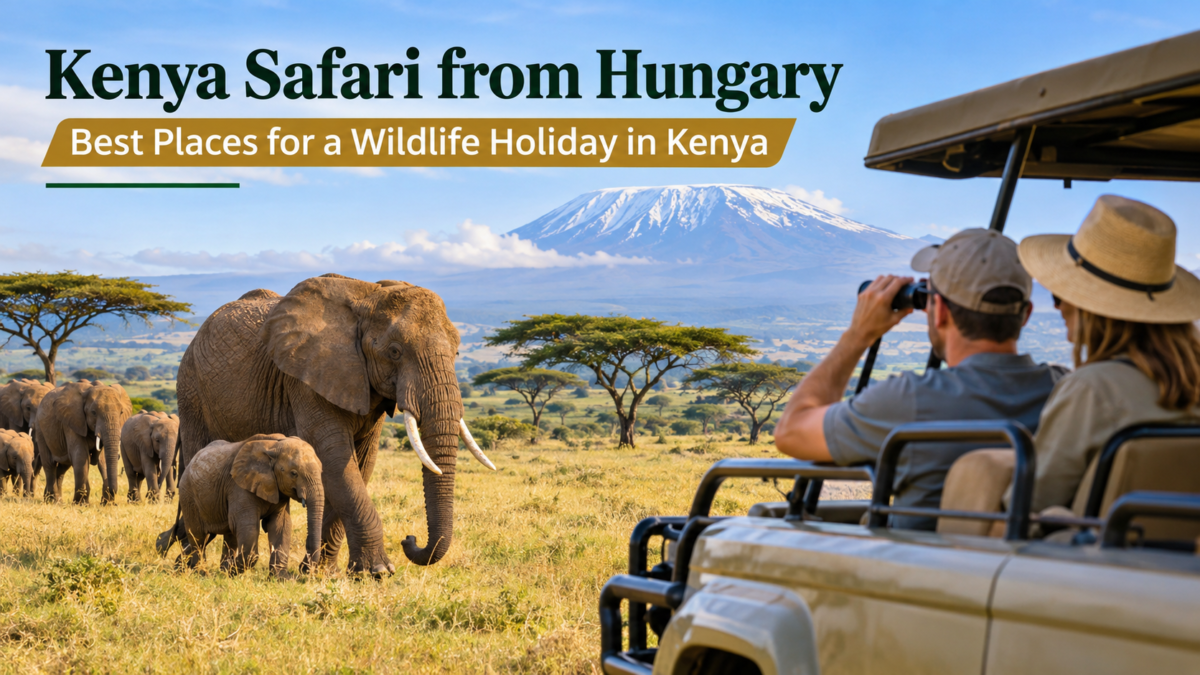
Planning a Kenya safari from Hungary is an opportunity to explore some of East Africa’s most remarkable wildlife destinations. From the open grasslands of the Maasai Mara to the elephant herds of Amboseli and the rhino habitats of Lake Nakuru, Kenya offers several very different safari experiences.
For Hungarian travellers departing from Budapest, choosing the right parks is only part of the planning. International flight connections, travel seasons, accommodation locations, road transfers and safari costs all influence the quality of the holiday.
This guide explains the best places to visit on a Kenya wildlife safari, when to travel, how to reach the country from Hungary and how to organise an itinerary that allows enough time for wildlife viewing.
What Are the Best Places for a Kenya Safari from Hungary?
The best Kenya safari destinations for Hungarian travellers are the Maasai Mara National Reserve, Amboseli National Park, Lake Nakuru National Park, Samburu National Reserve and the Tsavo national parks. The Maasai Mara is particularly suitable for first-time visitors, Amboseli is excellent for elephants, and Lake Nakuru adds opportunities to see rhinos.
For a first wildlife holiday, combining two or three destinations usually provides a better experience than trying to visit every famous park in one week.
1. Maasai Mara National Reserve – Best for Big Cats and the Great Migration
The Maasai Mara is one of Kenya’s most recognised wildlife destinations and an excellent starting point for a first African safari.
Located in southwestern Kenya, the reserve forms part of the wider Serengeti-Mara ecosystem, which extends into northern Tanzania.
The Maasai Mara is known for its open grasslands, large herbivore populations and excellent opportunities to observe predators.
Wildlife to See in the Maasai Mara
Visitors can search for lions, leopards, cheetahs, elephants, buffaloes, giraffes, zebras, wildebeest, hyenas and numerous bird species.
Lions are among the most sought-after animals, while cheetahs can sometimes be observed hunting across the open plains. Leopards are more elusive and are often associated with wooded areas and riverine habitats.
The reserve is also one of the principal destinations for the Great Migration.
When Is the Great Migration in Kenya?
Large migrating herds commonly enter the Maasai Mara during the July-to-October period, although their movements vary with rainfall and grazing conditions.
The Mara River is particularly famous for wildebeest crossings. However, these crossings cannot be scheduled or guaranteed.
Animals may gather near the river without crossing, and the location of the herds can change considerably.
Travellers hoping to witness migration activity should consider spending at least three nights in the Maasai Mara rather than depending on one afternoon game drive.
Where Should You Stay?
Accommodation includes budget camps, comfortable mid-range tented camps and luxury safari lodges.
When choosing accommodation, pay attention to whether the property is inside the reserve, within a conservancy or outside a reserve entrance.
A cheaper lodge located far from the wildlife-viewing area may result in additional driving and less time observing animals.
Recommended stay: Three to four nights for a wildlife-focused safari.
2. Amboseli National Park – Best for Elephants and Mount Kilimanjaro
Amboseli National Park lies in southern Kenya, close to the Tanzanian border. It is particularly famous for its elephants and views towards Mount Kilimanjaro.
The park combines open plains, seasonal lakebeds, wetlands and patches of woodland.
These habitats support elephants, buffaloes, zebras, wildebeest, giraffes, lions and a variety of birds.
Why Visit Amboseli?
Amboseli is an excellent destination for travellers interested in elephant behaviour and wildlife photography.
Elephants may be seen moving between feeding areas, crossing open plains or gathering around wetland habitats.
For photographers, the contrast between elephants and Mount Kilimanjaro creates distinctive landscape compositions.
However, the mountain is not visible throughout the day. Cloud cover can obscure the summit, particularly later in the morning.
Early game drives often provide better opportunities for clear mountain views and comfortable temperatures.
How Long Should You Stay?
Two nights provide a reasonable introduction to Amboseli, while three nights allow more time for photography and wildlife observation.
For Hungarian travellers visiting Kenya for the first time, Amboseli combines well with the Maasai Mara and Lake Nakuru.
3. Lake Nakuru National Park – Best for Rhinos and Birdwatching
Lake Nakuru National Park lies within Kenya’s Great Rift Valley and is an important destination for rhino conservation.
The park protects both black and white rhinoceroses, making it a valuable addition to a safari itinerary focused on seeing the Big Five.
Its landscape includes woodland, grassland, rocky viewpoints and the lake itself.
Wildlife Experiences at Lake Nakuru
Besides rhinos, visitors may encounter buffaloes, giraffes, zebras, waterbuck, baboons and several other mammals.
Lake Nakuru is also associated with flamingos and other waterbirds. However, flamingo numbers vary with water levels, food availability and environmental conditions.
Travellers should not assume that the lake will always be covered with large flocks of flamingos.
Why Include Lake Nakuru in Your Safari?
Lake Nakuru offers a different habitat from the Maasai Mara and Amboseli.
It is particularly useful for travellers who want to improve their opportunities for rhino viewing while exploring the Rift Valley.
One night can work for a carefully planned itinerary, although two nights allow more time to explore the park.
4. Samburu National Reserve – Best for Northern Kenya Wildlife
Samburu National Reserve lies in northern Kenya and offers a noticeably different environment from the country’s southern safari parks.
The landscape is generally drier, with rugged terrain, acacia woodland and the Ewaso Ng’iro River supporting wildlife.
Samburu is particularly interesting for travellers who want to see animals adapted to northern Kenya’s semi-arid environment.
Special Wildlife in Samburu
The region is known for several distinctive species, including:
- Grevy’s zebra, recognised by its narrow stripes and large ears.
- Reticulated giraffe, with its clearly defined coat pattern.
- Gerenuk, an antelope that can stand on its hind legs to browse.
- Beisa oryx, adapted to dry habitats.
- Somali ostrich, another characteristic northern species.
Elephants, lions, leopards and other wildlife can also be encountered.
Is Samburu Suitable for a First Safari?
Yes, particularly for travellers interested in wildlife diversity and photography.
However, Samburu is geographically separate from the main Maasai Mara–Rift Valley circuit.
For a short holiday, it may be better to concentrate on southern Kenya. Travellers with ten days or more can consider adding Samburu without rushing through the journey.
Recommended stay: Two to three nights.
5. Tsavo East and Tsavo West – Best for Extensive Wilderness and Varied Landscapes
Tsavo East and Tsavo West are two major national parks in southeastern Kenya.
Although they share the Tsavo name, their landscapes and safari experiences differ.
Tsavo East National Park
Tsavo East is known for its extensive open landscapes, seasonal rivers and elephants that often appear reddish after dust bathing in the park’s iron-rich soil.
The park offers opportunities to observe elephants, lions, buffaloes, giraffes, zebras and other wildlife.
Because of its size, sightings can require patience and careful route planning.
Tsavo West National Park
Tsavo West has a more varied landscape, including volcanic formations, hills, woodland and springs.
Mzima Springs is one of its best-known attractions.
Tsavo West is particularly interesting for travellers who enjoy combining wildlife observation with geology and landscape photography.
Combining Tsavo with a Beach Holiday
The Tsavo parks are useful additions to itineraries continuing towards Mombasa, Diani Beach or other coastal destinations.
For Hungarian travellers interested in both safari and relaxation, this can create a practical wildlife-and-beach holiday.
Allow enough time for the transfers rather than trying to cover both Tsavo parks in a single rushed day.
6. Lake Naivasha – Best for a Relaxed Rift Valley Experience
Lake Naivasha is a freshwater lake in Kenya’s Rift Valley and offers a different experience from traditional game drives.
Boat excursions may provide opportunities to see hippos and a wide range of waterbirds.
Nearby areas also offer guided nature activities, depending on local regulations and the location selected.
Lake Naivasha can be a useful overnight stop when travelling between Nairobi, Lake Nakuru and the Maasai Mara.
It is particularly suitable for travellers who want to include a quieter activity between several days of vehicle-based wildlife viewing.
Which Kenya Safari Destination Should You Choose?
The right destination depends on your interests, available time and travel budget.
For first-time safari travellers, the Maasai Mara offers a broad introduction to Kenya’s wildlife. It is especially attractive for those hoping to see big cats and large herds of grazing animals.
Amboseli is the stronger choice for elephant photography and Kilimanjaro scenery, while Lake Nakuru is valuable for rhinos.
Samburu suits travellers interested in northern species, and Tsavo is ideal for those who want extensive landscapes or a route towards the Kenyan coast.
For a seven-day holiday, combining the Maasai Mara, Lake Nakuru and Amboseli can provide considerable variety. However, travellers who dislike long transfers may prefer fewer parks and more time in each destination.
Best Time to Visit Kenya from Hungary
Kenya offers wildlife viewing throughout the year, but weather conditions and animal movements change between seasons.
January to March: Good General Wildlife Viewing
These months are often relatively dry across many safari destinations.
Shorter grass in some areas can make animals easier to locate, while warm weather creates good conditions for game drives.
This period can suit Hungarian travellers planning a winter escape from Europe.
April to May: Long Rains and Greener Landscapes
April and May often fall within Kenya’s main rainy period.
The landscape becomes greener, and some destinations experience fewer visitors.
However, muddy roads, heavy showers and difficult driving conditions can affect particular safari routes.
Some seasonal camps may close or reduce their operations.
A safari remains possible, but accommodation and road conditions should be checked before booking.
June to October: Popular Wildlife Safari Season
This period is particularly popular for wildlife holidays.
Drier conditions in many parks can make game drives more convenient, and the Maasai Mara becomes a major destination for travellers interested in the Great Migration.
July to October is generally the main period to consider for migration-related viewing in Kenya.
However, the exact timing of migrating herds depends on natural conditions.
November to December: Short Rains and Green Scenery
November often brings short rains, although weather patterns vary.
The landscapes can become greener, and birdwatching can be rewarding.
December is also an attractive holiday period, but accommodation demand may increase around Christmas and New Year.
For travellers departing from Hungary, booking early is advisable when travelling during major European holiday periods.
How to Travel from Hungary to Kenya
Most Hungarian travellers begin their journey at Budapest Ferenc Liszt International Airport.
The main international arrival airport for a classic Kenya safari is Jomo Kenyatta International Airport in Nairobi.
Flights from Budapest to Nairobi
As of November 2026, there are no regularly scheduled nonstop flights between Budapest and Nairobi.
Travellers can explore connecting routes through international hubs such as Istanbul, Doha, Dubai, Cairo or Frankfurt, depending on the airline and travel dates.
Total journey time depends on connection length, ticket arrangements and the chosen route.
Travellers living in western Hungary may also find it useful to compare flights departing from Vienna.
When booking international flights, avoid very short connections, especially when travelling with checked luggage.
If your flight arrives in Nairobi late in the evening, spending the first night in the city is often more comfortable than beginning a long road transfer immediately.
Travelling from Nairobi to the Safari Parks
Most Kenya safari itineraries begin with a private road transfer or a domestic flight.
A 4×4 safari vehicle provides flexibility during game drives and allows travellers to stop at suitable viewpoints along the route.
However, journeys between national parks can be long, and travel times depend on road conditions, weather, traffic and the location of the lodge.
Domestic flights can reduce transfer time on selected routes, particularly when visiting the Maasai Mara or combining distant safari destinations.
Travellers should also allow sufficient time when transferring between Nairobi’s international and domestic airports.
Kenya Entry Requirements for Hungarian Citizens
Hungarian passport holders travelling to Kenya for tourism should check the country’s electronic travel authorisation requirements before departure.
Under the rules available in November 2026, ordinary Hungarian passport holders generally require an approved Kenya Electronic Travel Authorisation (eTA), unless they qualify for a specific exemption.
Applications should be made through the official Kenya eTA website:
The application process generally requires a passport valid for at least six months after the intended arrival date, a passport photograph or selfie, travel information, accommodation details and a payment method.
Kenya’s immigration authorities recommend applying sufficiently early rather than waiting until departure.
An approved eTA permits travel to Kenya but does not guarantee admission, which remains subject to immigration checks on arrival.
Travellers should also check current inbound health insurance requirements, including Kenya’s rules introduced in 2026.
Because entry regulations can change, confirm the latest requirements before purchasing non-refundable travel arrangements.
Health, Vaccinations and Travel Insurance
Hungarian travellers should seek advice from a qualified travel-health professional before visiting Kenya.
Malaria prevention is important for many safari destinations, and travellers should discuss appropriate medication and mosquito-bite precautions.
Yellow fever vaccination requirements depend partly on the countries visited or transited through before entering Kenya. Travellers arriving from a country with yellow fever transmission risk may be required to provide a valid vaccination certificate.
Travellers should confirm the rules for their exact route rather than assuming that departure from Hungary automatically determines every health requirement.
Travel insurance should cover medical treatment, emergency evacuation, cancellation and the safari activities included in the itinerary.
Check that any policy meets Kenya’s current inbound travel-health insurance rules.
How Many Days Do You Need for a Kenya Safari?
For Hungarian travellers making a long international journey, seven to ten safari days provide a good balance between wildlife viewing and travel time.
A shorter trip is possible, but spending several days in Kenya makes the international journey more worthwhile.
Four to Five Days
A short safari can focus on the Maasai Mara, with an optional additional destination such as Lake Nakuru.
This suits travellers combining Kenya with another holiday or those with limited annual leave.
Seven Days
Seven days allow a more varied safari, potentially combining Amboseli, Lake Nakuru and the Maasai Mara.
This route includes elephants, rhinos, predators and several different landscapes.
Ten to Fourteen Days
A longer safari provides more flexibility for photography, additional game drives and destinations such as Samburu or Tsavo.
Travellers can also consider a beach extension along Kenya’s Indian Ocean coast.
Sample Seven-Day Kenya Wildlife Safari from Hungary
The following itinerary is an example of how Hungarian travellers can explore three major wildlife destinations after arriving in Nairobi.
Day 1: Arrival in Nairobi
Arrive at Jomo Kenyatta International Airport and transfer to your hotel. Rest after the international flight and prepare for the safari.
Day 2: Nairobi to Amboseli National Park
Travel south towards Amboseli. Depending on the departure time and road conditions, enjoy an afternoon game drive before settling into your lodge.
Day 3: Full-Day Amboseli Safari
Explore Amboseli’s wetlands and open plains. Look for elephant herds and other wildlife, with opportunities to photograph Mount Kilimanjaro if the weather is clear.
Day 4: Amboseli to Lake Nakuru
Travel towards the Great Rift Valley and Lake Nakuru. This is a substantial transfer day, so the itinerary should allow realistic driving time. An additional overnight stop may be preferable for travellers seeking a slower pace.
Day 5: Lake Nakuru to the Maasai Mara
Begin with a game drive in Lake Nakuru, focusing on rhinos and other wildlife. Continue towards the Maasai Mara, allowing for road conditions and arrival procedures.
Day 6: Full-Day Maasai Mara Safari
Spend the day exploring the reserve with your safari guide. Search for lions, leopards, cheetahs, elephants, buffaloes and other animals.
During migration season, your guide can adapt the route according to the reported movements of the herds.
Day 7: Return to Nairobi
After breakfast, return to Nairobi by road or take a prearranged domestic flight where suitable.
An additional overnight stay may be advisable before your international departure, particularly if road travel would leave little time for airport check-in.
Is This the Best Seven-Day Route?
This itinerary offers wildlife variety but includes some long transfers.
For travellers who prefer more time on game drives and less time on the road, a seven-day itinerary focusing on Lake Nakuru and the Maasai Mara may be more comfortable.
Zamunda Travels can help Hungarian travellers choose between a broader safari circuit and a slower itinerary with more nights in each wildlife area.
How Much Does a Kenya Safari from Hungary Cost?
The total cost depends on international flights, safari duration, accommodation, park fees, transport and the number of travellers sharing the vehicle.
Kenya safari prices are commonly quoted in US dollars, while Hungarian travellers may be budgeting in Hungarian forints.
According to general guidance published by Kenya Wildlife Service in 2026, safari packages can vary widely in price depending on comfort level and inclusions.
For a more detailed planning reference, a seven-day safari may cost approximately USD 1,800–3,500 per person for a mid-range package, excluding international flights. This is an indicative market-planning range, not a confirmed Zamunda Travels quotation.
Luxury lodges, private air transfers and peak-season accommodation can increase the cost substantially.
What Should Your Safari Price Include?
Before confirming a booking, check whether the quotation includes accommodation, meals, safari vehicle, professional guide, park entry fees, airport transfers and domestic flights where applicable.
Also confirm whether the following are excluded:
- International flights from Hungary.
- Kenya eTA and applicable insurance charges.
- Travel insurance and personal expenses.
- Optional hot-air balloon safaris.
- Tips, drinks and additional activities.
A lower advertised price does not necessarily represent better value if important expenses are excluded.
Paying for Your Safari from Hungary
Hungarian travellers should compare the total cost in HUF after any foreign-exchange conversion and international payment charges.
Ask the operator which currency will be used for the final invoice and whether the quoted amount is fixed or subject to changes before payment.
For international flights, compare the total ticket price, baggage allowance and cancellation conditions rather than choosing solely on the lowest fare.
Choosing the Right Accommodation and Safari Vehicle
Accommodation location can have a significant effect on the daily safari experience.
A lodge close to the wildlife-viewing area may allow more convenient morning game drives, while accommodation farther away can involve additional road travel.
In the Maasai Mara, it is important to understand the distinction between the national reserve, surrounding conservancies and nearby accommodation areas.
Entry arrangements, activities and permitted driving areas may differ.
For transport, a well-maintained 4×4 safari vehicle is a practical choice, particularly on routes affected by rough roads or seasonal rain.
Travellers interested in photography should ask about window seating, roof access, luggage space and the number of passengers sharing the vehicle.
A private safari provides greater flexibility for wildlife stops, photography and daily departure times.
Common Mistakes to Avoid When Planning a Kenya Safari
Trying to visit too many parks: Long transfers can reduce wildlife-viewing time. Choose destinations that complement one another rather than simply collecting park names.
Booking only one night in the Maasai Mara: Wildlife movements are unpredictable. More time improves opportunities to explore different areas.
Expecting guaranteed migration crossings: Wildebeest crossings depend on natural animal behaviour and cannot be promised for a specific date.
Ignoring accommodation location: A lodge may appear close to a park on a map but still require substantial driving to reach the intended game-viewing area.
Booking a tight international connection: Delays can affect airport transfers and the first day of a prepaid safari.
Comparing prices without checking inclusions: Park fees, transport, meals and optional activities can significantly change the final cost.
Approaching wildlife irresponsibly: Follow park rules, respect your guide’s instructions, remain inside the vehicle where required and never pressure animals for photographs.
Why Plan Your Kenya Safari with a Local East African Operator?
A safari involves more than arranging accommodation and a vehicle.
The choice of parks, the time allocated to each destination and the location of overnight stays all influence the experience.
Zamunda Travels Uganda Ltd is an East African safari operator organising wildlife and travel experiences across Uganda, Rwanda, Kenya and Tanzania.
For travellers coming from Hungary, the company can help develop an itinerary based on preferred wildlife, travel dates, accommodation standards and budget.
This can include a private Kenya safari, a photographic wildlife holiday or a longer East African journey combining Kenya with neighbouring destinations.
Planning the Right Kenya Wildlife Holiday from Hungary
A Kenya safari from Hungary is best planned around the wildlife experiences that matter most to you.
The Maasai Mara is an excellent choice for predators and seasonal migration activity. Amboseli offers exceptional elephant-viewing opportunities, while Lake Nakuru adds rhinos and Rift Valley scenery.
Samburu and Tsavo provide further variety for travellers with more time.
For a first safari, seven to ten days can provide a rewarding introduction to Kenya without making the journey unnecessarily rushed.
Choose your travel dates carefully, allow realistic transfer times and select accommodation according to both comfort and location.
Plan Your Kenya Safari with Zamunda Travels
Whether you are travelling from Budapest, another Hungarian city or elsewhere in Europe, Zamunda Travels can help you organise a Kenya wildlife safari suited to your interests and travel schedule.
From Maasai Mara game drives and Amboseli elephant safaris to longer wildlife journeys across East Africa, our team can assist with itinerary planning, accommodation, transport and guided safari arrangements.
Zamunda Travels Uganda Ltd
Beyond Expedition
Website: https://www.zamundatravels.com
Email: info@zamundatravels.com
WhatsApp: +256 704 705 606
Frequently Asked Questions About Kenya Safaris from Hungary
1. Do Hungarian citizens need a visa to visit Kenya?
Hungarian citizens travelling on ordinary passports generally need an approved Kenya Electronic Travel Authorisation (eTA), rather than a traditional tourist visa, unless a specific exemption applies. Applications are submitted online through Kenya’s official immigration system. Travellers should check the latest entry and insurance requirements before departure.
2. Are there direct flights from Budapest to Nairobi?
As of November 2026, there are no regularly scheduled nonstop flights between Budapest and Nairobi. Travellers generally connect through international hubs such as Istanbul, Doha, Dubai, Cairo or Frankfurt. Flight availability and journey times depend on the airline and travel dates, so it is advisable to compare routes before confirming a safari.
3. What is the best month for a Kenya safari from Hungary?
July to October is particularly attractive for travellers interested in the Great Migration in the Maasai Mara. January to March can also provide good general wildlife-viewing conditions. Kenya offers safari opportunities throughout the year, but rainfall, wildlife movements and accommodation availability vary by season.
4. How many days should Hungarian travellers spend on safari in Kenya?
Seven to ten days is a practical choice for many first-time visitors travelling from Hungary. This allows enough time to explore two or three wildlife destinations while accounting for transfers. Travellers with shorter holidays can focus on the Maasai Mara, while longer itineraries can include Samburu, Tsavo or the Kenyan coast.
5. Can I see the Big Five on a Kenya safari?
Yes, Kenya offers opportunities to see all five animals traditionally known as the Big Five: lion, leopard, elephant, buffalo and rhinoceros. The Maasai Mara is excellent for several of these species, while Lake Nakuru is an important rhino destination. However, wildlife is free-ranging, and sightings of individual species cannot be guaranteed.
6. Can I combine a Kenya safari with a beach holiday?
Yes. Travellers can combine wildlife destinations such as Amboseli or Tsavo with beach stays around Diani or Mombasa. A longer itinerary can also include the Maasai Mara before continuing to the coast. The most convenient route depends on your travel dates, available flights and the amount of time you want to spend on safari.
7. Is Kenya suitable for a family safari from Hungary?
Yes. Kenya has accommodation and safari arrangements suitable for families, including private vehicles and lodges with family rooms. The best itinerary depends on the children’s ages, driving tolerance and preferred activities. Families should confirm accommodation policies, age restrictions for special activities and health requirements before booking.